
By Elizabeth Feldmann-DeMello
A vote on the permanent location and operationalization of the permanent Secretariat of the Biodiversity Beyond National Jurisdiction Agreement will be taken in January 2027. This rapidly-approaching moment marks a new chapter for ocean governance in the international community, bringing the world one step closer to an answer to the age-old question: Who actually controls the world’s vast marine resources?
I found myself pondering this question during my first fisheries patrol. I still can remember jumping from our Over the Horizon small boat in the Pacific Ocean to conduct my first boarding of a commercial longliner. I was nervous and excited, and not sure what to expect.
That longliner looked like a run of the mill fishing vessel from a distance. Once on board, its paperwork appeared to be in order, and its catch was nothing out of the ordinary. But as I waited for the boarding officer to finish, it dawned on me how these boardings are much more than just safety and compliance checks. They are part of an evolving contest over who controls the world’s fisheries.
When people hear the phrase “illegal, unreported, and unregulated (IUU) fishing,” they see an environmental problem and/or a law enforcement problem that can be fixed with more patrol boats and harsher penalties. Yet what they often do not often realise is that IUU fishing is also a governance, food security, and national security issue. It is a task that requires a combination of economic, diplomatic, law enforcement, and fisheries governance reforms aimed at challenging the current political and economic structures that make distant water fishing (DWF) profitable.
Navigating An Unexpected Gap
The United Nations Convention on the Law of the Sea gives coastal states sovereign rights over the marine resources within Exclusive Economic Zones (EEZs) which extend 200 nautical miles from their coastlines. Theoretically, these coastal states should have full ownership and control of their EEZs, with the power to regulate access by foreign fishing fleets and ensure that economic benefits from the nation’s marine resources remain within their own communities.
Realistically, however, many coastal states lack the capability and resources to accomplish this aim. The result is that a persistent gap emerges between the legal authorities that support a nation’s fisheries management and the on-the-water operational realities that define the contemporary commercial fishing industry. This gap unexpectedly leaves resource-rich coastal states particularly vulnerable, with IUU fishing activity disproportionally affecting nations that have abundant fish stocks but possess inadequate resources to manage them.
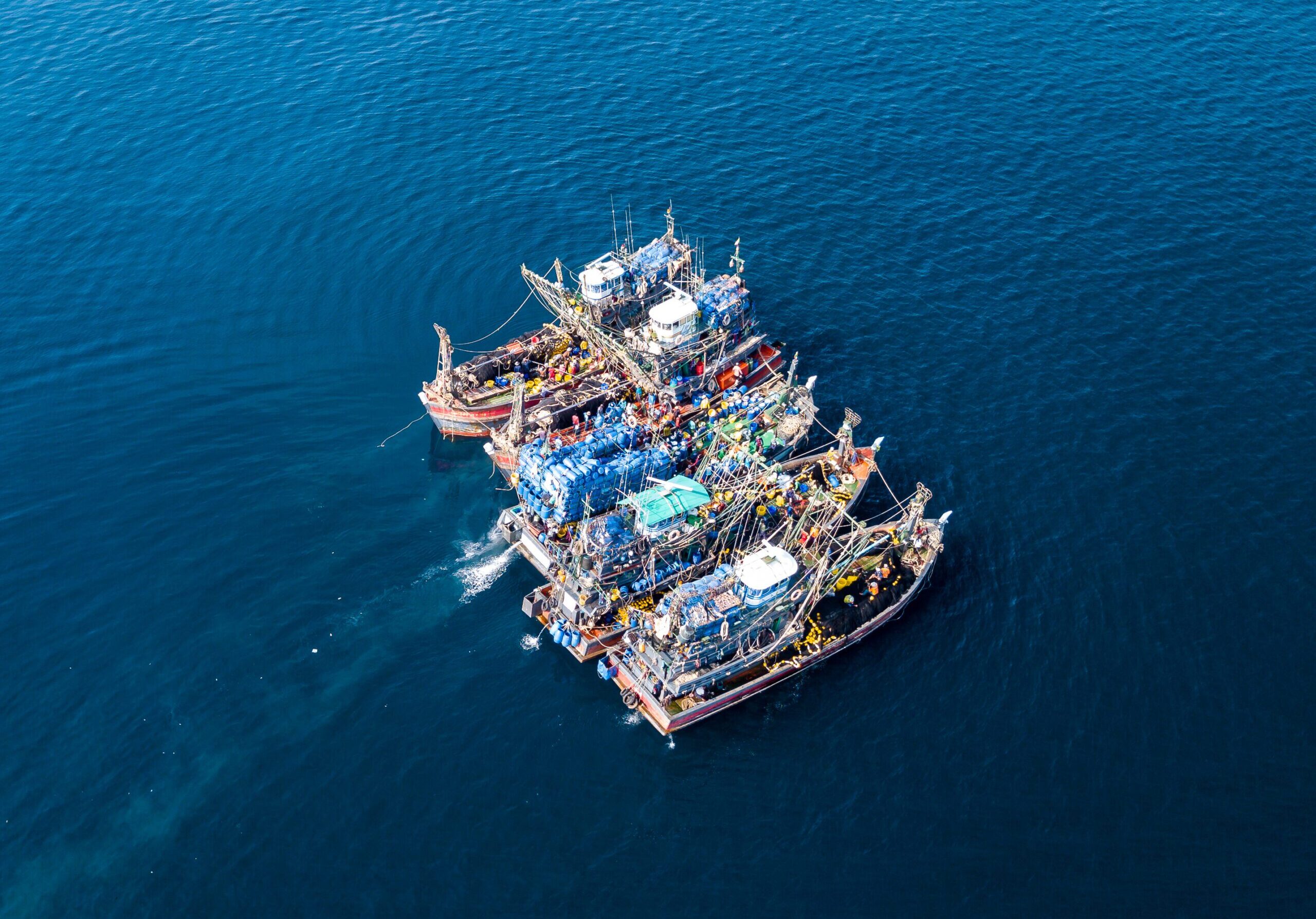
And as industrial DWF fleets have become more prevalent, the governance challenges for coastal states have become even more pronounced. While DWF fleets often operate legally and play an integral role in global seafood production, weak oversight and harmful economic incentives can encourage them to engage in—or facilitate IUU fishing. So, the issue is not the existence of DWF fleets, but rather the political and economic incentives that motivate them to become parties to illegal actions.
Hidden Drivers of IUU
Government subsidies are among the biggest drivers of DWF profitability. Fuel subsidies, construction grants, tax exemptions, and other factors encourage trawlers, longliners, and purse seiners to travel longer distances to fishing grounds with weaker enforcement.
This rush to waters with more lax regulation plays a key role in the prevalence of IUU fishing. Consequently, IUU fishing accounts for an estimated annual economic impact of US$24 billion to US$50 billion, reducing revenue and weakening food security and livelihoods of coastal communities.
Take the case of West Africa. The Financial Transparency Coalition reports that approximately 50 percent of the world’s industrial fishing vessels suspected of engaging in IUU fishing operate in West Africa’s waters. Many of these vessels can be linked to Chinese and European owners. Six West African countries also account for about 20 percent of the world’s illegally caught fish.
Another common tactic used by vessels that engage in IUU fishing is “going dark”: intentionally turning off or “spoofing” their Automatic Identification System transponders. Hiding themselves from being tracked allows these vessels to cross maritime boundaries, enter restricted or prohibited fishing areas, and engage in transshipment with a much lower risk of detection. This tactic further inhibits enforcement measures.
During my own participation in patrols, the difficulty of executing successful maritime enforcement actions was not lost on me. Capable equipment and well-trained boarding teams were not enough. Holding violators accountable depended upon the coastal state’s capacity to prosecute and enforce its own fisheries laws.
A Regional Approach
The challenge of effective enforcement grows exponentially for countries that have far fewer capabilities. So, how can smaller coastal states overcome these hurdles? The Pacific Islands demonstrate that this imbalance does not inevitably lead to failure.
For many years, Pacific Island countries chose to negotiate separately with foreign fishing fleets, which drastically reduced their shared bargaining power. Eight nations eventually stopped competing against one another for access fees and formed the Parties to the Nauru Agreement (PNA).
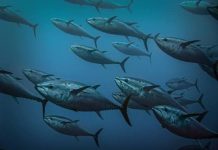
The beneficial effects of doing so quickly became apparent These nations together gained collective control over waters that produce roughly 50% of the world’s skipjack tuna. The coalition also introduced the Vessel Day Scheme to sell fishing days across their combined EEZs. Fishing fleets interested in targeting tuna in PNA waters were required to negotiate with the entire region rather than bilaterally with individual countries.
Through this new management practice, revenue for the PNA members increased from approximately US$60 million in 2010 to almost US$500 million in 2017, which profoundly altered the power dynamic between Pacific Islands and foreign fishing nations. Shared ventures such as Operation Tui Moana also allowed these countries to coordinate satellite surveillance, share intelligence, and conduct joint operations and training missions to address IUU fishing head on.
Today, the Western and Central Pacific skipjack tuna fishery is widely regarded as one of the world’s best managed fisheries, proving effective governance can deliver both ecological sustainability and economic prosperity. The lesson is that institutions, governance, and diplomacy do matter. When smaller coastal states manage shared stocks together instead of alone, they can fundamentally rebalance power.
Looking Beyond Maritime Law Enforcement
My own operational experience and research have taught me that we cannot rely on at-sea boardings to solve IUU fishing. While stronger maritime enforcement is essential, it does not address the fundamental economic incentives that encourage illegal fishing activities. A coordinated global approach is necessary.
The elements of such an approach are readily identified: accept the World Trade Organisation’s Protocol of the Agreement on Fisheries Subsidies, fully implement the Port State Measures Agreement to stop illegally harvested catch from entering the global market, increase transparency in fishing access agreements and vessel ownership, and strengthen regional partnerships that empower coastal states.
Ultimately, addressing IUU fishing will require an international community that is willing to reform the economic and governance systems that make illegal fishing profitable in the first place.
Elizabeth Feldmann-DeMello is an active-duty officer in the U.S Coast Guard and a recent graduate of Johns Hopkins University. Her firsthand experience conducting fisheries patrols in West Africa and the Pacific Ocean shapes her research on maritime security, ocean governance, and international environmental policy.