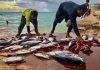


A strengthening El Niño is expected to affect tuna distribution and fishing activity across the Pacific through 2026 and into 2027, creating challenges for fisheries management and the economies of island nations.
The latest Pacific Islands Forum Fisheries Agency (FFA) Trade and Industry News reports changing fishing patterns across the Western and Central Pacific as ocean temperatures rise and conditions shift.
The United States National Oceanic and Atmospheric Administration (NOAA) has indicated that El Niño is present, with sea surface temperatures above average across the east-central and eastern equatorial Pacific.
There is more than a 90 percent chance of a very strong event developing during the Northern Hemisphere autumn and winter, with conditions likely to persist into February 2027.
The Pacific Community (SPC) has warned that the event could bring reduced rainfall to Fiji, Papua New Guinea, Solomon Islands, Vanuatu, Samoa, Niue, southern Cook Islands, Tonga and Palau, while Kiribati, Tokelau and parts of Tuvalu could face flooding and warmer seas.
The changing conditions are also expected to affect tuna fishing grounds and catch rates.
From mid-July into August, sea surface temperatures in the central and eastern equatorial Pacific were about 1.5 to 3 degrees Celsius above average, with the strongest warming in the eastern Pacific.
Fishing activity in Solomon Islands was low in July before increasing in August, while effort in central Papua New Guinea remained around normal levels. Activity further east was lower than in non-El Niño years.
Following the annual fish aggregating device (FAD) fishing ban, fishing effort shifted towards the high seas and the exclusive economic zones of Kiribati and Tuvalu.
The changes are significant for Pacific Island countries, where tuna fisheries underpin food security, employment, government revenue and economic development.
In the eastern Pacific, El Niño is expected to deepen the ocean thermocline, expanding tuna habitat and making it harder for fishing fleets to catch the fish efficiently.
Ecuador’s fishing industry is forecasting a decline of 90,000 tonnes in catches in 2026, while higher fuel and raw material costs are adding pressure on operators.
The effects are expected to extend beyond the Pacific.
El Niño could influence wind patterns over the Indian Ocean, contributing to a positive Indian Ocean Dipole, characterised by warmer sea surface temperatures in the western Indian Ocean and cooler conditions in the east.
These changes can affect ocean nutrients and tuna behaviour, with scientists anticipating potential negative impacts on yellowfin tuna catches.
In the Atlantic, El Niño is expected to influence skipjack tuna distribution, with traditional fishing grounds in the Gulf of Guinea and equatorial regions potentially becoming less productive.
The developments highlight the need for Pacific countries to strengthen climate-informed fisheries management, forecasting and adaptive planning to maintain sustainable tuna stocks and protect the economic benefits fisheries provide across the region.