
Samoa remains generally open to foreign investment, but its small economy, infrastructure bottlenecks, land ownership rules and labour shortages continue to constrain the country’s investment prospects, according to the 2026 Investment Climate Statements from the U.S State Department.
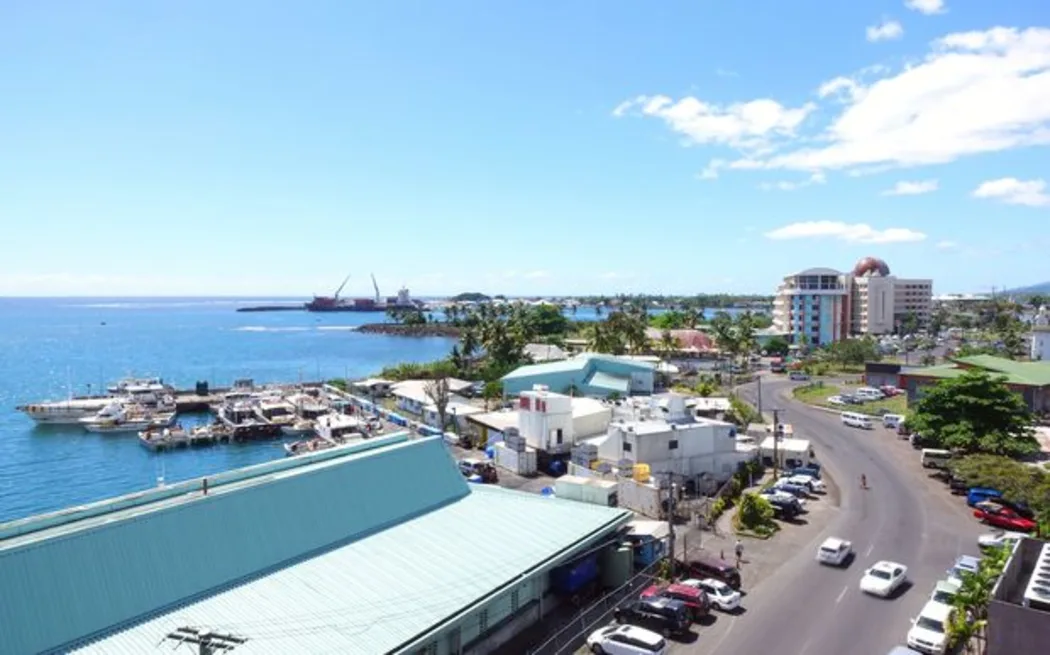
The report says Samoa’s economy grew by just under four percent in 2025 despite aging electricity infrastructure, congestion at the country’s only international port and political disruption caused by multiple votes of no confidence in the previous government.
Inflation fell below two percent by the end of 2025, while visitor arrivals continued to grow, supporting the potential for further expansion in tourism.
However, the report says Samoa remains heavily dependent on remittances and official development assistance, with limited economic diversification.
The U.S Embassy in Samoa and the State Department said the government continues to welcome foreign direct investment, particularly investment that creates employment for Samoans.
Priority sectors identified by the government include tourism and hospitality, agriculture and agro-processing, fisheries and aquaculture, information and communications technology, business process outsourcing, light manufacturing, renewable energy and creative industries.
“The Government of Samoa welcomes FDI and has pledged to streamline procedures to encourage increased foreign investment,” the report states.
Foreign investors can hold 100 percent ownership in most sectors, but several activities are reserved for Samoan citizens.
These include public bus and taxi services, vehicle rentals, retail, sawmilling and traditional elei garment design and printing.
Foreign ownership is also restricted in some sectors. Fishing operations are subject to a maximum 40 percent foreign equity, while nonu and coconut virgin oil production require a joint venture with a local partner.
Foreign investors must obtain a Foreign Investment Certificate from the Ministry of Commerce, Industry and Labour before receiving a business licence.
The report says the application is supposed to be processed within five working days, although all foreign investment is screened to ensure compliance with Samoa’s investment rules.
Land remains another major issue for investors.
About 80 percent of Samoa’s land is customary land, which cannot be bought or sold but can be leased. The report says business leases commonly run for 30 years, with the possibility of renewal.
Customary land cannot be mortgaged and therefore cannot be used as collateral to raise capital.
Freehold land can be bought, sold and mortgaged, but foreign ownership is restricted and requires approval from the Head of State.
The U.S report also highlights labour shortages, particularly in tourism and healthcare, driven in part by migration to New Zealand and Australia.
Only about 20 percent of Samoa’s working-age population was recorded as formally employed in 2024, according to Samoa Bureau of Statistics figures cited in the report, with informal employment widespread in agriculture, fishing, forestry and small businesses.
The minimum wage is scheduled to rise to 5.24 tala (US$1.90) an hour from July 2026, 5.65 tala (US$2.05) in July 2027 and 6.05 tala (US$2.19) in July 2028.
The report says some light manufacturing businesses have successfully relocated operations from Asia to Samoa, citing low labour costs, an English-speaking workforce and convenient time-zone links with the United States, Australia and New Zealand.
But it identifies uncertainty over duty concessions for imported raw materials as a constraint on manufacturing investment.
The report also points to weaknesses in government financial reporting, saying the Ministry of Finance has not released its annual report for 2023-24 or a statement of public accounts since 2021 because they have not been endorsed by Parliament.
Samoa was removed from the European Union’s list of non-cooperative jurisdictions for tax purposes in February 2026 after regulatory changes aimed at bringing the country into full compliance with international tax governance standards.
The report says Samoa has no comprehensive bilateral tax agreement with the United States.
It also notes that Samoa has 14 state-owned enterprises covering sectors including energy, water, aviation, banking and ports, but private companies are legally permitted to compete with them.
On corruption, the report says there are occasional credible allegations and prosecutions involving misuse of public funds and abuse of public office.
Samoa adopted its first National Anti-Corruption Policy and Strategy in 2024 and ratified the United Nations Convention against Corruption in 2018.
The report says Samoa remains politically peaceful and has no recent history of politically motivated violence or civil disorder.
It also describes Samoa as a parliamentary democracy with an independent judiciary and a record of protecting human rights, while noting past controversy over changes to the judicial system that were reversed through constitutional amendments in 2025.
The report says Samoa’s small population, remoteness and exposure to natural disasters remain structural challenges for investment, while climate change is increasing risks to infrastructure, food and water security and economic stability.