
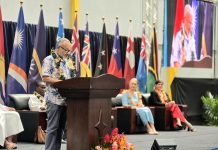

Fiji is demanding a greater share of the economic benefits from Pacific fisheries resources, with Fisheries and Forests Minister Alitia Bainivalu saying the wealth generated from tuna must translate into jobs, investment and income for Pacific people.
Bainivalu made the call while attending the 19th INFOFISH World Tuna Trade Conference and Exhibition (TUNA 2026) in Bangkok, where she is representing Fiji and engaging directly with the global seafood industry.
“My message is clear: Fiji’s ocean resources must create greater opportunities and greater returns for the people of Fiji,” Bainivalu said.
She said Pacific Island countries had carried much of the responsibility for managing and protecting the region’s fisheries resources while enormous wealth was generated from those resources in global markets.
“That must change,” she said.
Bainivalu said Fiji wanted a fisheries sector that creates jobs, supports fishers, grows local businesses, attracts responsible investment and increases the economic value retained in the country.
She said tuna resources were not simply commodities in the global seafood trade but were directly linked to livelihoods, food security, business income and government revenue.
“Our tuna resources are not simply numbers in the global seafood trade,” Bainivalu said.
“They represent livelihoods for our coastal communities, opportunities for our young people, income for our businesses, food security for our families and revenue for our country.”
Bainivalu also highlighted Fiji’s move to strengthen transparency and accountability in fisheries management.
Three days before travelling to Bangkok, Fiji became the first Pacific Island country to sign a national Memorandum of Understanding to fully implement Fisheries Transparency Initiative (FiTI) standards during a meeting in Rome.
She said Fiji was also strengthening its efforts against illegal, unreported and unregulated fishing.
The National Offshore Fisheries Operations and Surveillance Centre, launched in May 2025, uses real-time satellite tracking and electronic monitoring to strengthen surveillance and enforcement.
Fiji is also implementing 100 percent port call inspections under the Port State Measures Agreement.
“We are sending a strong message: Fiji will protect its waters and will not allow illegal fishing to take away the future of our people,” Bainivalu said.
But Bainivalu said protection of fisheries resources must be matched by efforts to increase the value retained in Fiji.
She said this included greater local processing, investment, employment, skills development and participation by Fijian businesses across the fisheries value chain.
“When international investors and fishing fleets benefit from our resources, Fiji and our people must benefit too,” she said.
Bainivalu said Fiji was advocating for a blue economy that was sustainable, transparent and economically fair, with coastal and maritime communities becoming active participants and beneficiaries rather than simply resource custodians.
She also warned that climate change was already affecting the movement of tuna stocks, making it critical for Pacific Island countries to have a stronger voice in regional and international fisheries decisions.
“We cannot simply manage the decline of our fisheries.
“We must build a fisheries industry that can sustain our people and our economy for generations,” Bainivalu said.
She said the Coalition Government would continue to protect Fiji’s natural resources while creating more economic opportunities.
“Our ocean is more than an environmental asset. It is Fiji’s economic asset.
“Our commitment remains simple: protect our resources, create opportunities, grow our economy and put our people first,” Bainivalu said.