


Reporting by PACNEWS Editor, Makereta Komai in Kitakyushu
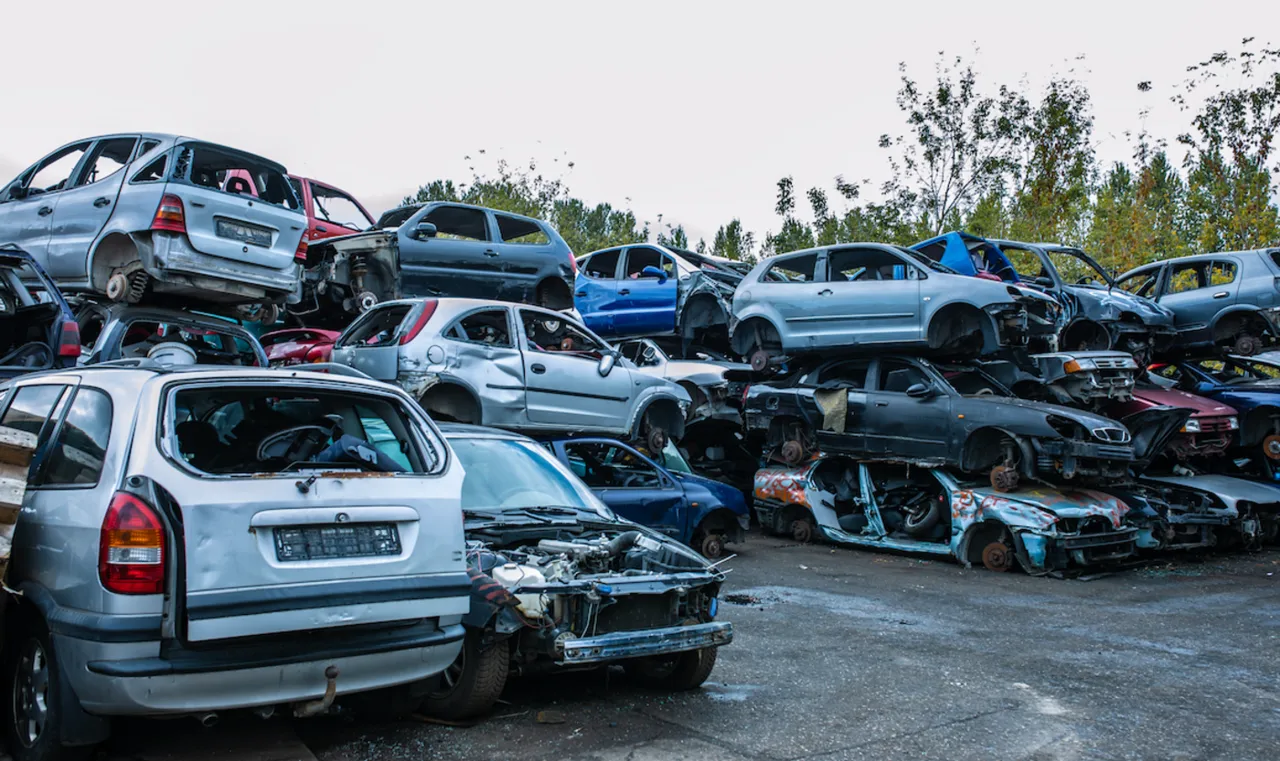
An automotive recycling company in Kitakyushu is turning old and unwanted vehicles into valuable resources while helping reduce industrial waste.
Western Japan Auto Recycling Company Limited (WARC) is helping to lead the way in environmentally friendly vehicle recycling in Japan.
The company operates a 60-metre dismantling line where it can recycle up to 30 end-of-life vehicles a day, with each vehicle taking about 45 minutes to go through the full recycling process.
The remaining metal frame is flattened and compressed into a rectangular block.
The company says its specialised process achieves a recycling rate of more than 95 percent.
Before a vehicle is dismantled, workers first remove harmful fluids such as oil and petrol.
Batteries and tyres are also removed for separate recycling or resale, before workers strip the vehicle of valuable reusable parts.
These include doors, bonnets, engines, gearboxes and other parts that can still be used.
WARC maintains a registry of between 120,000 and 180,000 reusable vehicle parts, which are sold in Japan and exported through international automotive networks.
The company said all parts go through strict quality checks before they are sold or reused.
The remaining metal is processed using a metal shredder and compressed into square blocks.
These are then transported to the Nippon Steel Corporation’s factory in Kitakyushu, where the scrap metal is melted down and used to produce new steel.
Five journalists from the Pacific and Caribbean, taking part in the Association for Promotion of International Cooperation (APIC) Japan Journalism Fellowship, visited the WARC facility in Kitakyushu Eco-Town to see the recycling process first-hand.
For the Pacific journalists, the visit highlighted an issue facing many of their nations — what to do with a growing number of old and abandoned vehicles.
Journalists Leilani McQuinn of Yokwe TV in the Marshall Islands and Elilai Rengiil of Tia Belau in Palau said industrial waste is becoming an increasing problem in their countries.
Old vehicles can often be seen abandoned along roadsides, in yards and other areas, creating an environmental and visual problem for communities.
Pacific island countries face particular challenges in dealing with what is often described as “hard waste”, including old cars and other heavy metal waste.
Many islands rely heavily on imported second-hand vehicles. Over time, these vehicles reach the end of their useful life and can be left to rust in backyards.
The tropical climate can also speed up corrosion, while the small size of many islands limits the land available for waste disposal.
Another major challenge is the lack of local recycling facilities and domestic markets for scrap metal.
Transporting heavy vehicle waste off the islands can also be expensive.
Some Pacific countries are now looking at ways to compact old vehicles to reduce the cost and space needed to transport them.
In Tonga, for example, mobile compactors are being used to crush scrap vehicles into smaller cubes, making it easier to load them onto ships for recycling elsewhere.
The experience of Kitakyushu shows how old vehicles and industrial waste can be turned from an environmental problem into a resource for a circular economy.
For Pacific Island countries facing growing vehicle waste, the challenge is finding practical and affordable ways to do the same.