


By Pita Ligaiula
Climate change is already threatening key Pacific economic sectors, but the Green Climate Fund (GCF) says its investments are being designed to ensure communities can continue to benefit from tuna fisheries, agriculture and food production long after individual projects end.
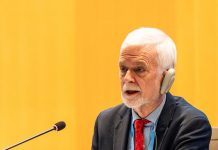
In an interview with PACNEWS in Palau last week, GCF Executive Director Mafalda Duarte said the Fund was backing major programmes aimed at protecting food security, livelihoods and the region’s critical tuna industry.
Duarte highlighted a major tuna initiative with Conservation International, which she said would benefit Pacific countries through measures including improved fisheries systems, better forecasting and stronger community access to tuna.
“Thirty percent of the world’s annual tuna catch comes from Pacific economic zones,” Duarte said, underlining the importance of the resource to the region and globally.
She said the project would enhance coastal and urban community access to tuna, strengthen national fisheries systems and improve forecasting to help countries manage the redistribution of tuna stocks as climate change alters their movement.
“It’s quite a significant project,” Duarte said.
She said about 25 percent of the region’s population was expected to benefit directly or indirectly from the initiative.
The GCF executive director said the project was also significant because it drew on Pacific-based science and institutions.
“It draws on the knowledge and the science that is generated here in the Pacific,” Duarte told PACNEWS.
She said the project would be implemented through a Pacific institution, with the Secretariat of the Pacific Community (SPC) serving as the executing entity.
“So really strong ownership with the knowledge and institutions of the region,” she said.
Duarte also highlighted a separate US$44 million programme covering Tonga, Vanuatu and Samoa aimed at strengthening food production and smallholder livelihoods.
The programme is expected to directly benefit more than 50,000 people, while almost 220,000 others are expected to benefit through broader policies, extension services and improved local food supplies.
The project will cover about 20,000 hectares, equivalent to 13 percent of the agricultural land across the three countries, Duarte said.
“These are significant programmes that really stand to make a significant impact in these countries,” she said.
GCF Regional Director for Asia and the Pacific Hemant Mandal said the Fund’s approach was not simply to provide financing, but to ensure projects create lasting capacity within Pacific communities.

“The main focus is also a paradigm shift. So it’s what happens after GCF intervention actually ends.
“How do we actually make sure that this continues?,” Mandal asked.
He said project design and investment decisions needed to consider what would happen after GCF funding ended.
“It’s not just to, as a traditional donor, give money, but to make sure the communities have the wherewithal, the skillset to take it forward,” Mandal said.
Mandal said the tuna project was designed to build on existing regional arrangements, including the treaties governing tuna fisheries among Pacific countries.
He said climate change was changing the distribution of tuna stocks, creating new challenges for fishing fleets and national fisheries authorities.
“How do you make sure with the climate change the tuna shoals are moving, the ships have to get the right information, but they’re licensed to go over there,” Mandal said.
He said better information would also help prevent overfishing and ensure more of the economic benefits from tuna were retained in Pacific countries.
“So it’s not just about the catch. The protein intake in the country goes up, but jobs are created within the country in food storage for the private sector to move in,” he said.
Mandal said the wider objective was to strengthen the resilience of Pacific economies as climate impacts intensify.
“It’s adaptation with the climate change, but also to be more resilient,
“That’s the way the GCF looks at the Pacific as a very important partner,” he told PACNEWS.
The GCF’s approach, he said, was to ensure climate investments strengthened existing Pacific systems rather than create parallel structures.
Duarte said the tuna initiative demonstrated that approach by combining international climate finance with Pacific science, institutions and fisheries systems.
The GCF’s investments in fisheries and food production come as Pacific leaders continue to push for greater access to climate finance to protect economies and communities from rising climate impacts.