By Pita Ligaiula in Koror, Palau
Pacific countries should expect faster Green Climate Fund approvals, more national and regional institutions accessing funding directly and a stronger focus on resilience as the GCF rolls out reforms over the next few years.
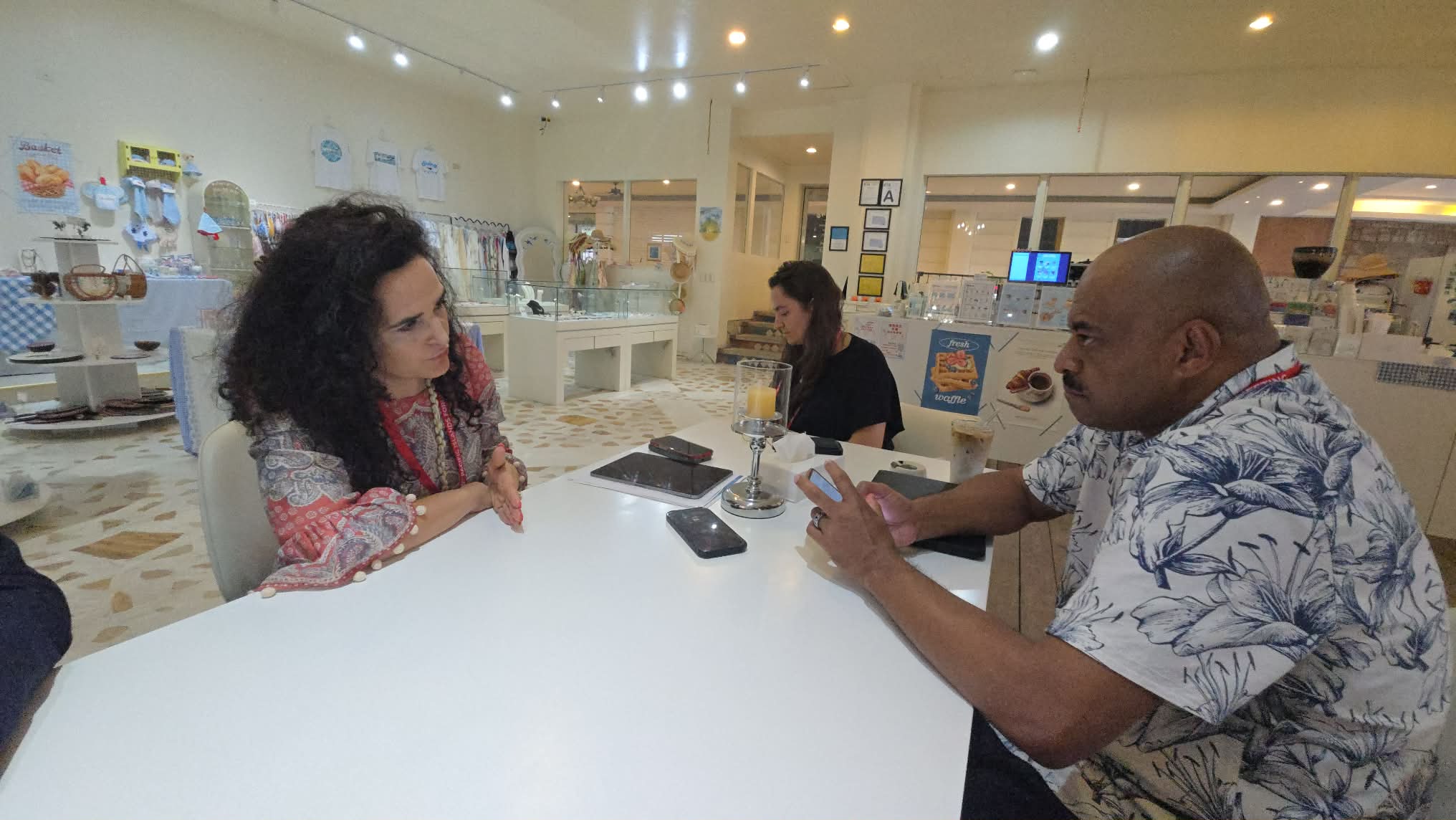
GCF Executive Director Mafalda Duarte told PACNEWS in an interview in Palau that the Fund was streamlining its project review and accreditation processes to reduce delays and increase direct access to climate finance.
“We hope that they start to see concrete results from our reforms in terms of streamlining the project review process, in terms of accreditation,” Duarte said.
She said the GCF wanted to see more national entities accredited so Pacific countries could access funding directly, reducing the number of intermediaries between the Fund and communities.
“One of the issues that Pacific leaders also mentioned to us is that engaging international entities reduces the funding that is then available on the ground.
“Actually having the regional and the national institutions access, make sure that we have less intermediaries in the chain to deliver,” She told PACNEWS.
Duarte said international organisations would continue to have a role where they could add value, but Pacific countries should increasingly be able to use their own national and regional institutions to access and deliver GCF resources.
She said direct access would also help strengthen the capacity of Pacific institutions to scale up climate projects.
Duarte said the GCF’s commitment to climate resilience and Small Island Developing States(SIDS) would remain strong.
“I foresee that our commitment to resilience funding is not going to decrease, it’s going to enhance.
“Our commitment to the SIDS will remain very strong, if not increase.” said Duarte.
But she warned that increased support would depend on the GCF securing a strong replenishment for its next funding cycle.
The GCF operates on a four-year replenishment cycle, with the current replenishment process expected to conclude at the end of next year for the 2028 period.
“We need an ambitious replenishment to be able to be ambitious in the delivery to the countries globally, including here in the Pacific,” Duarte said.
She urged Pacific leaders to support the replenishment effort.
“We are also encouraging the leaders here in the Pacific to voice their support to our replenishment.
“We are one of the key providers of resilience financing in the region. We are with the Pacific, we need them to be with us as well in these moments when we are in a replenishment process,” Duarte said.
Hemant Mandal, GCF Regional Director for Asia and the Pacific, said the Fund had already doubled its commitments to the region over the past three years and expected to see more projects moving into implementation.
“In the last three years, we’ve doubled our commitment.
“So when you say the next three or four years, I expect to see a lot of impacts on the ground,” Mandal told PACNEWS
Duarte said said the investments covered health, resilient infrastructure, forestry, food security, agriculture, seawalls, land reclamation and energy.
She also said the planned opening of the GCF’s Suva office would strengthen its engagement with Pacific countries.
“I expect our Suva office to open up so that we are here with our client countries so that we can service them,” he said.
Mandal also expects an increase in direct access entities, including national institutions and regional organisations such as the Pacific Community (SPC) and the Pacific Regional Environment Programme(SPREP).
“We do, we are here to stay.
“The plan is to actually expand, not contract. But we do need the support from the Pacific to make that happen,” he told PACNEWS
Duarte said renewable energy would be a major part of the GCF’s future work in the Pacific, particularly as Forum leaders pursue a regional vision of 100 percent renewable energy.
She said current GCF-supported projects were already expected to help some Pacific countries secure more than half of their energy mix from renewable sources.
“Tonga, Nauru, Cook Islands, Solomon,” he said, pointing to countries where the GCF is supporting renewable energy investments.
“So we are on the real path to help the region fulfil that vision,” she said.
Duarte said the push to reduce fossil fuel dependence had become even more urgent amid rising global fuel prices.
She highlighted the impact of the war in the Middle East on Pacific economies, saying prices for kerosene and diesel had risen by more than 35 to 40 percent.
“Less reliance on fossil fuels, more reliance on the resources that Pacific countries are endowed with,” he said.
She said the GCF was also working with Pacific countries on the transition to cleaner maritime transport through the Pacific Blue Shipping Partnership.
Duarte said the aim was to develop a bankable programme of investments that could help reduce fossil fuel dependence while strengthening regional economic integration.
“It can really make a significant shift in terms of economic impetus in the region, less reliance on fossil fuels, further regional economic integration,” she said.
She described the renewable energy and blue shipping initiatives as potentially transformative for the region.
“The potential impact that they can have is so, so profound that really we do hope in the coming years to see and then again demonstrate to the world what leadership is about,” Duarte said.
For the GCF, the message from Palau is clear that Pacific countries want climate finance to move faster, reach national and regional institutions more directly and translate into visible results on the ground.