
By Pita Ligaiula in Koror, Palau
Pacific governments must provide stronger political backing, funding and legal frameworks to break persistent barriers to intelligence sharing and strengthen the fight against transnational organised crime, a Pacific Islands Forum side event heard.
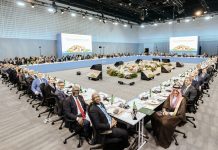
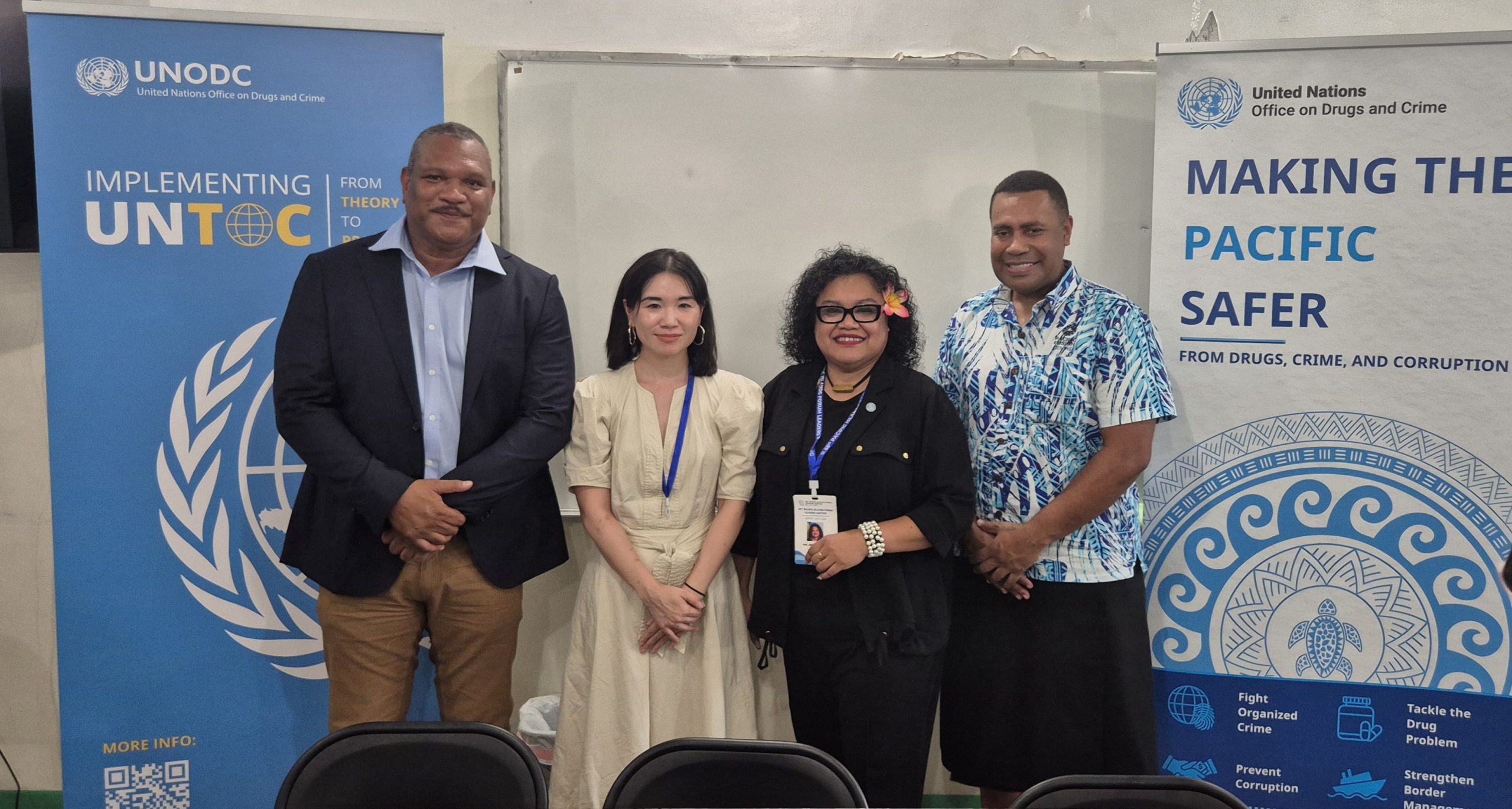
The issue was raised during a question-and-answer session at the event, “Transnational Organised Crime in the Pacific: Evolving Threats and Pacific Response,” involving Papua New Guinea Police Commissioner David Manning, Palau Minister of Justice Jennifer Olegeriil and Pacific Fusion Centre, Director Viliame Bovoro.
Questions focused on why intelligence-sharing across the region remained slow and fragmented despite years of discussion about the need for greater cooperation against drug trafficking, organised crime and other cross-border threats.
Responding to a question on the barriers preventing more effective intelligence sharing, PNG Police Commissioner David Manning said existing processes needed to be streamlined.
Manning said delays were often caused by the procedures required before information could be cleared and shared between jurisdictions.
“To overcome the delays when it comes to the process of sharing information, we will have to clear the process of clearing this information before we get to share it,” Manning said.
He argued that regional mechanisms could help remove some of the obstacles faced when agencies had to deal separately with individual jurisdictions.
“If there is a focal point serving that regional body itself, rather than having to deal with a small jurisdiction or individual, it requires details that require us to respond,” he said.
Manning said legal changes could also help strengthen regional cooperation.
“Some legal amendments would serve the region better,” he said.
His comments follow his earlier call at the same event for Pacific leaders to consider a regional treaty to combat transnational organised crime and give greater legal force to police cooperation already taking place across the region.
Palau Minister of Justice Jennifer Olegeriil said the biggest obstacle was not simply technical capacity but political will.
“When you talk about action, you see something, you see a system that has been placed that’s not working. So, you need to be adaptive,” Olegeriil said.
“But in order for that to take place, there first must be that political will. It needs to start at the top,” she said.
She said political commitment was necessary to drive government funding towards equipment, assets, training, capacity building and intelligence-sharing systems.
“If that’s not a priority for the leadership and the development policy level, then they’re not going to put funds into that area that needs to be improved,” Olegeriil said.
She said Pacific police leaders could develop effective responses, but governments had to provide the political backing and financial resources needed to make them work.
“The response needs to be police-led.
“But the reason they develop a police-led response and are still facing barriers is because political will has not prioritised it and given it the funding priority that it needs,” she said.
Olegeriil said the response had to work across several levels, including political leadership, legislation, policy, funding and law enforcement.
“There has to be political will, there has to be enabling legislation and policies that enable that funding priority, and it needs to be police-led agencies,” she said.
The Palau Justice Minister said transnational organised crime could not be treated as a law enforcement issue alone.
She said Pacific countries also needed to address social and economic conditions that allowed drugs and organised crime to take hold in communities.
“We do have to address all the underlying factors that continue to enable drugs in our communities,” Olegeriil said.
“We can’t talk about drug trafficking and drug use without talking about the impacts of climate change and how that’s influencing crime.”
She also highlighted gender equity, social inclusion, education and other social institutions as part of a wider regional response.
“Everybody has to be doing their part,” she said.
Olegeriil said police should be given the resources and support needed to focus on their core job.
“We need to be looking at our education system, we need to be looking at our other social institutions in place, and the police can concentrate on catching the drug dealers with enough funding in a model that is police-led,” she said.
Another question from the Office of the Attorney General focused on whether intelligence-sharing between Pacific law enforcement agencies was reaching prosecutors and being used to pursue criminal assets.
The question highlighted the need for cooperation that could identify bank accounts and other assets linked to suspected criminals and allow prosecutors to pursue asset forfeiture.
Pacific Fusion Centre Director Viliame Bovoro said regional work was already underway to strengthen cooperation on proceeds of crime and asset forfeiture.
He pointed to the Pacific Islands Law Officers’ Network, known as PILON, which has developed a regional framework that is being tested in two countries.
“There’s another agency called PILON, the Pacific Islands Law Officers’ Network.
“They’ve recently developed a framework which is currently being tested in two countries around proceeds of crime and asset forfeiture,” Bovoro said.
Bovoro said Pacific countries also needed to review their laws to identify where legislative barriers were preventing effective cooperation.
“There needs to be some sort of a good scan across all of the legislative frameworks on what can allow to be implemented, so that you can have a cooperation process,” he said.
He pointed to recent developments in Fiji, where authorities have begun prosecuting cases involving proceeds of crime linked to drug sales.
“I’ve seen in Fiji recently that they’ve started to actually prosecute the proceeds of crime around drug sales,” Bovoro said.
“That is a good indication,” Bovoro said.
The discussion reinforced a growing regional focus on targeting the financial foundations of organised crime rather than relying only on arrests and drug seizures.
Bovoro said there were lessons across the region on how Pacific governments could improve asset forfeiture and follow the proceeds generated by criminal activity.
“There are a lot of lessons that can be learned from just being able to see how we can effectively do that,” he said.
The exchange highlighted the continuing gap between Pacific commitments to greater regional security cooperation and the practical systems needed to make intelligence sharing faster and more effective.
As the Forum considers the growing threat of transnational organised crime, the message from the panel was clear that intelligence alone is not enough unless governments provide the political will, funding and legal tools to turn information into action.