
The Organisation of African, Caribbean and Pacific States (OACPS) has reaffirmed its commitment to protecting and sustainably managing the world’s oceans, warning that marine ecosystems face growing threats from climate change, pollution and biodiversity loss.
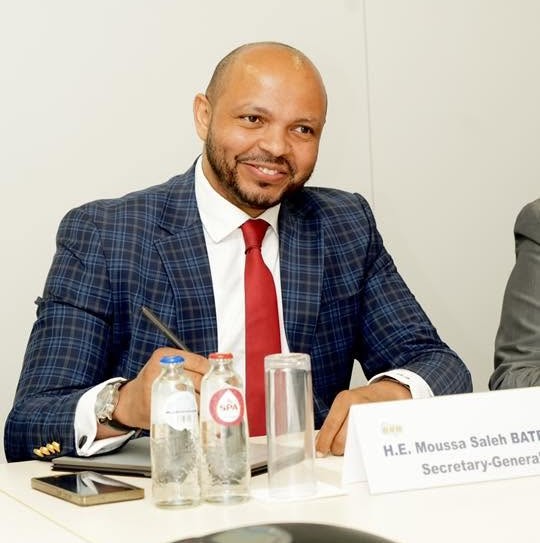
Marking World Oceans Day 2026, OACPS Secretary-General Moussa Saleh Batraki said the organisation remained committed to advancing a sustainable and equitable blue economy while promoting the interests of its member states in global ocean governance discussions.
“This 08 June, the Organisation of African, Caribbean and Pacific States (OACPS) joins the international community in commemorating World Oceans Day,” he said.
Batraki, reaffirmed the OACPS’ unwavering commitment to the protection, conservation and sustainable use of our oceans and marine resources.
Batraki noted that the OACPS comprises 79 member states across Africa, the Caribbean and the Pacific, including 39 Small Island Developing States and 64 coastal nations, many of which depend heavily on healthy oceans for their economies, food security and cultural identity.
“For the OACPS, whose membership comprises 79 States across Africa, the Caribbean and the Pacific, including 39 Small Island Developing States and 64 coastal nations, the ocean is at the heart of our economies, our food security, our cultures and our way of life. The sustainable management of marine resources is therefore fundamental to achieving resilient, inclusive and sustainable development for our peoples,” he said in a statement.
The Secretary-General said the organisation’s commitment is anchored in the Revised Georgetown Agreement and reinforced by decisions adopted at the 11th Summit of Heads of State and Government through the Malo Declaration.
He said these commitments highlight the importance of sustainable development, responsible stewardship of natural resources and stronger international cooperation on climate action, biodiversity conservation, sustainable ocean governance and climate finance.
Referring to this year’s World Oceans Day theme, “Awakening New Depths,” Batraki said it serves as a reminder of the urgent need to better understand the oceans and strengthen collective efforts to address growing environmental challenges.
“The Secretary-General welcomes this year’s theme, ‘Awakening New Depths,’ which serves as a timely reminder of the need to deepen our understanding of the oceans and to strengthen collective action in addressing the growing challenges posed by climate change, marine pollution, biodiversity loss and the unsustainable exploitation of marine resources.”
Batraki said the OACPS remains committed to advancing a sustainable and equitable blue economy and supporting member states in international negotiations and agreements aimed at protecting marine ecosystems.
“The OACPS remains firmly committed to advancing a sustainable and equitable blue economy, and to promoting the interests of its Member States in global discussions on ocean governance.”
“In this regard, the Organisation continues to support the implementation of international commitments, including the Agreement on the Conservation and Sustainable Use of Marine Biological Diversity of Areas Beyond National Jurisdiction (BBNJ Agreement), as well as initiatives aimed at strengthening the resilience of coastal and island communities.”
The Secretary-General also called on governments, development partners, businesses and civil society to increase investment in ocean protection and sustainable management.
“The Secretary-General joins the United Nations and the international community in calling upon governments, development partners, the private sector and civil society to invest in the protection and sustainable management of our oceans, ensuring that they continue to serve as a source of prosperity, resilience and opportunity for present and future generations.”
The statement comes as countries around the world mark World Oceans Day and intensify efforts to address mounting threats to marine ecosystems and the communities that depend on them.