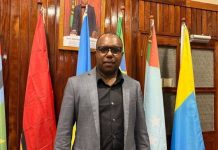


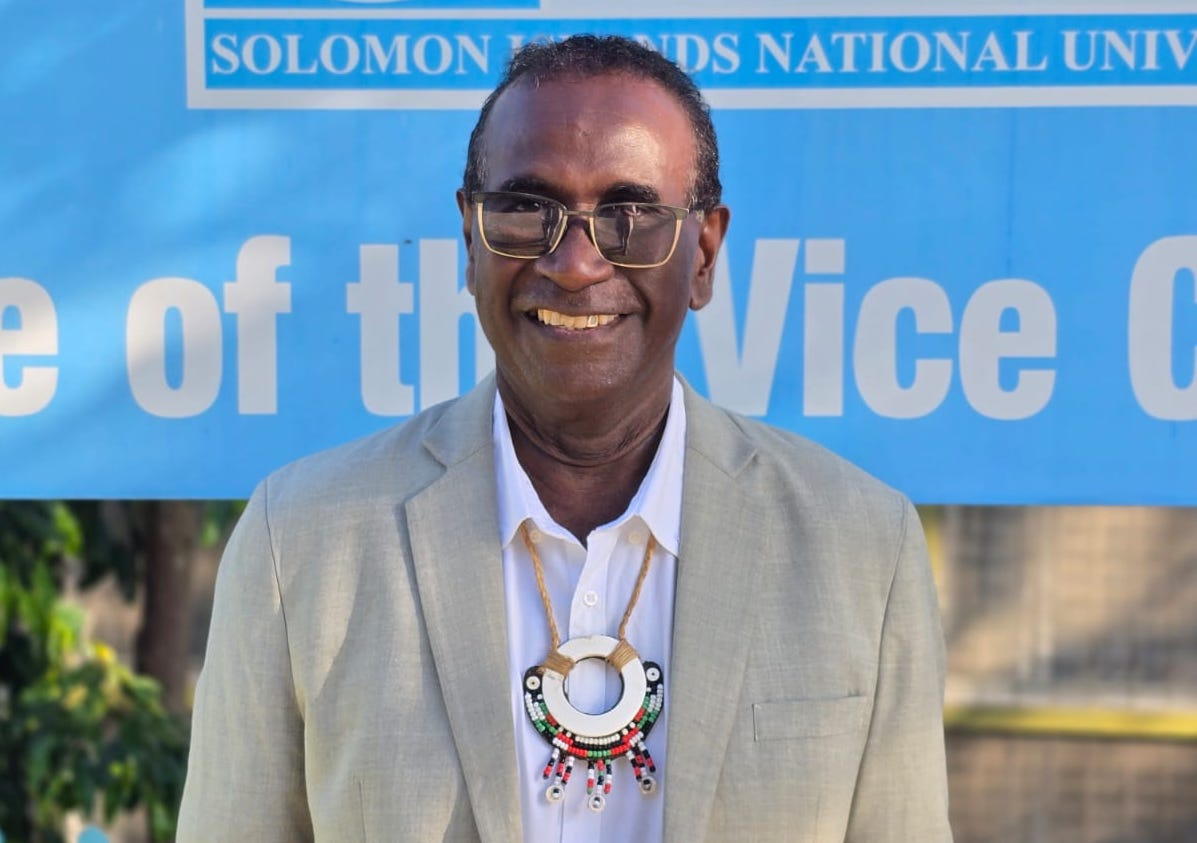
Solomon Islands National University (SINU) Vice Chancellor Dr Transform Aqorau says effective leadership requires balancing the idealism of youth, the pragmatism of leadership and the wisdom gained through experience.
In a social media post titled “The Idealism of Youth, the Pragmatism of Leadership, and the Wisdom of Experience: Reflections from a Pacific Journey,” Dr Aqorau reflected on lessons from his career in public service and leadership.
“When I first entered the workforce in my early twenties, I believed that good ideas, hard work and determination were enough to change the world,” he said.
Dr Aqorau said idealism was one of his greatest strengths because it fostered a belief that Solomon Islands and the Pacific could build “a more prosperous, just and sustainable future.”
“Idealism is the engine of progress. Every generation needs young people who question accepted wisdom, challenge outdated practices and imagine a better future.”
Dr Aqorau said experience had taught him that leadership is rarely about choosing between good and bad options.
“More often, it is about choosing between competing priorities, each of which has merit. Decisions must be made within the constraints of limited budgets, limited institutional capacity, competing stakeholder interests, and political realities.
“This is where pragmatism becomes essential,” he said.
He said governments and public institutions operate with limited resources despite growing demands.
“One lesson has remained with me throughout my career: our countries possess unlimited needs but only limited resources.”
He described this as “the defining challenge of development in Solomon Islands and across the Pacific.”
“Leadership therefore becomes an exercise in prioritisation.”
Dr Aqorau said leaders must decide which investments deliver the greatest long-term benefits, strengthen national capability and make the best use of limited public resources.
He also said development is about more than infrastructure.
“Development is fundamentally about building institutions and people rather than simply constructing infrastructure.”
Dr Aqorau said roads, ports, airports and buildings would not reach their full potential without capable institutions, ethical leadership, skilled professionals and accountable governance.
Drawing on his experience as a lawyer, adviser, academic, international negotiator and now Vice Chancellor, Dr Aqorau said leadership requires balancing three perspectives.
“First, never lose the idealism of youth.”
“Second, embrace the pragmatism of leadership.”
“Third, value the wisdom that comes through experience,” he said.
He said these lessons are particularly relevant for Solomon Islands and the wider Pacific.
“Our future will not be secured simply by copying the development models of larger economies. Nor will it be achieved by pursuing every opportunity simultaneously.”
“Rather, our success will depend upon making wise choices, investing strategically in our people and institutions, and remaining grounded in our own cultures, histories and values,” he said.
Dr Aqorau said the Pacific has the talent, ideas and resilience needed for development.
“What we must continue to develop is the collective discipline to align our limited resources with our highest priorities.”
Reflecting on his own journey, he said his views on change had evolved but his optimism had not.
“Real progress lies not in abandoning our ideals, but in tempering them with practical leadership and the wisdom that only experience can provide.”
He said that leadership is about combining vision with practical action.
“Dream boldly, lead wisely, and never forget that while our resources may be limited, the possibilities created by good leadership, capable institutions and committed people are almost limitless” Dr Aqorau said.