


By Eddie Osifelo in Antalya, Turkiye
Solomon Islands is set to become the first country to pledge to the Green Climate Fund’s third replenishment (GCF-3), making history as the first Small Island Developing State (SIDS) or Least Developed Country (LDC) ever to pledge to a GCF replenishment cycle.
The USD$400,000 commitment is particularly symbolic: one of the world’s most climate-vulnerable nations is putting the first money on the table for GCF-3, ahead of the world’s largest economies.
The announcement comes as countries prepare for the Fund’s next replenishment cycle, culminating in October 2027, and sends a clear message to wealthier nations to step up their climate finance commitments.
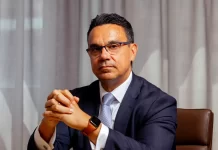
Solomon Islands Prime Minister Matthew Wale has announced the pledge during a GCF side event of the COP31 in Antalya, Turkey on Wednesday, and called on major economies to follow suit, stating:
“I call on all contributors and partners with the capacity to do so to support a timely, adequate and ambitious GCF free replenishment.”
Wale in partnership with GCF cordially invite GCF Director General to go and visit Solomon Islands next year to see firsthand the work that GCF has been doing with us.
He said GCF continues to deliver the same in the Pacific Islands region, in SIDS and in developing countries.
“Such partnerships demonstrate what is possible when climate finance is country driven, aligned with national priorities and focused on measurable results.
“A reformed and ambitious and full, fully replenished GCF3 will enable scaling of renewable energy and resilient infrastructure,” he said.
“It will expand community level adaptation that protects islands, livelihoods, food security and vulnerable populations.
“We therefore call for an ambitious and timely third, replenishment of the Green Climate Fund.
“A well capitalised and adequately resourced GCF is essential to sustaining and scaling up climate finance to effectively address growing climate threats and challenges and to implementing national climate commitments to achieve the climate and sustainable development goals,” he said.
PM Wale said an ambitious GCF3 will need to be guided by a call for climate finance to be grant based, demand driven, flexible and delivered through national budget systems.
“From our lessons Learned and experience, ECF3 can deliver better with the following pivots.
First, focus on country ownership and locally led solutions.
“One of the clearest lessons is that country ownership matters.
“Solutions are most effective when governments, communities, women, youth, traditional knowledge holders help in shaping priorities and implementation,” he said.
Second, use of national systems and delivery national scale program programmatic approach, responsive to localized priorities and reflecting the diversity of considerations.
“We know our issues and our systems are designed poor for that.
“Any form of scaling must be at country level, across sectors or across sub national levels to increase impact,” he said.
“To ensure climate finance follows vulnerability, the GCF and its accredited entities multilaterals it is important that there is an increased appreciation and use of Multidimensional Vulnerability Index as a tool to operationalize the special circumstances of SIDS in determining access to an allocation of resources and the terms of investments,” he said.
More so when GCF funds are mobilised with other funding sources in the same projects.
He said terms of GCF concessional funding must be the basis of terms for other funding sources as well.
“There is great need to move from the status quo when it comes to climate financing.
“Transformative fourthly, transformative investment in natural capital,” he said.
“Over 90% of the people in my country are First nations indigenous.
“The indigenous economy has sustained them for generations in the face of a changing climate.
“Their knowledge and affinity to nature is the biggest resilient resilience adaptive tool capacity.
“We need to recognise natural capital as an asset class around water, forest, biodiversity and regulatory services to contribute to long term resilience and sequestration of carbon dioxide,” he said.
The pledge will be reaffirmed at Thursday’s World Leaders Summit.