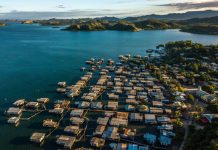


Pacific Island nations are seeking to mobilise US$500 million for a regional resilience fund to support communities threatened by rising sea levels and extreme weather, a senior Pacific climate envoy said Tuesday, calling for reforms to make international climate financing more accessible.
Speaking to Anadolu on the sidelines of the UN climate conference COP31 in Antalya, Ruel Yamuna, the COP31 Pacific Envoy for Climate Finance Access and Papua New Guinea’s Special Envoy for Climate and Environment, said capitalising the Pacific Resilience Facility (PRF) is among the region’s main priorities at the summit.
‘Our target for the PRF, the Pacific Resilience Facility, is US$500 million,” Yamuna said.
He acknowledged that the amount would not cover the region’s broader climate financing needs but described it as an important starting point for funding small, locally led projects and initiatives.
Yamuna said a pledging event was expected later this week, building on momentum from recent preparatory meetings in Fiji, where six additional pledges were made toward the facility’s capitalization.
The envoy stressed that access to climate financing remains a major challenge for Pacific island nations, despite their vulnerability to the impacts of global warming.
“The countries that are in the forefront do not have access to the funding resources that are supposed to be there helping those communities in the frontline,” he said.
Yamuna said small island governments often lack the technical capacity needed to prepare funding applications and develop projects that meet international financing requirements.
“We have small island economies, small governmental departments with limited capacity,” he said, explaining that some governments have just one or two technical officers responsible for multiple tasks.
Another major obstacle is accreditation, as only a limited number of local institutions across the Pacific are authorised to access international climate funds directly.
As a result, countries frequently depend on international organisations including the UN Development Programme, the UN Environment Programme and the World Bank to prepare and submit proposals.
Yamuna said developing funding proposals can take between 12 and 24 months, while the Green Climate Fund Secretariat has set a timeline of nine to 12 months for moving proposals from concept notes to full applications.
“In theory, it’s great — nine months cut off. But in practice, it’s a challenge,” he said.
He called for reforms to streamline funding procedures and ensure that climate finance reaches vulnerable communities more quickly.
Yamuna warned that delays in financing have serious consequences for Pacific communities already experiencing the effects of climate change.
“Climate change is not an abstract thing, or something that we are just talking about that will happen in 5 to 10 years. It’s already happening,” he said.
He pointed to rising sea levels, flooding of agricultural land and increasingly extreme weather patterns across Pacific island nations.
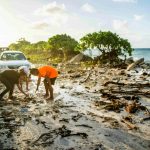
Some communities living on low-lying atolls are already seeking relocation and resettlement, he said.
“You have some who do not want to leave, but some they don’t have any choice because their land is low lying and it’s already submerged underwater,” Yamuna said.
He emphasised that protecting vulnerable communities requires financial support and technology transfer, citing land reclamation initiatives in Tuvalu as an example of adaptation efforts.
Beyond the resilience fund, Yamuna said Pacific nations are seeking progress on an Access to Finance Statement and Action Plan developed following preparatory climate meetings in Fiji and Tuvalu.
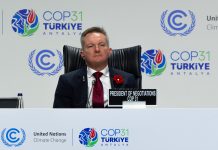
The initiative, announced by Australian Climate Change and Energy Minister Chris Bowen, aims to address longstanding barriers preventing vulnerable countries from accessing climate funding.
Yamuna said discussions were continuing ahead of an anticipated formal signing later this week.
“We are, as a region, looking forward to carrying out some of those reforms that are needed to ensure that finance is streamlined, is accessible and is affordable,” he said.
He also welcomed cooperation between Türkiye, Australia and Pacific island nations under the COP31 framework, describing it as an opportunity to bring greater international attention to the region’s climate challenges.
“I think it’s the first of its kind, where you have a partnership like Türkiye and Australia, including the Pacific, to progress some of these issues, very important issues,” he said.
Yamuna expressed appreciation for Turkish Environment, Urbanization and Climate Change Minister Murat Kurum and Australian Minister Chris Bowen, voicing hope that the summit would deliver concrete reforms benefiting vulnerable island communities.
“For us as a region, as the Pacific, we are proud and privileged to be standing on the shoulders of giants like Türkiye, Australia, to shine the spotlight on our region,” he said.