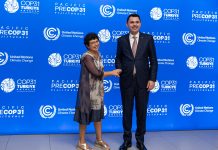


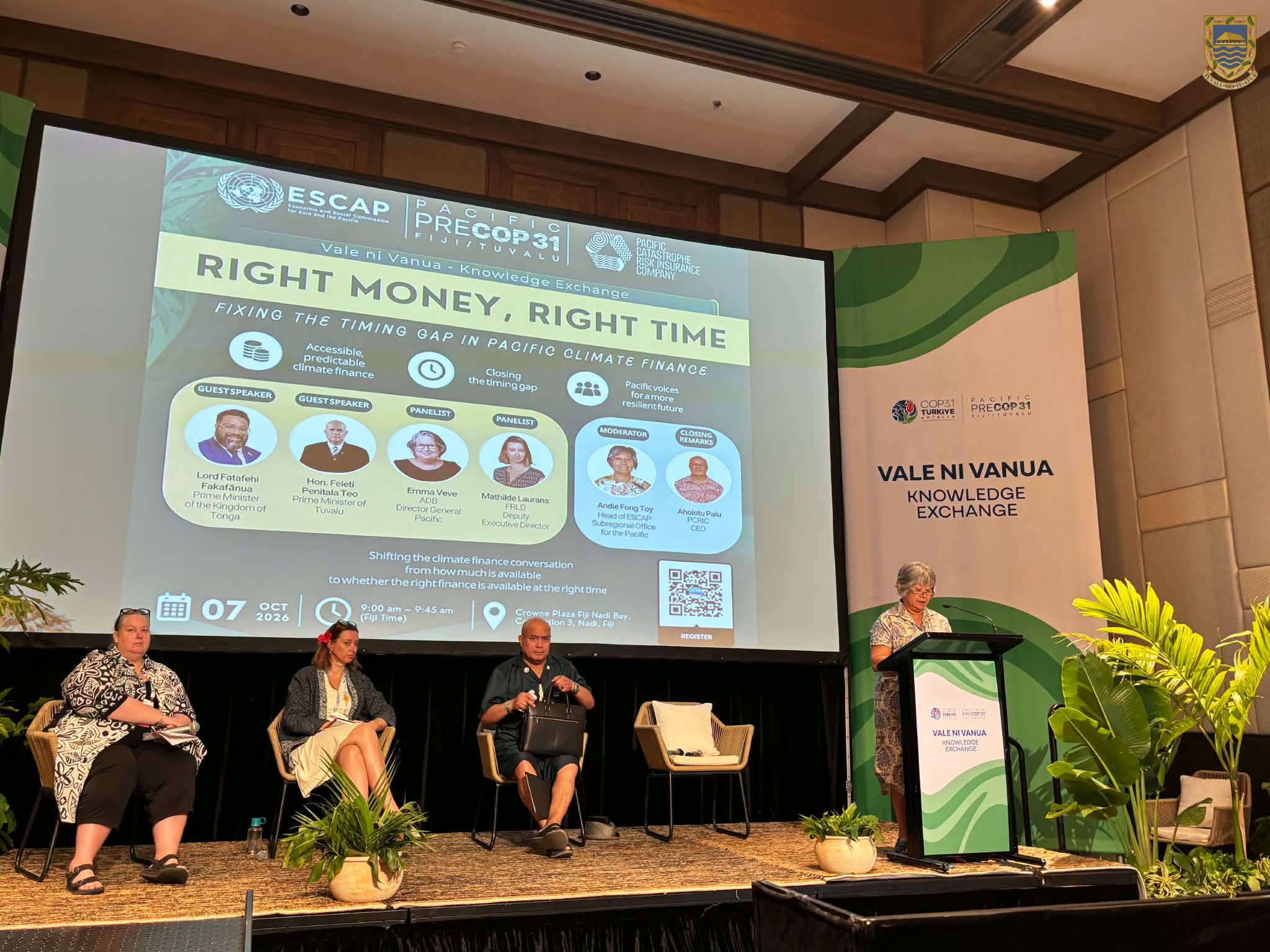
Tuvalu Prime Minister Feleti Teo has called for faster and more accessible climate and disaster financing for Pacific Island countries, warning that delays in funding can cost lives and undermine recovery.
Speaking at the “Right Money, Right Time – Fixing the Timing Gap in Pacific Climate Finance” side event at the Pacific Pre-COP31, Teo said Pacific countries needed financing that could be accessed quickly when disasters strike.
“Every minute lost without action is a minute lost from saving lives,” Teo said.
He highlighted Tuvalu’s efforts to strengthen disaster preparedness through regional mechanisms, including the Pacific Catastrophe Risk Insurance Company (PCRIC), its participation in the PCRIC Foundation and the introduction of a micro-parametric insurance product for high-tide events.
Teo said timely access to finance was critical for Tuvalu, where communities and infrastructure face growing risks from coastal flooding, king tides, sea-level rise and drought.
“Pre-arranged financing ensures the right money at the right time, saving lives and stabilizing recovery efforts,” he said.
Teo called for greater investment in regional institutions and insurance mechanisms designed around the realities of atoll states.
He also stressed the need for financing to address both sudden disasters and slow-onset climate impacts.
At a separate Pre-COP31 side event, “Weaving Gender & Health into Pacific Climate Action”, Teo said climate change was increasingly affecting food security, health, safety and the wellbeing of women and families.
He said climate impacts in Tuvalu were being felt through saltwater intrusion into pulaka pits, changes to nearshore fisheries, disruption to maternal health services and increased risks of violence against women and girls following disasters.
“For Tuvalu, a pulaka pit is a health infrastructure, so is a living reef,” Teo said.
He called for the development of a Pacific SIDS Climate, Health and Gender Implementation and Financing Roadmap, building on the Pacific Pact on Gender and Climate Action and the Belém Gender and Health Action Plans.
Teo urged international partners and climate finance institutions to invest in gender-responsive health services, care systems, protection from violence and other essential services affected by climate change.
“We will not accept a climate finance architecture that ignores the critical climate-induced loss and damage impacting the safety, health and fundamental rights of women, our children, and the most vulnerable,” he said.
Teo said climate action in Tuvalu and across the Pacific must go beyond protecting land and infrastructure to protecting people, their health, dignity and way of life.