
Barbados is calling for a major shift in how climate finance is delivered to small island states, warning that broad promises of more funding will not close the investment gap facing vulnerable economies.
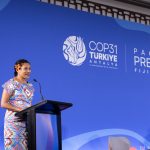
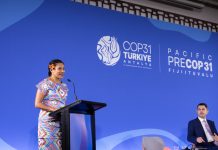
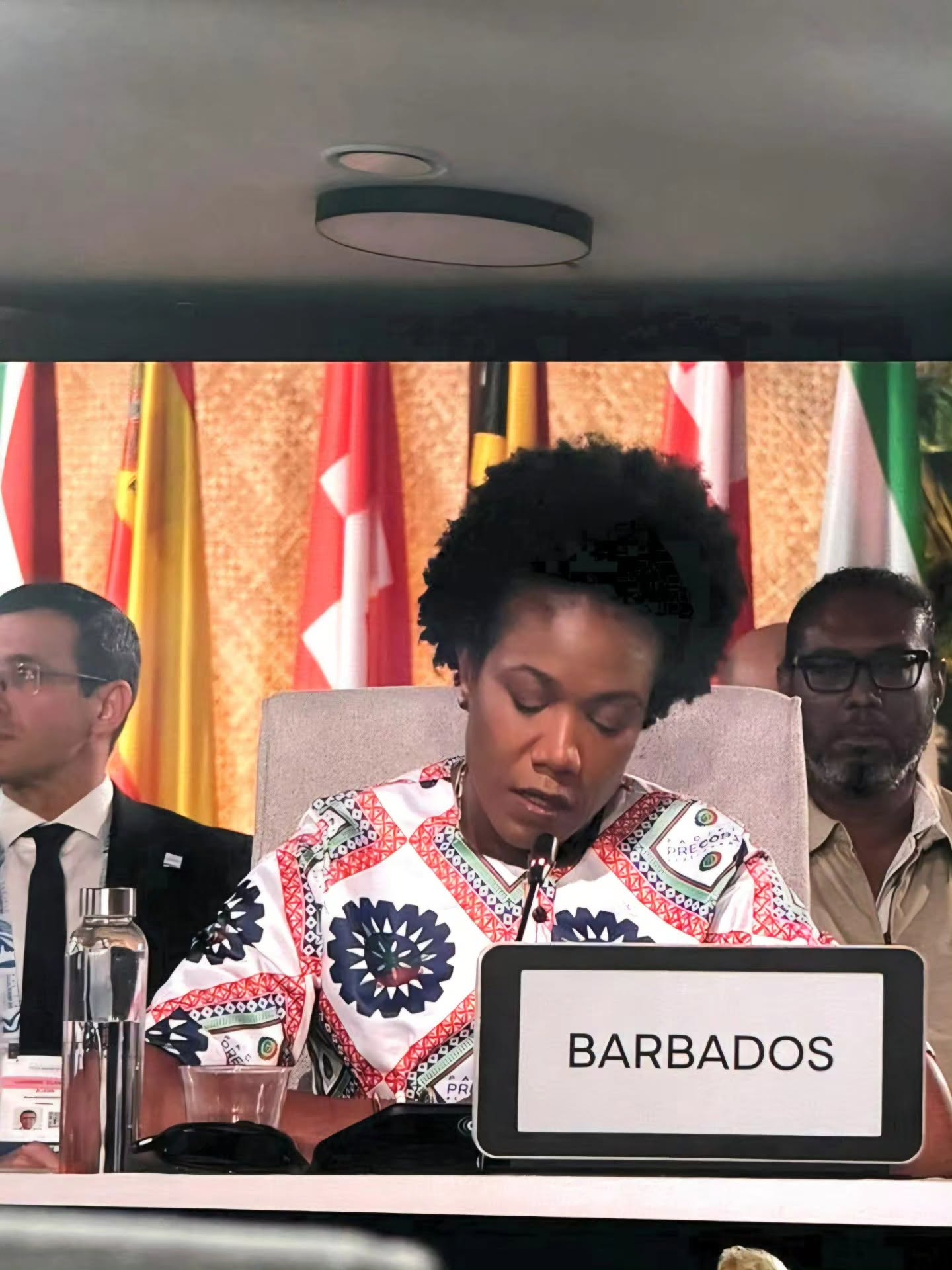
Barbados Minister for Economic Affairs and Planning Marsha Caddle told Pacific Pre-COP31 leaders in Fiji that climate vulnerability and economic development could no longer be treated as separate issues.
“People’s lives do not fall so neatly behind the lines we draw for our own convenience,” Caddle said.
She said small island states had spent years carrying debt accumulated largely through climate-related vulnerability and recovery while being denied adequate financing for development.
Caddle said she had seen the same challenges two decades ago when she worked on poverty reduction and economic security in the Caribbean.
“At that time Caribbean small islands were based on their GDP, attracting little financing for economic security, but had a debt overhang that constrained our investment in people.
“That debt accumulated largely by climate-related vulnerability and recovery, yet we were being told that climate was not development,” she said.
Caddle said the experience of Tuvalu over the past two days demonstrated why climate resilience, economic development and local ownership must be addressed together.
She highlighted Tuvalu’s engineering works, driven by local employment, expertise and ownership, as an example of solutions developed by small island states that could have wider global application.
“I hope that by the end of this project what we see is a Tuvalu-owned and operated company that is able to offer these services to other islands in other parts of the world,” she said.
Caddle said Barbados had also been working to develop practical financing solutions for small island states.
She recalled that at the 2021 Glasgow climate conference, Barbados, Caribbean countries and Pacific and other small island states highlighted an estimated US$7.8 billion annual financing gap through to 2035.
Since then, she said Barbados had advanced work with multilateral institutions on debt pause clauses, debt swaps, debt sustainability frameworks and long-term financing for climate-vulnerable sectors.
“These are the kinds of public and private financing measures and instruments for mitigation and for adaptation that we have seen work, but that still requires scaling up at the multilateral and bilateral levels,” Caddle said.
She also pointed to financing approaches that free up resources for marine management and ocean governance, alongside investment in health, water and development.
Caddle said natural capital valuation was another important tool for small island states to demonstrate the economic value of their oceans and natural assets.
As Pacific leaders prepare to endorse the Taku Pakasoa Declaration ahead of COP31 in Türkiye, Caddle urged countries to maintain pressure for greater climate finance.
“We need to maintain the ambition on climate finance.
“Not simply by general calls for more, but by remaining specific in the kinds of public and private financing measures and instruments for mitigation and for adaptation that we have seen work,” she said.
Caddle said small island states had already demonstrated that they could develop solutions to their own challenges.
“Small island states have shown the way. The world must now take our hands and walk alongside,” she said.