


UN Climate Change Executive Secretary Simon Stiell has warned that rising temperatures are creating a new and potentially deadly threat to pregnant women, newborns and health systems, with the poorest and most vulnerable communities facing the greatest risks.
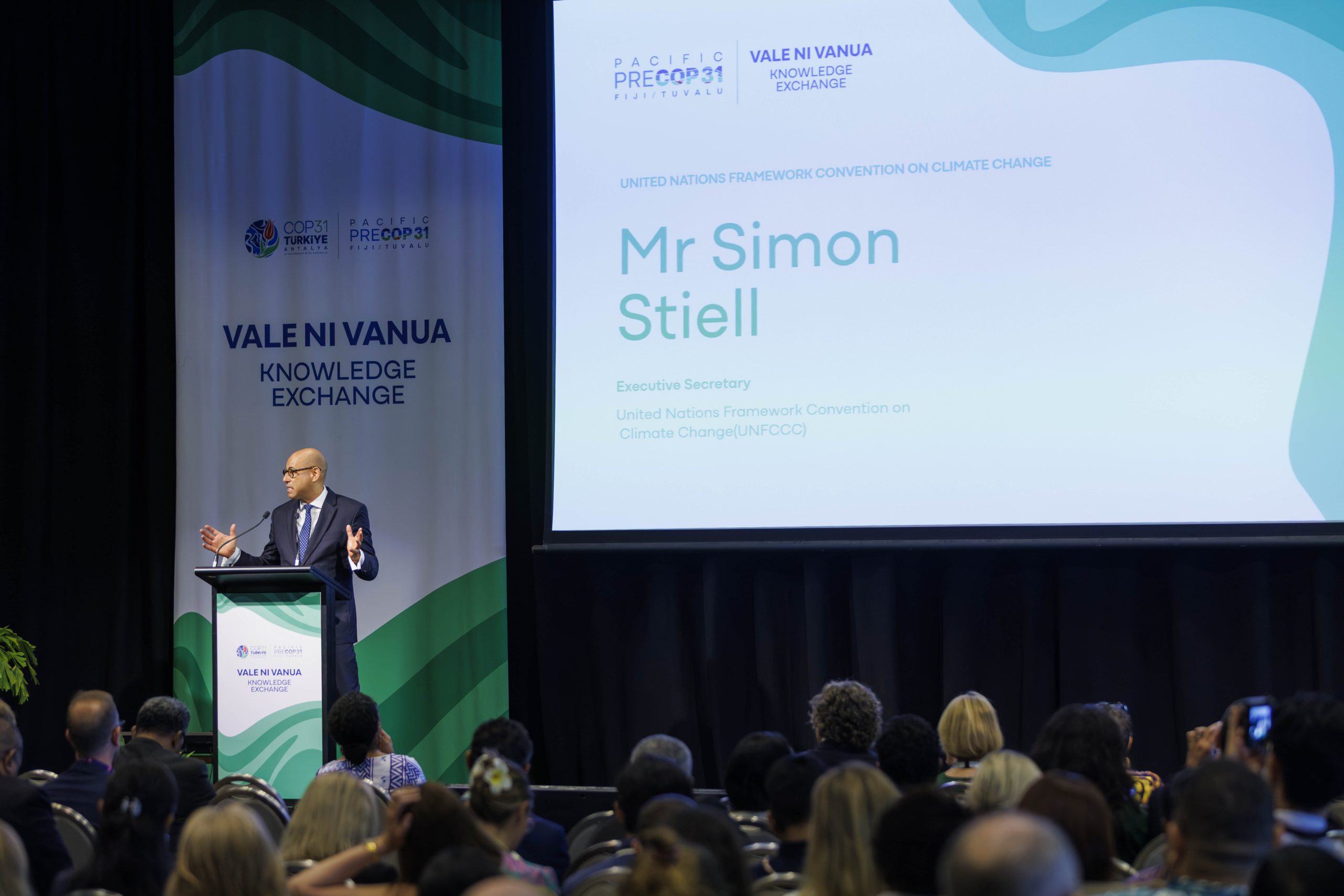
Speaking at a Wellcome event on the first day of the official Pre-COP31 ministerial meeting in Fiji on Monday, Stiell said extreme heat was increasingly affecting pregnancy and birth and warned that climate change was deepening existing inequalities in access to safe healthcare.
“The climate policy process is measured in degrees, targets and finance. But a deep test of climate action is far, far simpler: whether we protect life at its most fragile,” Stiell said.
He said the world was operating in a “new, hotter world” as countries continued to burn planet-heating fossil fuels, with the past 11 years breaking temperature records.
“Rising temperatures mean rising danger in pregnancy,” he said.
Stiell cited new data from a Wellcome-commissioned survey of maternal health professionals in five countries across five continents.
The survey found 73 percent of health professionals reported that heat-related cases or complications had increased over the past five years, while 81 percent were concerned or very concerned that extreme heat would increasingly threaten maternal, fetal and newborn health without further action.
Almost all respondents had cared for a pregnant woman, 98 percent, or a baby, 99 percent, whose health they believed had been affected by extreme heat.
Stiell said the figures represented more than statistics, pointing to pregnant women struggling to reach clinics in extreme heat, health workers operating in unsafe conditions and newborns requiring specialist care that may not be available in vulnerable countries.
“The picture is clear and very disturbing: as extreme heat worsens, pregnancy and birth are now a new faultline in the global climate crisis, and one which is potentially fatal,” he said.
Stiell warned that the impacts would not be felt equally.
“Someone working outdoors, living in unregulated housing, travelling far to a clinic, or relying on facilities without water, power or cooling, cannot be protected by advice alone,” he said.
“‘Staying cool’ is simply not an option when there is no cool place to go.”
He said climate change could widen existing inequalities in maternal healthcare, with geography, income and access to health services already influencing whether women can have safe pregnancies and births.
Stiell also highlighted the particular vulnerability of Pacific island countries, which have contributed little to global emissions but face some of the most severe climate impacts.
“For small islands – and other nations who did practically nothing to create this climate crisis – it underscores the need for support and support at scale,” he said.
He called for the commitment to triple adaptation finance agreed at COP30 in Belém to be delivered and urged countries and the wider financial system to mobilise US$1.3 trillion annually for developing countries.
The funding, he said, was needed to build resilience and accelerate the transition to clean, affordable and secure energy, which is also critical to reliable healthcare.
Stiell outlined three priorities for protecting maternal and newborn health from climate impacts.
The first is to include pregnancy and newborn care in national adaptation, heat and health plans.
“What is not named in a plan is too often not funded, not measured and not protected,” he said.
He called for maternal and newborn health to be incorporated into national adaptation and heat action plans, supported by resilient clinics, reliable water and electricity and trained health workers.
The second priority is turning evidence into practical protection, including clearer guidance, health worker training, heat alerts and facilities equipped with water, power and other essential services before extreme events occur.
The third is improving data collection and analysis to identify where risks are increasing and determine which interventions are effective.
“Harm that is not counted is too easily ignored,” Stiell said.
He said stronger data would help identify communities facing the greatest exposure and guide climate finance and technology support.
Stiell welcomed the Belém Gender Action Plan and the Belém Adaptation Indicators as tools that could strengthen gender-responsive climate action, improve data and finance, and track progress towards climate-resilient health services.
He also commended the Türkiye COP31 Presidency and Australia’s President of Negotiations for making health a key priority at COP31, building on Brazil’s work at COP30.
Stiell said the issue should be treated as a shared responsibility.
“Across every culture, the arrival of a child is precious.
“A changing climate must never be accepted as a reason pregnancy and birth become less safe.
“A newborn’s healthy start must never depend on a family’s ability to escape the heat,” he said.
He said action on climate and maternal health was urgent and required governments, health systems, climate negotiators and development partners to work together.