
Pacific disability advocates are demanding that persons with disabilities have a direct role in climate decision-making and access to climate finance, warning that current systems are leaving some of the region’s most vulnerable communities behind.
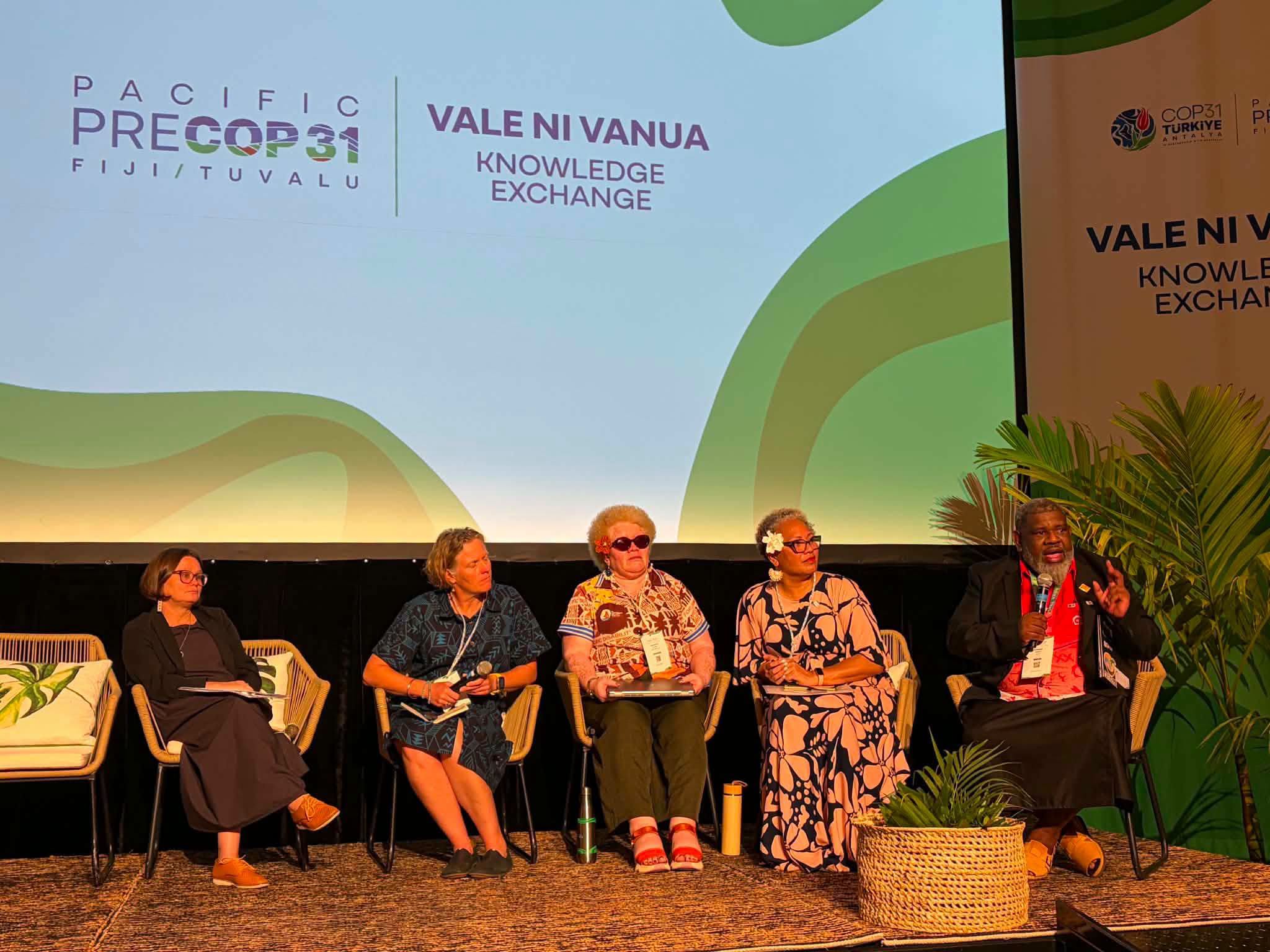
Speaking at the Fiji Pre-COP31 Stakeholder Programme in Nadi, Pacific Disability Forum representative Sainimili Tawake said climate change was already threatening the safety, dignity and survival of persons with disabilities across the Pacific.
“For persons with disabilities across the Pacific, the climate crisis is already stripping away safety, dignity, and the very conditions needed to survive,” Tawake said.
She said rising sea levels, stronger cyclones, water insecurity and damage to critical infrastructure were creating immediate risks, but the disproportionate impact on persons with disabilities was largely the result of exclusion from planning and investment.
“The disproportionate risks faced by persons with disabilities are not natural inevitabilities, nor are they caused by impairment
“They are created and intensified by inaccessible infrastructure, exclusionary evacuation planning, and structural neglect,” she said.
Tawake said there could be no climate justice without disability justice.
She highlighted experiences across Tuvalu, Kiribati and Fiji, where inaccessible evacuation centres, warning systems, water infrastructure and temporary education arrangements were putting persons with disabilities at greater risk during climate emergencies.
In Tuvalu, she said evacuation centres often lacked ramps and accessible sanitation, creating physical barriers for people with mobility impairments.
Deaf and hard-of-hearing people could also miss emergency warnings when systems relied mainly on audible sirens, while blind and visually impaired people faced additional risks when disaster-damaged environments changed rapidly without accessible information.
In Kiribati, saltwater intrusion and growing pressure on freshwater supplies were creating additional barriers for people with mobility impairments when water collection points were moved or centralised.
Tawake said recent floods and cyclones in Fiji had also exposed gaps in education support for children with disabilities when schools and community facilities were damaged.
“These are not isolated logistical glitches; they are systemic erasures,” she said.
Tawake called for disability inclusion to be built directly into the operation of the Fund for Responding to Loss and Damage.
She said disasters could cause losses beyond homes and income, including the destruction of assistive devices, disruption of personal support networks, loss of medication and interruptions to rehabilitation services.
The Loss and Damage Fund should therefore establish a dedicated mechanism for disability-inclusive reconstruction and recovery, she said.
“Loss and damage assessments must account for the specific socioeconomic and physical costs incurred by persons with disabilities,” Tawake said.
She also called for climate finance institutions, including the Green Climate Fund and Adaptation Fund, to require dedicated funding for universal accessibility, reasonable accommodation, accessible digital communications and assistive technologies.
“Labeling without budgeting is tokenism,” she said.
Tawake said complex international funding requirements were also preventing smaller national and community-based Organisations of Persons with Disabilities from accessing climate finance.
She called for simplified small-grant and direct-access mechanisms that would allow local disability organisations to design and manage climate projects themselves.
“If persons with disabilities cannot access, influence, and equitably benefit from climate capital, that finance is complicit in perpetuating inequality,” she said.
Tawake said persons with disabilities should not be treated as passive recipients of climate assistance.
“We are not passive beneficiaries awaiting your charity. We are rights-holders, knowledge-holders, and the rightful architects of our own resilience,” she said.
She urged governments and negotiators heading into Pre-COP31 and COP31 to ensure persons with disabilities and their representative organisations were involved in climate policy, financing, implementation, monitoring and accountability.
“Do not speak of inclusion while persons with disabilities remain outside the rooms where climate decisions are made,” Tawake said.
“The mandate from our communities is clear, unified, and absolute: Nothing About Us Without Us.”
She said every climate response must ensure that persons with disabilities were included in decisions that directly affected their survival and resilience.
“Every person on board. Every voice heard. Every right protected,” said Tawake.