
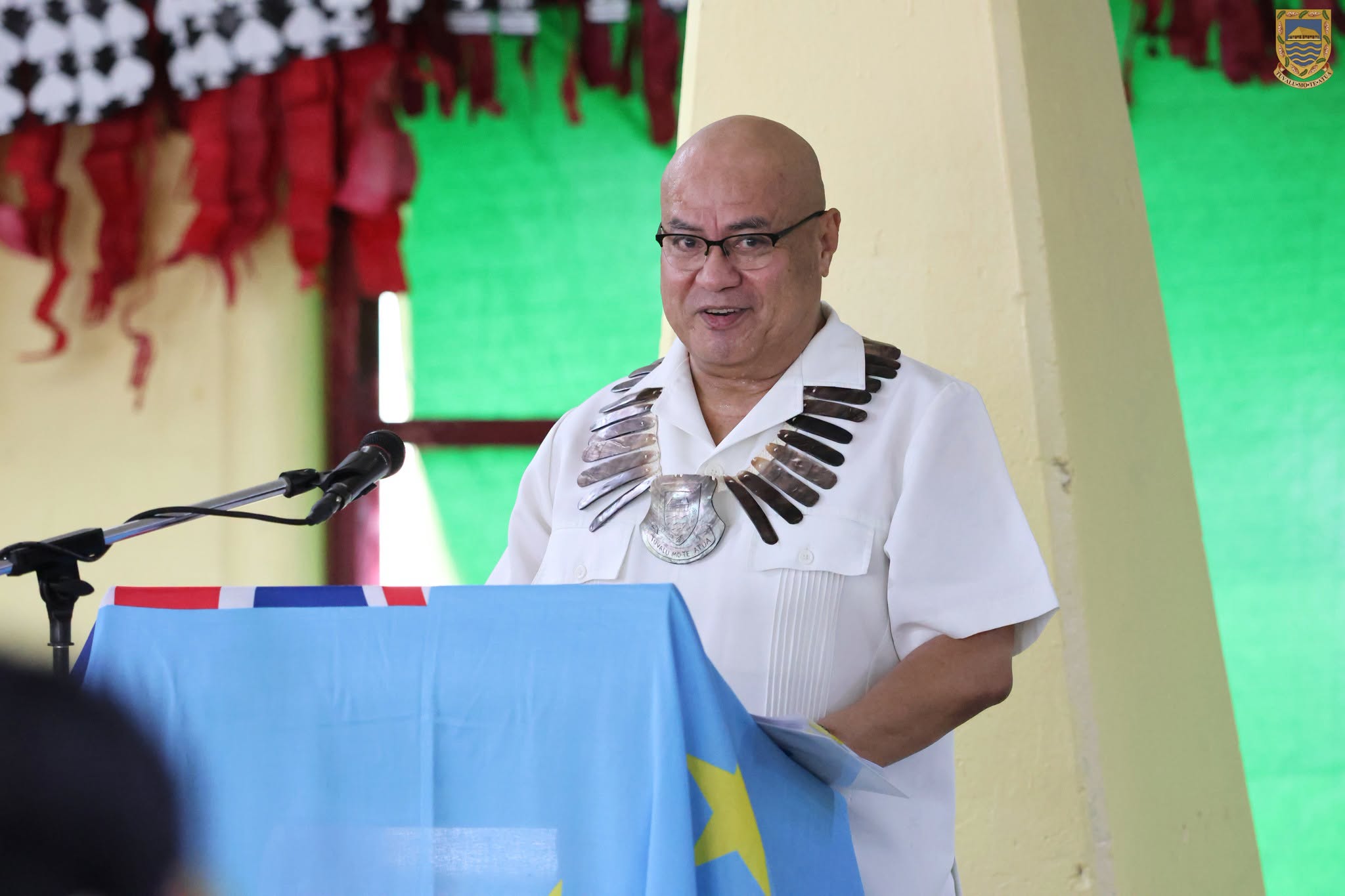
Tuvalu Prime Minister Feleti Teo says the Government must move beyond short-term assistance and build an economy that can withstand fuel price shocks, supply disruptions and the country’s dependence on imports.
Delivering his 48th Independence Anniversary address last week, Teo said global fuel price increases and disruptions to international supply chains had pushed up the cost of essential goods and services in Tuvalu.
The Government responded with a High Cost of Living Support Scheme, providing assistance to low-income households.
Teo said about 1,099 households and more than 5,858 beneficiaries received support, with payments reaching $290,000 (US$201,000) in June.
The Government has extended the scheme while pursuing longer-term measures to reduce fuel costs and protect consumers.
But Teo said financial assistance could not address the underlying economic vulnerabilities.
“Government recognises that the assistance alone is not enough, and it must continue building an economy that creates opportunities and is better able to withstand external shocks,” he said.
Teo said the Government had taken steps to create a clearer environment for investment, including Parliament’s passage of a new Foreign Direct Investment Act.
The Government has also developed Tuvalu’s first National Investment Policy and is working on new Fair Pricing and Consumer Protection legislation to strengthen safeguards for consumers.
Fisheries remain central to the economy, with the Government looking at ways to increase the value generated from the country’s fisheries resources.
The Government is also supporting climate-resilient agriculture, home gardening and poultry production to strengthen food security and reduce dependence on imported food.
Teo highlighted the first FENUA OLA export shipment, which left Tuvalu in June.
He said it was the country’s first export shipment since 2004.
“While modest in scale, its significance is much greater,” Teo said.
“It demonstrates that Tuvalu can produce, trade and create new opportunities for our people.”
The Government is also expanding labour-mobility opportunities and supporting tourism and accommodation through initiatives including the Fatama Homestay loan scheme.
However, Teo said three major structural challenges continued to constrain Tuvalu’s sustainable development.
The first was the country’s exposure to external economic shocks.
These include volatile fuel prices, heavy dependence on imported goods, fluctuating fisheries revenues and a narrow domestic revenue base.
Teo said the Government would continue providing targeted assistance where necessary while placing greater emphasis on sustainable long-term solutions.
The second challenge was maintaining infrastructure after it was built.
Teo highlighted the power outages experienced earlier this year as a warning that infrastructure investment must include long-term maintenance.
“The power outages experienced earlier this year is a stern reminder that constructing infrastructure is the easier part of development, ensuring their continuous functionality is the greater challenge,” he said.
Teo said planned maintenance and asset management systems for critical infrastructure must be established and properly implemented.
The third challenge was a shortage of human capacity, which he said continued to limit the pace of development.
The Government must therefore continue investing in scholarships, technical and professional training, workforce development and public service reform.
Teo said strengthening human capacity would be critical to ensuring Tuvalu could manage its development priorities and reduce its vulnerability to external shocks.
The economic agenda forms part of the Government’s broader effort to build a more resilient Tuvalu, alongside investment in climate adaptation, energy security, connectivity and human development.