

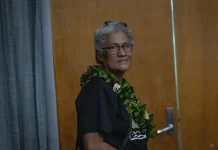
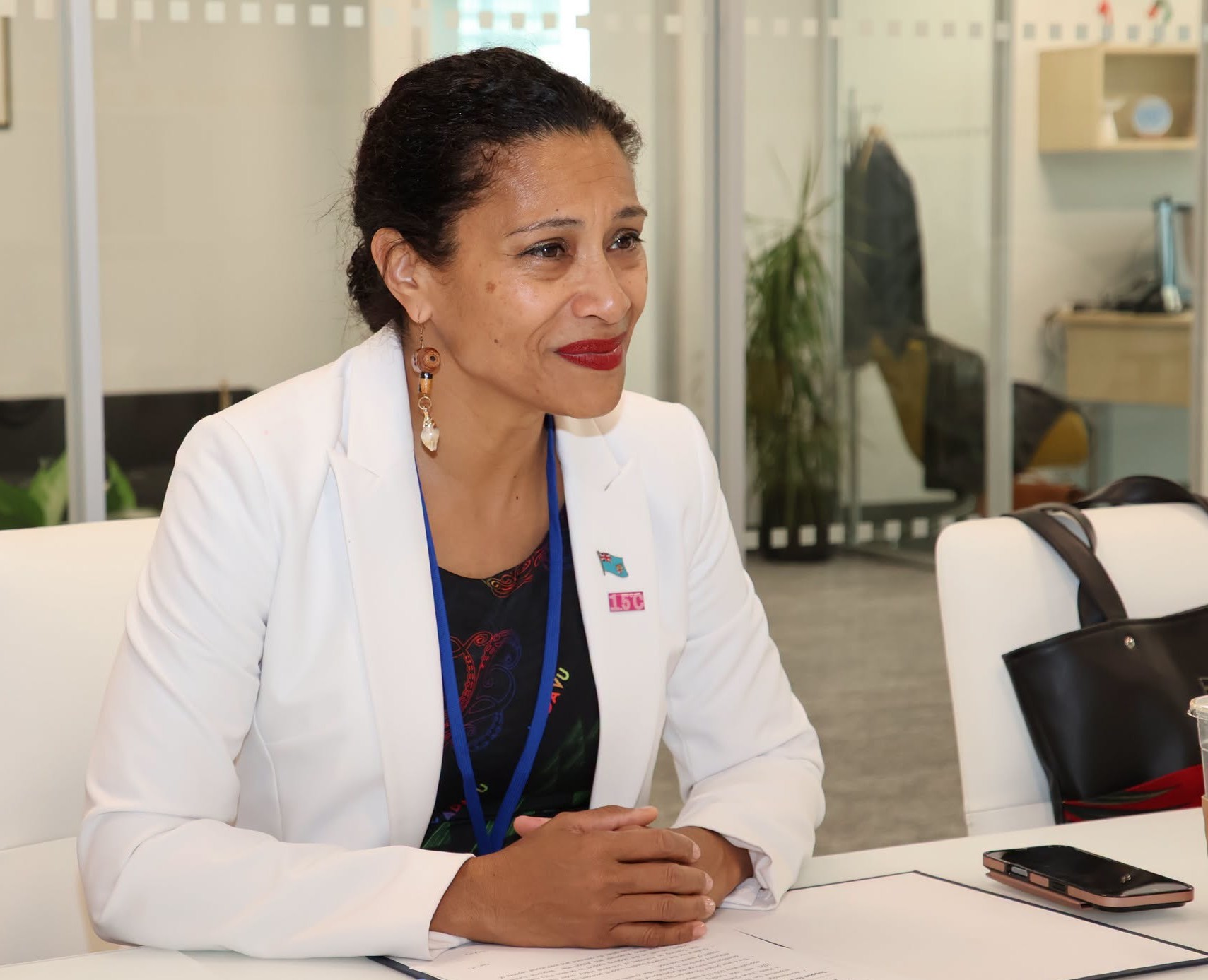
Fiji’s Minister for Information, Climate Change and Environment, Lynda Tabuya says the Pacific must be at the centre of global climate decision-making as the region prepares for Pre-COP31 and the 31st United Nations Climate Change Conference (COP31).
Speaking during a media briefing convened by the Pacific Islands Forum Secretariat (PIFS) and the Secretariat of the Pacific Regional Environment Programme (SPREP), Tabuya outlined three key messages the Pacific will take into the Pre-COP31 process.
“The Pacific must be at the centre and not at the margins of global climate decision-making,” Tabuya said.
Fiji, Australia and Tuvalu are working together in the lead-up to COP31, with Fiji hosting Pre-COP31 and Tuvalu hosting a leaders’ segment as part of the Pacific-led preparations.
Tabuya said the Pacific had a significant opportunity to put its priorities and lived experiences at the forefront of global climate discussions.
“We are very mindful of the fact that not every Pacific country may be aptly represented at COP31 in Turkey. So this is our moment, this is our moment as the Pacific to shine and to give our powerful messages to the world,” she said.
Tabuya said Pacific climate ambition must be developed alongside the communities most affected by climate change.
“Our pre-COP has been designed in such a way where we do hear from our communities, and they will be represented as well.”
She highlighted the Pacific’s contribution to global climate action, including its role in securing the 1.5-degree Celsius target in the Paris Agreement and establishing the loss and damage fund at COP27.
The Pacific Small Island Developing States (PSIDS) Chair also emphasised the importance of the ocean and the blue economy to the region’s climate response.
“We have a major climate opportunity in terms of the blue economy, looking at scaling investment in clean shipping, renewables, fisheries and conservation.”
Tabuya said Pre-COP31 would seek to ensure the connection between oceans and climate change is reflected in the negotiations leading into COP31.
“In pre-COP we will ensure that the ocean climate nexus is fully integrated into our negotiation tracks as we head to COP31,” she said.
The second key message, she said, was that the Pacific is a “legitimate and unifying voice” on climate protection.
“We know climate is the greatest existential threat to the Pacific, but our oceans are central to this climate solution, and climate action cannot succeed without that being front and centre,” she said.
Tabuya pointed to Tuvalu as an example of the region’s frontline climate realities, saying sea levels there had risen by 21 centimetres over 30 years.
She said Pacific-led science, Indigenous knowledge and stewardship were important in developing climate and nature solutions.
“We have an opportunity here in pre-COP to anchor global climate diplomacy in our Pacific reality,” Tabuya said.
“By hosting these negotiations, we ensure that COP31 is defined by the Pacific lived experiences and local expertise.”
Tabuya said the third major priority for the Pacific was improving access to climate finance that is faster, fairer and more accessible for our communities.
“Our countries need finance that is accessible, predictable and fit for purpose, especially for adaptation, resilience and loss and damage,” she said.
She said the Pacific would use Pre-COP31 to outline the financial needs of communities and push for greater support for the Pacific Resilience Facility (PRF).
“We will be calling for more pledges at pre-COP next week,” she said.
The PRF has a target of US$500 million, with Tabuya saying contributions were currently close to US$200 million.
“In terms of our target, I think we’re just close to US$200 million. So we will be calling for support from that,” she said.
Tabuya said Pacific countries, including Fiji, would also need to contribute to the facility.
“I believe the point is that we are taking charge of our own destiny, so to speak,” she said.
“We need to be able to show that we can do this ourselves as well, especially as we are trying to help our communities directly for easier access to finance.”
She said the Pacific was calling both for greater access to existing climate finance and an increase in the overall pool of available funding.
“The call is for both,” Tabuya said.
She expressed concern over the continued reliance on concessional loans and said the Pacific was advocating for grant-based financing.
Tabuya said climate investments in Small Island Developing States often focused on public goods that may not produce conventional financial returns, but were essential to communities.
“For us, the investment is really in public goods that may not necessarily have the returns, but it is an investment in our communities and our people,” she said.
She said greater grant-based financing was needed to help Pacific communities respond more quickly to climate impacts, including loss and damage.
Tabuya also acknowledged the support of development partners, including the United Nations Development Programme, PIFS and SPREP, in helping Pacific countries develop proposals and “bankable projects” to improve access to climate finance.
With Pre-COP31 approaching, Tabuya said the Pacific’s focus would be on ensuring its climate realities, ocean priorities and financing needs are reflected in the global climate negotiations.
“COP31 is an opportunity to turn commitment into capital so that our finance reaches the front line,” she said.