

Fiji has called for climate finance to move from commitments to implementation, warning that Pacific island countries need funding at the scale, speed and terms required to protect their water systems, oceans and communities.
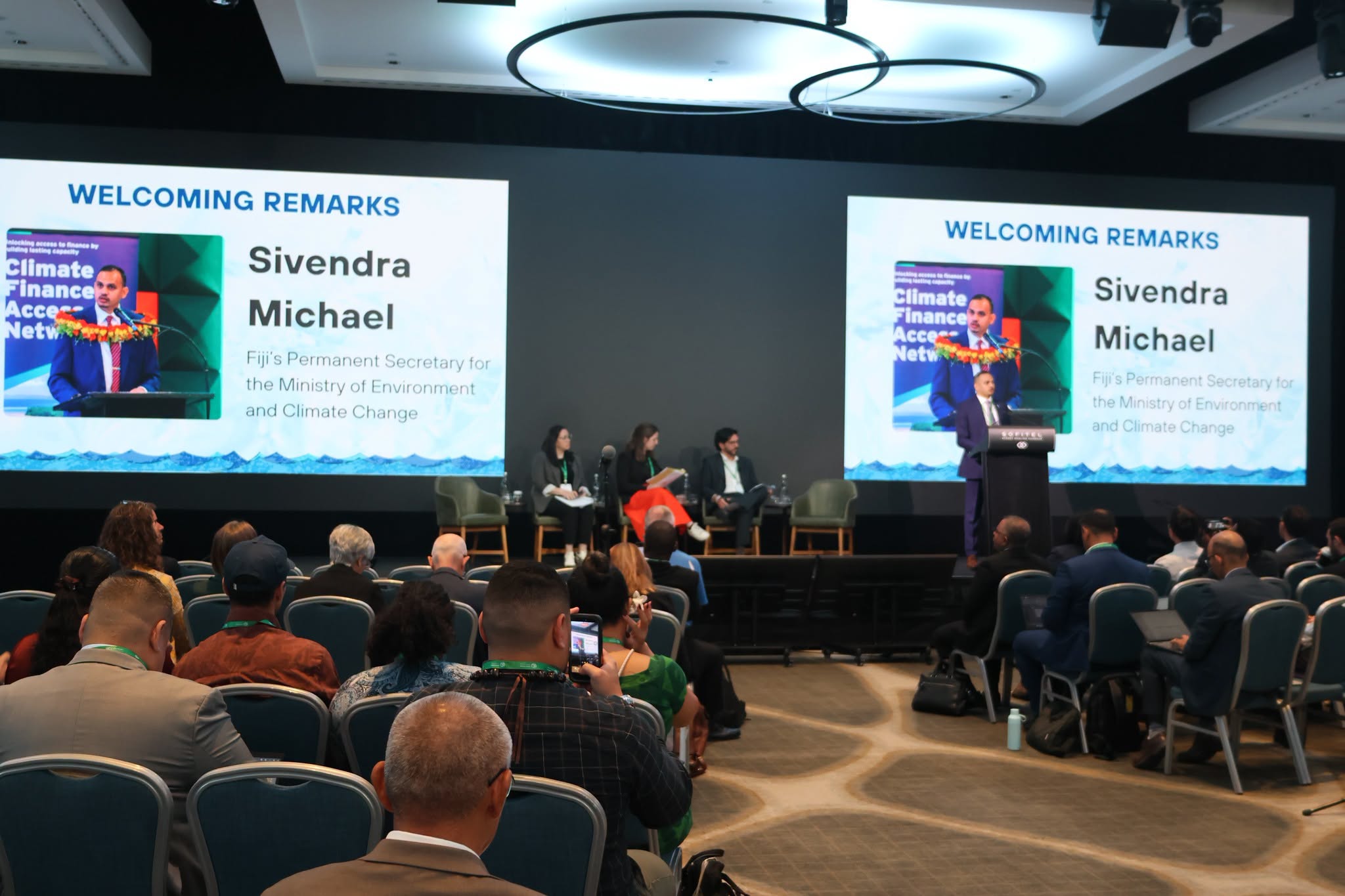
Fiji’s Permanent Secretary for Environment and Climate Change, Dr Sivendra Michael, made the call while opening the 2026 Standing Committee on Finance Forum, co-hosted by Fiji and the Pacific under the theme “Financing Climate Action for Water Systems and the Ocean.” in Sydney.
“For Pacific Small Island Developing States, the focus of this forum and our conversations this week could not be more urgent or timely,” Michael said.
He said the ocean was central to the lives, economies, food systems, cultures and national security of Pacific Small Island Developing States (SIDS), while freshwater systems were closely connected to the health of the ocean.
Across the Blue Pacific, countries and territories collectively steward about 28 million square kilometres of ocean, making the region one of the world’s major ocean assets.
Dr Michael said Pacific SIDS remained among the countries most exposed to climate impacts despite their role as stewards of these global assets.
They also continue to face barriers to accessing climate finance at the scale, speed and terms needed for adaptation and ocean protection.
But Dr Michael said Pacific countries should not be defined by their vulnerability.
“The Small Island Developing States resist being defined by our vulnerability. We come with experience of proven solutions, leadership, and a call to increase collaboration and partnership,” he said.
He said ocean priorities were already incorporated into SIDS Nationally Determined Contributions, including blue carbon ecosystems, sustainable fisheries, resilient coastal infrastructure and ocean renewable energy.
Water security was also a major priority, with 90 percent of SIDS NDCs identifying freshwater scarcity as a concern and outlining commitments to address it.
“The challenge before us, therefore, is no longer what needs to be done – it is how we finance implementation at scale and at pace,” Dr Michael said.
He said the forum should focus on practical ways to mobilise and deliver finance rather than simply identifying existing financing gaps.
“This Forum must help us move beyond diagnosing financing gaps to defining the means to mobilise, invest, and deliver outcomes,” Dr Michael said.
He called for stronger links between country and community priorities and public finance, multilateral climate funds, development institutions, philanthropy and responsible private capital.
Dr Michael said financing approaches also needed to recognise the links between watersheds, communities, coastlines, reefs and oceans.
“Watersheds, communities, coastlines, reefs and the ocean are part of one unified system.
“Financing models must match this reality through integrated water-resource and ridge-to-reef approaches,” he said
Dr Michael stressed regional initiatives including Unlocking Blue Pacific Prosperity, the Pacific One-Maritime Framework, the Pacific Blue Shipping Partnership and Weather Ready Pacific as examples of efforts that recognise the need for interconnected investments.
He also highlighted blue bonds, conservation trust funds, blended finance and parametric insurance as financial tools that could help deliver climate action.
Dr Michael said financing needed to support broader outcomes, including economic resilience, food and water security, resilient livelihoods and protection of global public goods.
He said the Pacific’s priorities had become more urgent as countries looked towards the pre-COP31 and COP31 meetings.
Dr Michael said the upcoming COP would take place against a backdrop of a strengthening Super El Niño across the Pacific and rising global temperatures.
“Preventing the scale and duration of overshoot and delivering the 1.5-degree temperature goal is mission critical,” he said.
Dr Michael said El Niño also demonstrated the close relationship between the ocean and climate.
He warned that the ocean’s capacity to absorb heat and carbon and protect communities from the full impacts of climate change had limits.
“The ocean’s role as a climate regulator, absorbing heat and carbon and buffering us from full exposure to the harm wrought on our climate system has its limits,” he said.
Dr Michael said recognising those limits should drive greater action to protect oceans, freshwater systems and Pacific livelihoods.
He said the finance forum could help build momentum towards the pre-COP31 and COP31 by identifying approaches that work, determining what could be scaled up and establishing the partnerships needed to finance implementation.
The Alliance of Small Island States (AOSIS) has called for the forum to generate momentum for increased finance for climate action focused on oceans and freshwater, recognising the global benefits of such investment.
Dr Michael said the Pacific’s position ahead of the climate negotiations was straightforward.
“The leadership exists. The solutions exist. The investment opportunities exist.
“What we need now is finance at the scale, speed and on the terms required to deliver results,” he said.