Commonwealth leaders have committed to strengthening climate finance, protecting Pacific maritime boundaries and expanding trade and investment, as they called for urgent action to address climate change and growing economic pressures on vulnerable countries.
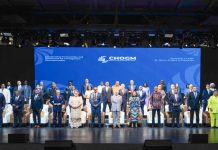
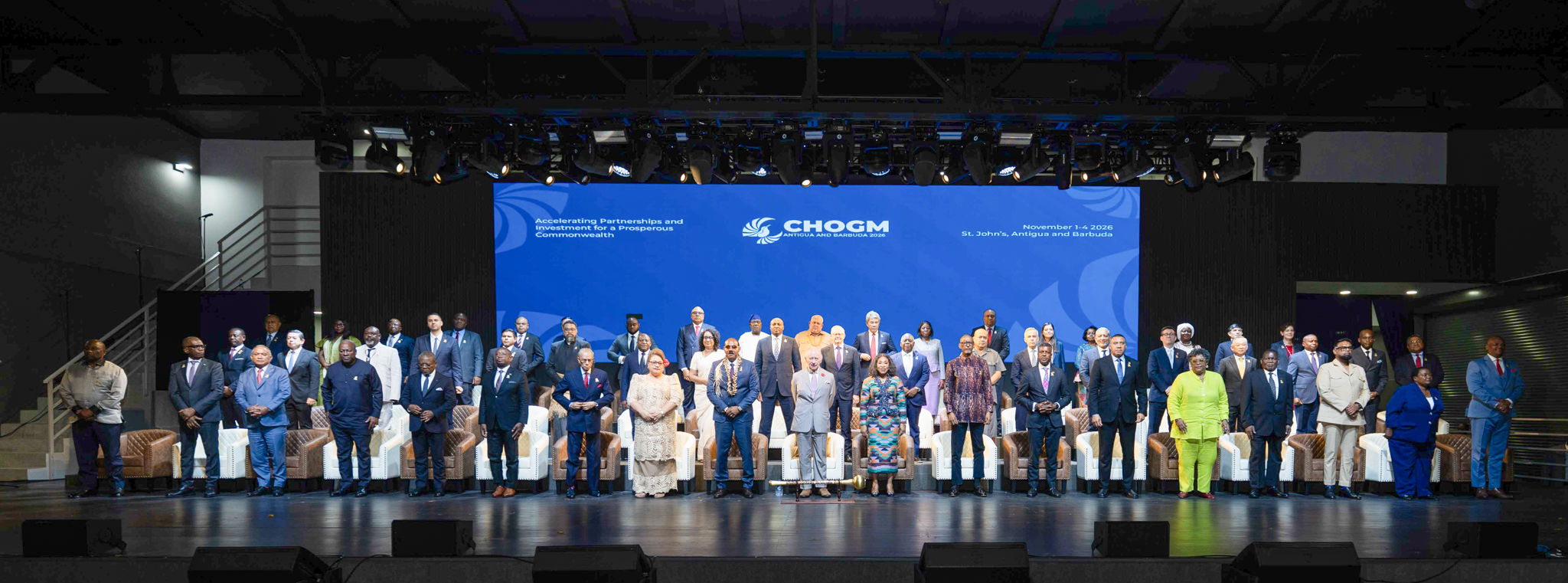
The commitments are outlined in the 2026 Commonwealth Heads of Government Meeting (CHOGM) Communiqué, adopted at the conclusion of the four-day summit in St John’s, Antigua and Barbuda, on 4 November.
The communiqué, agreed by leaders of the 56-member Commonwealth, recognises the growing challenges facing small island developing states (SIDS), including climate change, limited access to finance, economic uncertainty and vulnerability to external shocks.
Leaders reaffirmed their commitment to the Paris Agreement and the goal of limiting global warming to 1.5 degrees Celsius, warning that current emissions trajectories remain significantly off track.
They urged Commonwealth members to submit ambitious, economy-wide national climate plans aligned with the 1.5-degree target and called for a balance between adaptation and mitigation in climate finance.
The leaders also welcomed the International Court of Justice’s July 2025 advisory opinion on states’ obligations in respect of climate change, describing it as an authoritative contribution to clarifying existing international law.
With Australia and Pacific countries preparing for COP31, the communiqué called for stronger Commonwealth coordination on climate negotiations, improved access to climate finance and equitable approaches to loss and damage.
The leaders specifically welcomed the Pacific Resilience Facility (PRF), the Antigua and Barbuda Agenda for SIDS and the Bridgetown Initiative as important platforms for improving development and climate financing.
They also called for reforms to debt sustainability frameworks to account for climate vulnerability, including the use of climate-linked debt instruments and debt-pause clauses to protect government finances during disasters.
On ocean governance, Commonwealth leaders welcomed the Pacific Islands Forum’s Blue Pacific Ocean of Peace Declaration, recognising its contribution to a peaceful and cooperative regional order.
They reaffirmed their commitment to working with Pacific countries to protect maritime zones, address climate-related sea-level rise and advance sustainable ocean-based development.
Importantly, the communiqué reaffirmed that maritime zones established and notified under the United Nations Convention on the Law of the Sea (UNCLOS) should continue to apply without reduction, notwithstanding physical changes caused by climate-related sea-level rise.
Leaders also welcomed the entry into force of the Biodiversity Beyond National Jurisdiction (BBNJ) Agreement and called for its effective implementation, including marine protected areas, environmental impact assessments and the fair sharing of benefits from marine genetic resources.
On economic cooperation, the Commonwealth leaders committed to removing trade barriers, strengthening supply chains and increasing investment across member countries.
They called for practical measures to increase intra-Commonwealth trade, improve market access and support small businesses, particularly women-owned and youth-led enterprises.
The communiqué also welcomed the launch of the Commonwealth Trade Portal to improve access to information on products, services and business opportunities.
Leaders recognised that small island developing states, least developed countries and landlocked developing countries remain disproportionately affected by global economic uncertainty, limited capacity and disruptions to trade and investment.
They called for greater investment in climate-resilient infrastructure, renewable energy, sustainable tourism, the blue economy, water and food security and digital transformation.
The communiqué also addressed the growing digital divide, calling for affordable digital infrastructure, improved access to technology and stronger safeguards around artificial intelligence.
Leaders urged members to develop ethical, inclusive and safe AI governance frameworks that protect human rights and personal data while ensuring developing countries, particularly small island states, can participate in the global AI economy.
On democracy and governance, the leaders reaffirmed their commitment to the Commonwealth Charter, the rule of law, human rights, freedom of expression and accountable institutions.
They expressed concern over shrinking civic and political space, restrictions on independent civil society organisations and human rights defenders, and threats against journalists.
The communiqué recalled the 2024 Commonwealth Principles on Freedom of Expression and the Role of the Media in Good Governance and pledged continued implementation.
It also recognised the Nadi Declaration on Democratic Resilience and Participation as a framework for strengthening democratic institutions.
On reparatory justice, leaders welcomed the United Kingdom Government’s agreement to engage in structured, time-bound and inclusive dialogue with affected parties on the transatlantic trafficking of enslaved Africans and its historical harms.
The summit, chaired by Antigua and Barbuda Prime Minister Gaston Browne, was held under the theme “Accelerating Partnerships and Investment for a Prosperous Commonwealth”.
More than 3,000 delegates attended the meeting, with new commitments of US$500 million raised for initiatives covering renewable energy, youth skills development, trade and economic growth.
In concluding the communiqué, leaders said the Commonwealth must use its collective economic and human resources to promote inclusive and sustainable development.
They pledged to strengthen the organisation’s global voice while ensuring no member country is left behind in the pursuit of prosperity, resilience and sustainable growth.