



The Commonwealth must urgently increase investment in cancer diagnosis, treatment and health services, with global cancer cases projected to rise by 77 percent to 35 million annually by 2050, a new report warns.
The Lancet Oncology Commission report on Cancer in the Commonwealth, launched at the 2026 Commonwealth Heads of Government Meeting (CHOGM) in Antigua and Barbuda, says stronger cancer control could save lives while delivering significant economic returns.
The report estimates that comprehensive investment in cancer control could generate returns of US$16 to US$24 for every US$1 invested, depending on national income, geography and the valuation method used.
It identifies expanded treatment and medical imaging capacity, alongside improved quality of care, as the areas offering the greatest opportunity to prevent cancer deaths.
Presenting the findings, Commission Chair Professor Rifat Atun said investment in cancer services would deliver substantial health and economic benefits across the Commonwealth’s 56 member countries, which have a combined population of about 2.7 billion.
“A comprehensive scale-up of treatment, imaging, and quality of care will deliver benefits of between US$140 and US$793 billion,” Atun said.
He said cancer control investment also generated economic benefits beyond the health sector.
In 2022, health expenditure on cancer control generated an estimated US$82.9 billion in gross value added across Commonwealth economies through direct, spillover and induced economic activity.
“These benefits strengthen national productivity and fiscal resilience well beyond health ministries,” he said.
The report is the result of a three-year collaboration between The Lancet Oncology Commission and the Commonwealth Secretariat.
It identifies cancer as both a major public health challenge and an economic development issue, calling for sustained investment in prevention, early diagnosis, treatment and health workforce development.
The report also introduces the Commonwealth Observatory for Health Systems and Cancer Control, a database covering about 800 indicators across member countries.
The observatory includes demographic, epidemiological and economic information, health system data and assessments of national cancer control plans to support evidence-based policymaking.
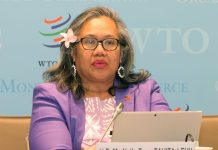
Commonwealth Secretariat Officer-in-Charge of the Social Development, Youth and Gender Division, Jennifer Namgyal, said regional cooperation was essential to improving cancer outcomes.
“The Commonwealth’s strength lies in partnership and collective action. We bring member countries, experts and strategic partners together around shared priorities, connecting evidence, policy and implementation to support country-led solutions,” Namgyal said.
She said the Commission demonstrated how shared expertise and cooperation could help countries strengthen health systems and improve access to cancer care.
More than 14 First Ladies and spouses of Commonwealth Heads of Government attended the launch.
Participants were encouraged to use their public profiles and advocacy work to raise awareness of the growing cancer burden and promote stronger cancer services.
A ministerial and diplomatic panel at CHOGM identified six priorities for improving equitable cancer control across the Commonwealth.
These include expanding access to affordable cancer technologies, improving the availability and quality of care, accelerating innovation in prevention and treatment, and placing patients and civil society at the centre of health policies.
Other priorities include investing in cancer care training and strengthening health data systems and national cancer control plans.
The Commission said implementation would require sustained political leadership, financing, inclusive partnerships and greater cooperation among member countries.
Preliminary findings were presented at the inaugural Commonwealth Health Coordination Forum in Geneva on 16 May 2026.
The report’s launch at CHOGM brings the recommendations before Commonwealth leaders, with a call for greater investment in cancer control to reduce preventable deaths, strengthen health systems and improve economic resilience.