

By Pita Ligaiula in Savusavu
Pacific journalists will examine corruption risks in climate finance and disaster response programmes Monday, focusing on how weak oversight can divert resources intended for vulnerable communities.
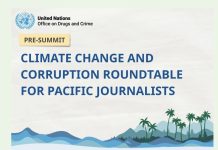
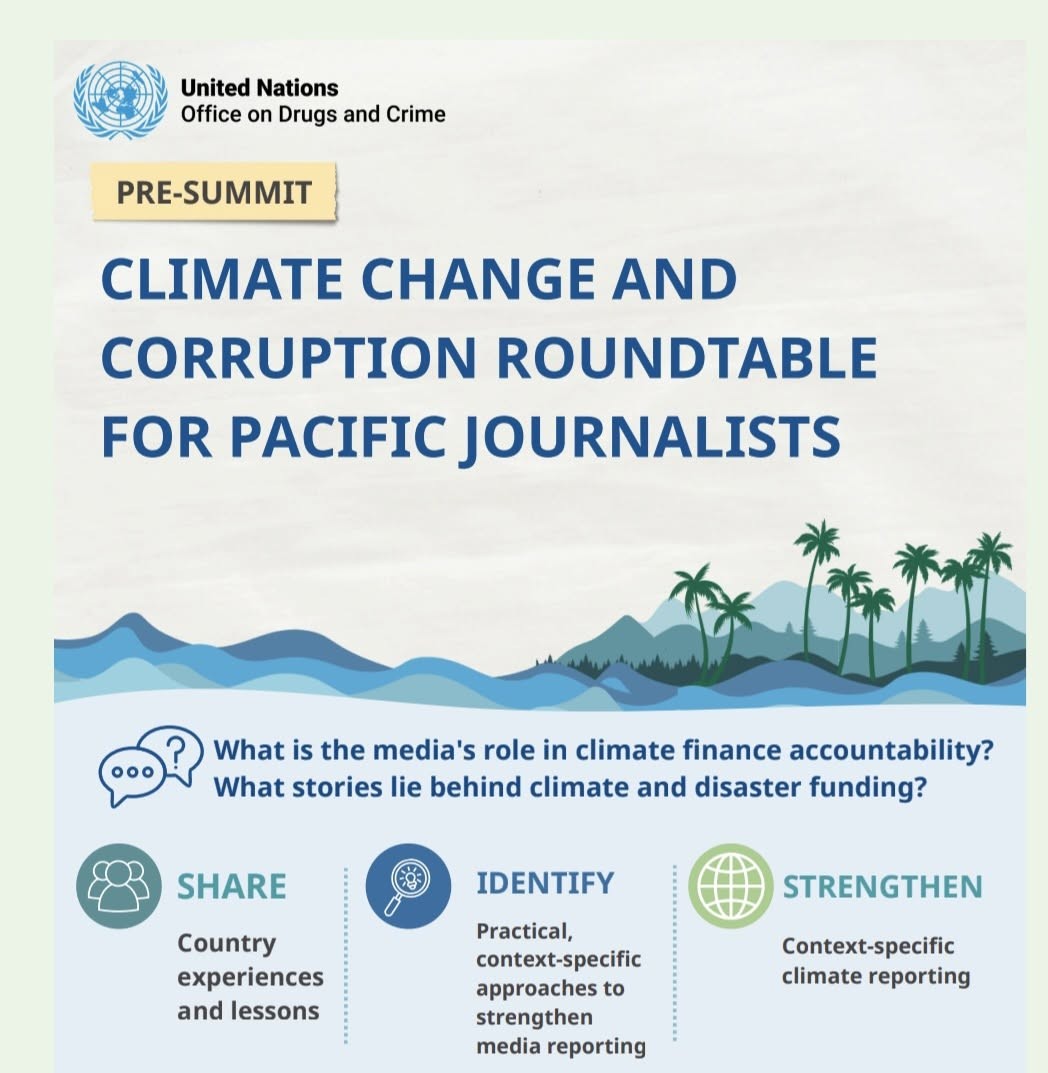
The issue will be discussed during the Climate Change and Corruption roundtable at the 8th Pacific Media Summit in Savusavu.
The session will focus on how weak governance, limited oversight and complex funding arrangements can affect the delivery of climate and disaster resources to communities.
Pacific Small Island Developing States (PSIDS) are facing increasingly severe and frequent climate-related disasters, placing growing pressure on national systems, institutions and communities.
As countries scale up investment in climate adaptation, disaster risk reduction and recovery, the roundtable will examine the importance of ensuring these resources are used effectively, transparently and accountably.
The session will highlight several potential corruption entry points in the climate finance system.
These include large amounts of adaptation, mitigation, carbon credit and disaster funding moving quickly through systems where oversight capacity may be limited.
Technical complexity in areas such as carbon offset calculations, land-use assessments and climate vulnerability data can also make it difficult to identify inflated or fabricated figures.
Land and resource rights present another risk, particularly through REDD+ programmes, carbon offset projects and renewable energy developments involving customary or contested land.
The roundtable will also examine how multiple layers of international climate funds, national governments and local implementers can create gaps in accountability.
Emergency procurement following cyclones and other disasters can present additional risks when normal tendering and audit processes are bypassed.
The discussion will emphasise that corruption in climate finance is not only a financial issue but can directly affect communities that depend on these resources.
Weak governance and limited accountability can undermine climate and disaster responses, erode public trust and increase the vulnerability of communities following climate shocks.
The session will also consider climate finance from a human rights perspective, including non-discrimination, meaningful participation of affected communities, access to information and access to remedies when systems fail.
The discussion is aligned with the Teieniwa Vision for a Pacific free of corruption, which highlights integrity, accountability and people-centred governance as foundations for sustainable development.
Pacific journalists will also be encouraged to use investigative reporting techniques to follow climate funding from commitments and allocations through to projects on the ground.
These include comparing pledged or allocated funds with what has actually been delivered, examining procurement contracts and investigating companies awarded climate-related contracts.
Journalists can also cross-check beneficial ownership information against politically exposed persons and speak directly with affected communities to compare their experiences with official project reports.
The use of satellite and remote-sensing data can help verify claims involving reforestation, land use and project completion, while carbon credit registries can provide information on projects involving potential reversals, double-counting or auditor conflicts of interest.
The roundtable forms part of wider efforts to strengthen Pacific investigative journalism and anti-corruption reporting.
The Pacific Islands News Association (PINA) and the United Nations Office on Drugs and Crime (UNODC) have worked with Pacific anti-corruption journalists since 2019.
Earlier this year, PINA and UNODC launched the Partnership for Journalists for Pacific Anti-Corruption and Transparency project, supported by New Zealand’s Ministry of Foreign Affairs and Trade.
The project aims to strengthen the region’s media sector and support journalists in maintaining scrutiny of institutions and public commitments.
The session will also consider recent international anti-corruption commitments, including Resolution 11/9 adopted at the 11th Conference of the States Parties to the UN Convention against Corruption on preventing and combating corruption linked to environmental crimes.
The resolution includes measures relating to procurement integrity, beneficial ownership transparency and public access to information.
The Pacific-led roundtable aims to give journalists an opportunity to share country experiences, identify practical approaches to reporting climate-related corruption and strengthen collaboration ahead of future COP discussions.