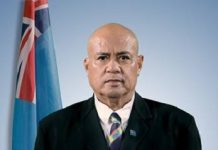




Rewa chief and Great Council of Chiefs (GCC) member Ro Naulu Mataitini says Fiji must put the next general election ahead of constitutional reform to avoid creating uncertainty over the country’s electoral timetable.
Mataitini says the proposed process to have a new Constitution in place by 24 December 2026 leaves too little time for proper scrutiny, public debate, civic education and preparations for an election that must be held by 6 February 2027.
Cabinet has proposed a referendum between November and mid-December, with a new Constitution to come into force by 24 December if approved through the required processes.
Mataitini argues that the constitutional process should be sequenced rather than rushed to meet a deadline.
“The real choice is between a process that belongs to us the people, and one that belongs to the calendar.
“Let Fijians vote on time. Then let the people decide what comes next. That is sovereignty,” he said.
Mataitini sets out two options, with the first being to hold the general election on time and begin a new constitution-making process afterwards with a fresh parliamentary mandate.
“Hold the general election on time by 06 February 2027. Let the people choose their representatives. Then, with a fresh mandate, begin a genuinely participatory constitution-making process,” he said.
He said this would allow a new Parliament to take ownership of the constitutional process and give Fijians more time to debate and participate in shaping a new constitutional framework.
“The objection: what if the new Parliament refuses to act? That is a risk democracy requires us to accept.
“A constitution made without a fresh mandate is a greater problem than one delayed by the verdict of voters,” Mataitini said.
His second option is for constitutional reform to proceed before the election, but with safeguards to ensure the new Constitution does not disrupt the established electoral process.
“If a new Constitution must come first, it must not determine the next election’s conditions without safeguards,” he said.
Mataitini said any major changes to the electoral system should be supported by transitional provisions and independently assessed to ensure the election can still be conducted lawfully and on time.
He said the Electoral Commission and Supervisor of Elections should establish whether the election can proceed under any new constitutional framework, while allowing sufficient time for scrutiny, independent oversight, cross-party engagement and civic education.
“What is not workable is a new Constitution commencing on 24 December 2026 -the day the election writ is due with no guarantee the election can proceed,” he said.
The Government has said its proposed timeline includes consideration of transitional arrangements and that Cabinet’s decision to table the Constitution Review Commission report does not amount to acceptance of all its recommendations.
Prime Minister Sitiveni Rabuka has previously said Fiji must have an election by 6 February 2027 and that, if the constitutional review is not completed, the election would proceed under the existing laws and regulations.
Mataitini says the worst outcome would be a new Constitution that lacks broad public support while also creating uncertainty over the election.
“The worst outcome is a new Constitution without broad buy-in and a delayed election.
“That would combine the legitimacy problems of 2013 with the uncertainty of 2026–27, giving critics a permanent grievance and defenders of the old order a talking point,” he said.
He said Fiji could otherwise enter the next electoral cycle with both a contested Constitution and a contested election.
“That is not renewal. It is instability,” Mataitini said.
Mataitini also argues that constitutional legitimacy depends not only on the content of a document but on how it is developed and adopted.
“A constitution derives legitimacy not only from what it says but from how and when it is made,” he said.
He said Fiji should develop a constitutional model that reflects its own history, customary institutions and democratic rights, rather than treating constitutional reform solely as a parliamentary or legal exercise.
“This matters for a Pasifika democracy.
“Fiji need not import its democracy wholesale; it has its own foundations,” he said.
Mataitini said a locally grounded constitutional process would require time, dialogue and broad participation.
“Sequencing makes a locally grounded constitution possible. Speed risks making it impossible,” he said.
He said the test of sovereignty was whether Fijians had the opportunity to deliberate, shape, accept or reject the constitutional framework.
“The sovereignty test is not the passport of the funder or the location of the drafters. It is whether the people have power to deliberate, shape, accept or reject,” Mataitini said.
Mataitini said Fiji should not allow the constitutional process to become driven by a fixed Christmas deadline.
“The Kirisimasi Constitution should not be born.
“Our politicians have the watch. We the people have the time,” he said.
The Constitution Review Commission submitted its report and Draft Constitution Bill to President Ratu Naiqama Lalabalavu on 31 August. Cabinet has supported the report being tabled in Parliament, with debate scheduled from 28 September.
The proposed timeline would see a referendum held between November and mid-December, followed by commencement of a new Constitution by 24 December if approved through the required processes.
The latest possible date for the Writ of Election is 24 December 2026, with the final date for the general election set at 06 February 2027.