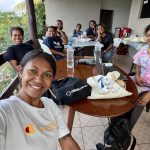



Final-year University of the South Pacific (USP) Journalism student Prishanta Sharma is participating in the 8th Pacific Media Summit 2026 in Savusavu from 21–25 September.
This was made possible through a sponsored opportunity made available through the Pacific Islands News Association (PINA) and USP’s ongoing partnership with the Journalism Programme.
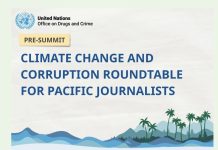
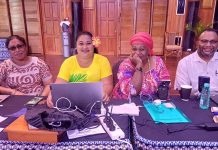
As part of PINA’s commitment to its Memorandum of Understanding with the USP Journalism Programme, Prishanta will participate in the UN Office on Drugs and Crime (UNODC)-supported pre-summit workshop, gaining valuable exposure to experienced media practitioners and strengthening her skills in investigative reporting.
She will also be writing stories from the summit for the USP Journalism student training newspaper Wansolwara.
The Journalism Programme and the Wansolwara editorial team would like to thank USP’s School of Pacific Arts, Communication and Education (SPACE) and its Head of School, Professor Danyal Farsani, for their support in paying for the registration fee for the event.
As part of the pre-summit workshop, the UNODC will facilitate a media roundtable on climate corruption and transnational organised crime.
Other sessions will involve organisations including BBC Media Action, the Secretariat of the Pacific Regional Environment Programme, the Pacific Media Assistance Scheme (PACMAS), the Waitt Institute, Women in Media Fiji and the Fiji Council of Social Services.
Held under the theme “Reaching the Remote: Media & Digital Innovation for a Connected Blue Pacific,” the 8th Pacific Media Summit brings together media practitioners, communicators, policymakers, development partners and digital innovators to explore how technology and innovation can strengthen connections across the region.
For Prishanta, participation in the summit provides an opportunity to take her academic learning beyond the classroom and engage directly with the regional media industry.
“I really appreciate this opportunity and am grateful for the Journalism teaching staff’s trust and confidence in me. I look forward to making the most of this experience and representing USP Journalism to the best of my ability,” she said.
Teaching Assistant Monika Singh said the opportunity would benefit Prishanta by providing first-hand exposure to contemporary journalism practices and enabling her to develop professional networks with experienced media practitioners.
Singh said the experience would also benefit the Journalism Programme by bringing fresh industry perspectives and practical insights back into the classroom, further strengthening the connection between journalism education and the evolving Pacific media landscape.
The opportunity also demonstrates the value of collaboration between journalism education and the media industry in preparing students for professional practice.
Through opportunities such as this, USP and its industry partners continue to support the development of skilled, connected and future-ready Pacific journalists.
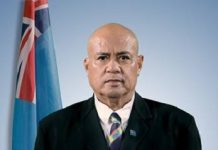
The Journalism Programme also thanks PINA President Kalafi Moala for the sponsorship.
During a meeting of the PINA board members and USP Journalism in April this year, Mr Moala assured the Programme Coordinator, Associate Professor Shailendra Singh, that PINA would encourage and support greater participation of journalism students in regional initiatives, including attendance at the biennial Pacific Media Summit.
Prime Minister Sitiveni Rabuka will officially open the Summit in Savusavu on 23 September, bringing together almost 200 media professionals and stakeholders from across the Pacific.
The summit is being held in Fiji for the first time in 14 years, with discussions expected to focus on press freedom, media sustainability, climate and disaster reporting, artificial intelligence, digital innovation, public broadcasting and inclusive media leadership.
The event will end on 25 September with the PINA Annual General Meeting and the presentation of a Savusavu Outcome Statement by FMA President Rosi Tamani-Doviverata and PINA President Kalafi Moala.
The summit is supported by Australia’s Regional Media Support Fund (RMSF), PACMAS, the British High Commission, BBC Media Action, the Government of Fiji, FCOSS, the Pacific Community (SPC), SPREP, UNODC and the Waitt Institute. Vodafone Fiji is also a corporate partner for the event.