

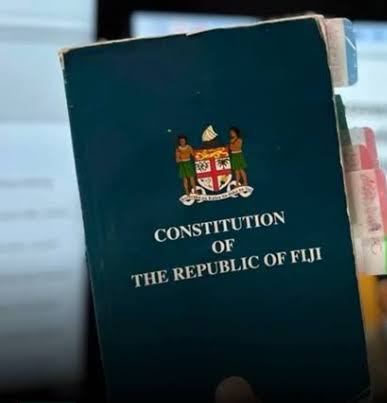
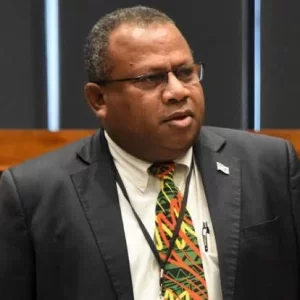
Fiji Opposition Leader Inia Seruiratu has called on the Government to slow down its proposed constitutional reform process, warning that replacing the country’s supreme law within about three months risks creating political and economic uncertainty.
Seruiratu said the Government’s plan to have a new Constitution come into force by 24 December 2026 was an “extraordinarily compressed timetable” for a process that would fundamentally change how Fiji is governed.
“The Government needs to explain to the people of Fiji why it is necessary to have a new Constitution in force by Christmas Eve,” Seruiratu said.
He said the Constitution should not be treated like ordinary legislation that could be rushed through Parliament to meet a political deadline.
“It determines the structure of the State, the exercise of political power, the rights of our citizens and the electoral system through which the people choose their government,” he said.
The Opposition Leader also questioned the level of public participation in the constitutional review process, saying the Constitutional Review Commission’s published figures showed that, even using the most generous calculation, less than one percent of Fiji’s population directly participated.
“A Constitution cannot be treated like an ordinary piece of legislation that Government can rush through Parliament according to a convenient political timetable,” he said.
The Commission submitted its report and Draft Constitution Bill to the President on 31 August, with the Government proposing a special parliamentary sitting on 22 September, followed by parliamentary consideration and a referendum between November and mid-December.
Seruiratu said Fijians needed adequate time to understand the proposed Constitution, including what they could gain or lose and how it would change the country’s system of government.
Seruiratu has also raised concerns over the impact of the proposed constitutional changes on Fiji’s next General Election.
He said the proposed shift from the existing national electoral arrangement under the 2013 Constitution to a system involving ‘open constituencies’ would require new electoral boundaries and significant preparation by the Electoral Commission and Fijian Elections Office.
“If the Government intends for this new Constitution to take effect by 24 December 2026, then it must tell the people what this means for the next General Election,” he said.
Seruiratu said there was a “legitimate concern” that introducing a new electoral system and drawing a new electoral map could affect the timing of the next election if electoral institutions were not ready.
“The Government must therefore answer a very simple question: will it guarantee that its constitutional timetable will not result in the postponement of the next General Election?” he said.
Seruiratu also singled out the National Federation Party, saying it needed to make its position on the constitutional process clear.
“The NFP cannot claim to represent the interests and concerns of the communities that placed their trust in it while remaining silent as the Government races towards fundamentally changing Fiji’s constitutional and electoral system by 24 December,” he said.
He called on the NFP and other coalition partners to challenge the timetable if they believed more time was required.
“This is the moment when the NFP and the other Coalition partners must demonstrate that they are partners in Government and not merely passengers in Prime Minister Rabuka’s Cabinet,” Seruiratu said.
He said coalition partners had a responsibility to demand a process that was “credible, inclusive and carefully considered”.
Seruiratu also warned against repeating what he described as mistakes arising from constitutional uncertainty in Fiji’s political history.
“Fiji cannot afford another constitutional mistake,” he said.
Seruiratu’s strongest concerns centred on what happens after the proposed Constitution takes effect.
He highlighted the Government’s reference to a Cabinet Subcommittee considering “transitional arrangements that will need to be put in place” and demanded clarification.
“What exactly does that mean?” he asked.
Seruiratu said the Government had yet to explain whether there would be a transitional period, how long it would last, what would happen to the existing Parliament and Government, and whether any transitional arrangement could affect the next General Election.
“Will there be a transitional period after the new Constitution comes into force? How long will that period last? What happens to the existing Parliament and Government during that period?” he said.
“Most importantly, what effect, if any, will these transitional arrangements have on the timing of the next General Election?”
Seruiratu called on Prime Minister Sitiveni Rabuka to provide clear answers before the referendum.
“If there is absolutely no intention to extend the life of the present Government or postpone the next General Election, then the Prime Minister should have no difficulty saying so clearly and unequivocally,” he said.
He said the Government needed to explain how the new electoral map would be implemented and whether the next election would proceed within the timeframe currently expected by voters.
“Fiji should not be asked to vote on a new Constitution while being kept in the dark about what happens the day after it comes into force,” Seruiratu said.
He called for more time for parliamentary scrutiny, public debate and preparation by electoral institutions.
“I am calling on the Government to slow this process down” Seruiratu said.
“This is bigger than Sitiveni Rabuka. It is bigger than the Coalition Government. It is bigger than the Opposition.
“It concerns the constitutional future of every Fijian,” he said.