

Across the Pacific, meteorological services and disaster preparedness systems are being strengthened to help communities better prepare for extreme weather and climate change.
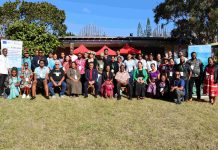
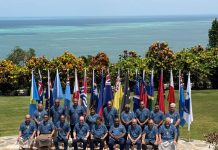
The 8th Pacific Meteorological Council (PMC-8) Meeting brought Pacific nations and development partners together to share the progress they have made in strengthening weather services, early warning systems and climate information, and several achievements stand out.
The PMC is a subsidiary body of the Secretariat of the Pacific Regional Environment Programme (SPREP) and has provided a platform for coordination and development Pacific National Meteorological and Hydrological Services (NMHS) for over a decade.
Day two of PMC-8 was opened with the highly anticipated country reports, where council members were given the opportunity to share what they have been able to achieve since the last convening of the PMC in 2024.
Tonga has completed construction of its new Joint Multi-Hazard Early Warning Services Centre and approved national policy and roadmap for managing weather and natural hazards. While Kiribati has achieved independence in weather forecasting and secured funding to upgrade 14 surface weather stations, and three upper-air observation systems. And Tuvalu, the integration of Artificial Intelligence (AI) into daily forecasting and severe weather monitoring has resulted in faster, more accurate predictions.
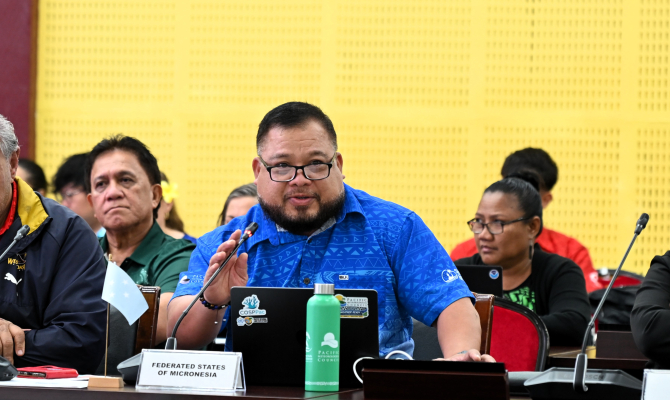
Across the region, in the Cook Islands, the Rarotonga Upper-Air Observation Station was restored, while the Federated States of Micronesia (FSM) has become the first Pacific nation where all four states have achieved United Nations Educational, Scientific and Cultural Organisation – Intergovernmental Oceanographic Commission (UNESCO-IOC) Tsunami Ready recognition. In Fiji, the advancement of the Regional Training Centre (RTC) and Regional Instrumentation Calibration Centre (RICC), that will strengthen technical capacity and the integrity of weather equipment across the Pacific.
In French Polynesia, funding has been secured for an identified site for a new weather radar – increasing the number of radars (existing and those in construction/pipeline) up to 15 systems across the Pacific region. These investments are expanding the network to strengthen weather monitoring, early warnings and preparedness for extreme events.
Marshall Islands have expanded monitoring through new automatic weather stations (AWS), and Nauru has strengthened its meteorological services through new legislation. In New Caledonia and Wallis and Futuna, rainfall data is being used to monitor landslide risk, and Niue has established a three-station network using AWS and wave buoys.
Both Papua New Guinea (PNG) and Vanuatu have achieved their Civil Aviation Authority Part 174 certification, with the latter completing cost recovery policy and building a backup Centre in Luganville, Santo. Samoa has modernised its observation infrastructure and preparing to move to a new site.
In Solomon Islands, its first weather radar is planned for commissioning before the end of the year, through the Weather Ready Pacific (WRP) Programme, and another huge milestone was achieved this year in Tokelau, through the WRP Joint-Mission to the remote atoll island nation that provided the opportunity for Tokelau to host its first National Climate Outlook Forum (NCOF) this year.
While the achievements vary, the purpose is shared: better information, earlier warnings and stronger decisions for Pacific communities. These investments help governments, farmers, fishers, businesses and families prepare for cyclones, tsunamis, droughts, floods, landslides and other climate impacts.
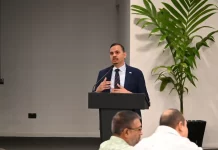
“The progress of the PMC is measured by the progress of its members. I commend our National Meteorological and Hydrological Services and their governments for their continued commitment to strengthening services that protect our communities and economies,” said Salesa Nihmei, Director of the Climate Science and Information Programme at SPREP.
“Development is guided by the Pacific Islands Meteorological Strategy as a clear roadmap for development, and the country reports demonstrate the significant progress achieved across the region. This progress has been supported by strong Pacific-led collaboration, our development partners, regional organisations and programmes working alongside Members. Together, these achievements show how far we have come and strengthen our collective commitment to safer and more resilient Pacific communities,” said Nihmei.
The progress also demonstrates the value of Pacific-led collaboration and sustained support from development partners, including Australia, New Zealand and the United Kingdom, and other regional organisations who also contribute towards Pacific NMHS development. As climate change increases weather-related risks, stronger meteorological and early warning services are an essential foundation for safer, more resilient Pacific communities.
The Pacific Meteorological Council is a specialised subsidiary body of the Secretariat of the Pacific Regional Environment Programme (SPREP) established to facilitate and coordinate the scientific and technical programme and activities of Pacific National Meteorological and Hydrological Services.
The eighth meeting of the Pacific Meteorological Council (PMC-8) is held from 10 – 14 September 2026 in Nuku’alofa, Tonga. It follows a series of pre-meetings which starts on 7 September 2026 and will conclude with the convening of the fourth Pacific Ministerial Meeting on Meteorology (PMMM-4) on 16 September 2026.
The PMC-8 and PMMM-4 are made possible through the partnership and collaboration between the Government of Tonga, SPREP, World Meteorological Organisation-Climate Risk and Early Warning Systems (WMO-CREWS) project, United Kingdom-Weather and Climate Information Systems (UK-WISER), Australian Department of Foreign Affairs and Trade (DFAT), New Zealand Ministry of Foreign Affairs and Trade (MFAT), Weather Ready Pacific Programme (WRPP), European Union-funded Intra-ACP Climate Services and Applications programme (ClimSA), Climate and Oceans Support Program in the Pacific (COSPPac), Republic of Korea-Pacific Islands Climate Prediction Services Phase 3 project (ROK-PI CliPS 3), Apec Climate Centre (APCC), and the Pacific Community (SPC).