
The current ‘super El Niño’ that has been established in the Pacific is making its presence known, and felt, across the region.
Countries attending the 19th Pacific Islands Climate and Oceans Forum (PICOF-19) in Papua New Guinea shared some of the impacts they’ve seen on the ground as the El Niño event wreaks havoc on sectors such as water, health, agriculture, tourism, and fisheries.
El Niño is a naturally occurring climate phenomenon when ocean temperatures in the central and eastern Pacific Ocean become warmer than normal, causing rainfall patterns to change and resulting in drier than normal conditions for some countries and wetter than normal conditions for others.
Director of the Secretariat of the Pacific Regional Environment’s (SPREP) Climate Science and Information programme, Mr. Salesa Nihmei, stressed that El Niño is not an abstract idea presented on maps and diagrams.
El Niño is real, and it is here, and countries must act now to soften the impacts that they are currently facing and those that are yet to come.
“This El Niño is one of the strongest ever recorded, and it is occurring in an even warmer world than the last major El Niño events, so the impacts are unpredictable and unprecedented,” Nihmei said.
“We are already starting to see the impacts in PNG, and the government is organising with its partners to deal with the crisis at hand. We urge all other countries to heed this warning, and to learn from PNG.
Papua New Guinea is bearing the brunt of these impacts, as its geographic location means its communities are among the first to feel the impacts of El Niño. The First Secretary of the Ministry of Transport, Coffee and Meteorology, Mr. Nos Inox, urged Pacific island countries to heed the warnings from National Meteorological and Hydrological Services and to prepare now for the worse still to come.
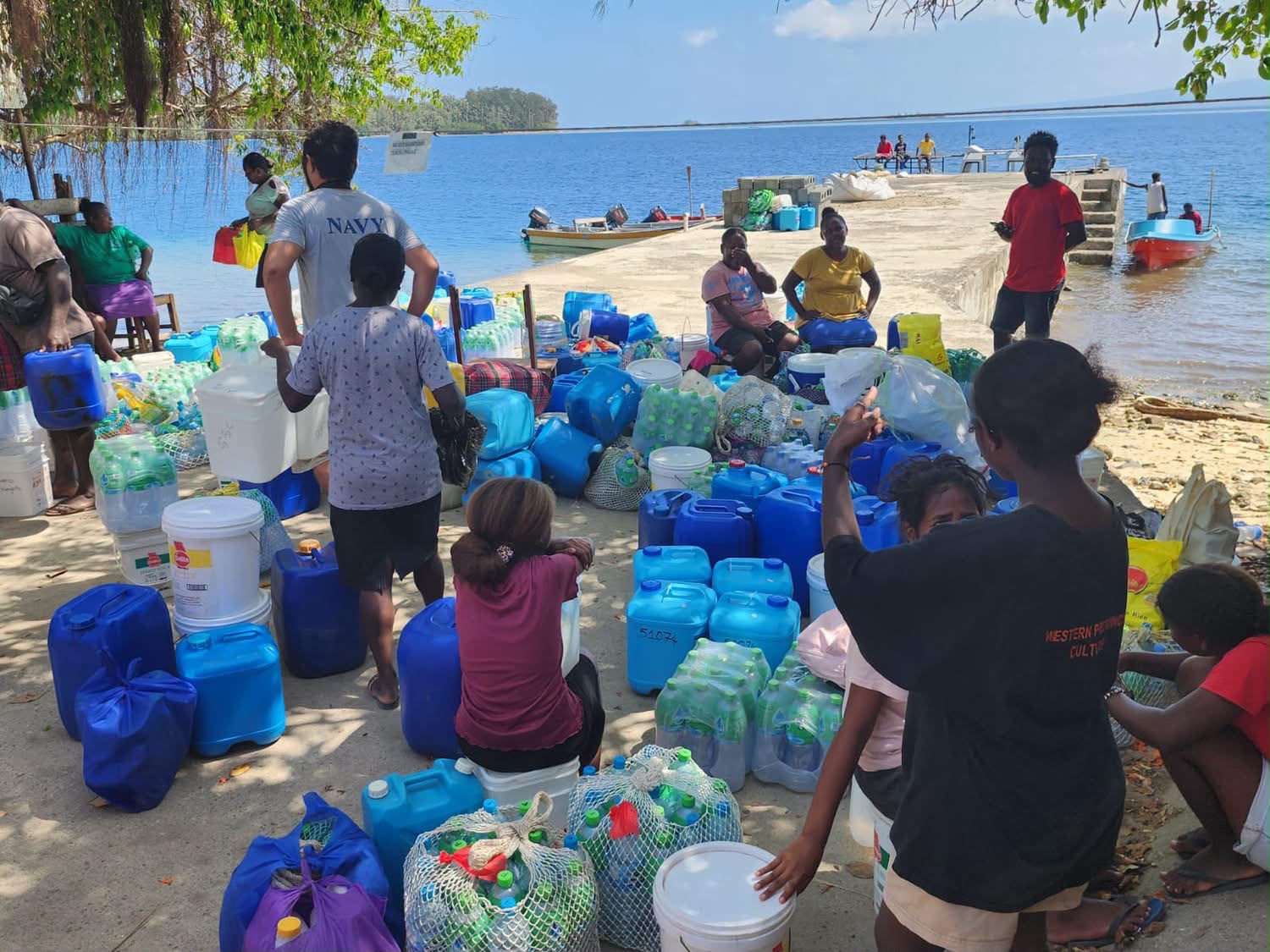
Droughts and water shortages have been declared in all four regions of PNG as a result of below-normal rainfall due to El Niño. This includes the capital of Port Moresby where 3 million people reside.
School have been forced to close due to the lack of water, and water transportation has been affected due to major rivers and waterways drying up. The hydropower station has also been affected due to the low water levels, resulting in power management across the capital.
Mining operations were affected in PNG, such as the OK Tedi Mine, a large-scale open-pit copper, gold, and silver mine located on Mount Fubilan in the Star Mountains of the North Fly District, Western Province, Papua New Guinea.
With the decrease in water level in the Fly river, supply chain has been disrupted forcing operation to use fiberglass boats and plane to move fuel and for other logistics. This mine works with the government of Indonesia to pipe fuel from Indonesia to PNG to keep the mine operational.
Haze can be seen in the sky as you fly into Jacksons International Airport from bushfires raging across the country, with Lou Islands in the Manus province being one of the hardest hit areas. Destructive frosts have plagued the PNG highlands, destroying crops, gardens, and plantations, and causing a food shortage crisis for highlanders.
Other countries in the Melanesian sub-region are also experiencing impacts. The Fiji Meteorological Service revealed that prolonged dry conditions have depleted rainwater catchment and storage and caused critical water shortages in areas such as Rakiraki, Nagigi and Labasa.
Residents have been forced to sell off their remaining livestock and scale back gardening due to insufficient water and pasture, schools and health facilities across Malolo and Yanuya have been forced to close, and there has been an increase in diarrhea cases.
The Solomon Islands Meteorological Service shared that El Niño has triggered higher sea surface temperatures which have resulted in marine heatwaves and excessive algae growth that has severely damaged seaweed farms. Lower sea levels in Solomon Islands have also resulted in a large number of fish kill, or fish that have died as a result of changing ocean conditions.
Prolonged dry conditions in Malaita, the Western Province, and the Choiseul Province have resulted in water shortages, creeks drying up, and residents reporting strong foul ordors from dead tilapia.
Bush fires and wildfires have been raging across Vanuatu as a result of prolonged dry conditions brought on by the El Niño event, affecting Iririki Island resort, a factory in Motalava Island, and the Elluk Plateau. Fish kill has also been reported by the Vanuatu Meteorological and Hydrological Department, due to the lower than normal sea levels.
Ambae experienced an outbreak of pertussis, or whooping cough, with a total of 276 cases reported and multiple hospitalisations. The Vanuatu Ministry of Health also declared a dengue fever outbreak in Tanna.
Maritime incidents have also been reported across Melanesia, from PNG to Fiji), with rough seas and swells resulting in maritime transport accidents and the loss of 57 lives.
In Vanuatu, the MV Matui vessel capsized due to rough ocean conditions. Warnings were issued by the Vanuatu Meteorological and Hydrology Division which were ignored by the crew of the vessel and resulted in two deaths and multiple still missing.
In Micronesia, the Palau Weather Service Office reported abnormal dryness in August, as well as haze from the wildfires in Indonesia.
National Meteorological Services in Naoero and the Federated States of Micronesia shared that both countries experienced heavy rainfall, with Naoero experiencing an outbreak in flu and dengue fever as a result of changes in rainfall patterns and humidity. In FSM, heavy rainfall caused landslides and flooding in Pohnpei and Kosrae, while coral reefs were exposed during low-tides due to below normal sea levels as a result of El Niño.
The Kiribati Meteorological Service reported that the atoll nation has been hit with strong winds, with Hurricane Lowell and storm surges causing coastal inundation.
The Polynesian sub-region began reporting impacts of El Niño in July, with Tonga reaching record low temperatures of 8.6° in ‘Eua, coral bleaching in Vava’u, and severe drought in the Ha’apai group.
Rainfall in Ha’apai has been below normal since April 2026 according to the Tonga Meteorological Service, and a drought was declared in June. Residents of the outer islands of Ha’apai are at risk of relocation, as crops and livestock cannot continue much longer due to the drought conditions.
In the Cook Islands, a prolonged August to September dry spell has intensified water shortages, drought, and the risk of bush fires. The dry spell has also reached the southern islands, causing stress on agriculture and food security, according to the country’s National Meteorological Service.
Samoa reported heavy rain and flooding conditions in May, with landslides and strong winds causing risk to infrastructure also thrown in the mix. Rough seas and bushfires were also reported.
According to SPREP’s Pacific Climate Services, the El Niño event is likely to persist until May 2027, and will peak in December to January. This provides another added risk to countries, as it coincides with the tropical cyclone season for the Southwest Pacific.
“The impacts we are seeing now across the Pacific are only going to get worse towards the end of this year and into next year,” said Nihmei.
“El Niño will manifest itself and its impacts gradually from the west to the east of the Pacific, so countries must prepare now for the worst is yet to come,” he added.
The PICOF-19 regional outlook statement that will be released at the conclusion of the forum will spell out the risks that can be expected over the next six months, and key messages for governments, sectors, and communities to plan and prepare in order to protect themselves and their livelihoods.