

As Pacific Island nations prepare to take a strong and united voice to COP31, Tonga is advancing a powerful message shared across the Blue Pacific: protecting people, livelihoods, and cultures begins with protecting the ocean that sustains them.
This commitment is taking shape through the Tonga Coastal Resilience Project, with proposed coastal protection designs for the Nukuleka–Talafo’ou and Manuka–Kolonga areas endorsed by Tonga’s Joint National Action Plan (JNAP) Taskforce on 16 October 2026, following community consultations.
The endorsement marks an important step towards strengthening coastal protection for communities facing rising seas, coastal erosion and extreme weather, while ensuring that local priorities help shape the solutions being developed.
The Tonga Coastal Resilience Project is funded by the Green Climate Fund (GCF) and implemented by the United Nations Development Programme (UNDP) in partnership with the Government of Tonga through the Ministry of Meteorology, Energy, Information, Disaster Management, Environment, Climate Change and Communications (MEIDECC).
For families living along Tonga’s coastlines, protecting the shore is about more than infrastructure. It is about safeguarding homes, livelihoods, access to the ocean and the places that have supported communities for generations.
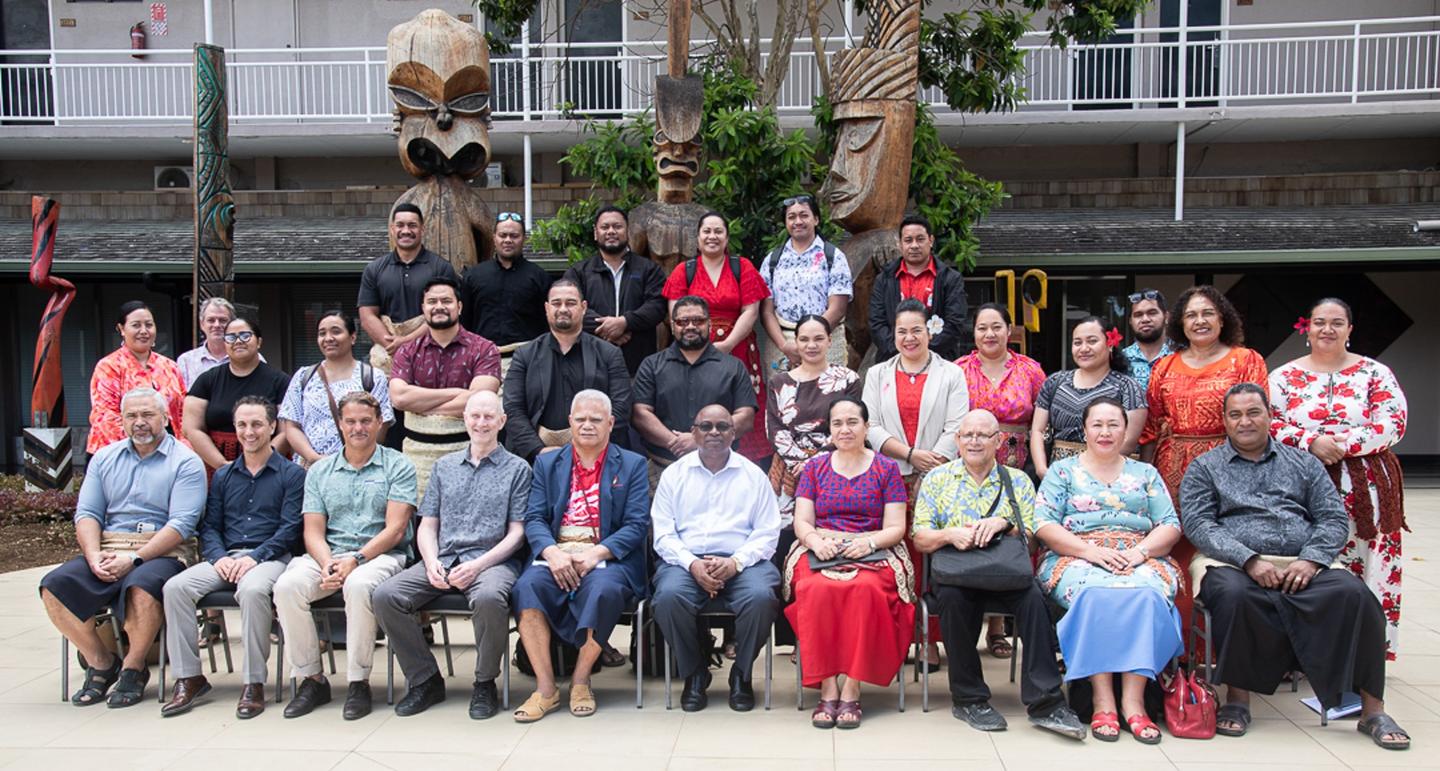
On 13 and 14 October 2026, the Project convened consultations in Kolonga and Manuka to give feedback on proposed coastal protection design for the Manuka-Kolonga coastline, engaging representatives from the six beneficiary communities of Kolonga, Manuka, Navutoka, Makaunga, Talafo’ou, and Nukuleka.
“The consultations and coordination meetings highlight how Pacific communities are leading climate adaptation efforts by giving their feedback on the coastal protection designs, that will protect the ecosystems that underpin life in Tonga,” said Director of the Department of Climate Change (DCC) under MEIDECC, Lu’isa Tu‘i‘afitu Malolo.
Pacific Communities Leading Solutions from the Ocean’s Frontlines
For Tonga and many Pacific Small Island Developing States, coastlines are far more than physical boundaries. They support fisheries, cultural heritage, biodiversity, transportation, recreation, and community well-being. As sea-level rise, coastal erosion, storm surges, and extreme weather events intensify, safeguarding coastal areas has become essential for protecting both people and the ocean-dependent livelihoods upon which communities rely.
Using existing data to understand flood risks, the proposed coastal construction involves constructing a revetment along the existing vegetation line while maintaining current road elevations. The design will also preserve coastal trees, protect adjacent land allotments and create a natural vegetated buffer between the shoreline and the road.
Community representatives expressed strong support for the design, demonstrating the importance of locally informed adaptation measures that protect both infrastructure and the natural coastal ecosystems that serve as the first line of defence against climate impacts.
Talanoa Hala‘api‘api of Kolonga emphasised the importance of maintaining and improving access to the shoreline, particularly for fishers who depend on the coast for their daily livelihoods.
The discussions also addressed coastal ecosystem protection, construction management, and environmental and social safeguards. Feedback from communities will continue to inform detailed engineering designs and environmental assessment processes as the Project progresses, and new data is being prepared to further inform the project’s progress.
Strengthening National Coordination for a Climate-Resilient and Ocean-Resilient Tonga
The week’s engagements concluded on with the Joint National Action Plan (JNAP) Taskforce Meeting, convened by the Department of Climate Change under MEIDECC and chaired byLuisa Tu’i’afitu Malolo, Director of Climate Change.
The meeting brought together government ministries, civil society organisations, community representatives, and development partners to review progress and strengthen coordination across the Project’s outputs.
“A key outcome of these engagements is the Taskforce’s endorsement of the proposed coastal infrastructure designs for both the Nukuleka-Talafo’ou and Manuka-Kolonga sites,” Malolo added.
“These are important milestone toward implementation, subject to detailed design and the completion of environmental and social safeguard requirements.”
The Taskforce also reviewed the draft concept note for a National Dialogue on Climate-Resilient Land Use and Long-Term Adaptation, recognising that sustainable management of land, coastlines, and marine resources is essential for building resilience in the face of growing climate risks. The Ministry of Lands, Survey, Planning and Natural Resources (MLSPNR) was designated to coordinate preparations for the dialogue.
Bringing the Blue Pacific Voice to COP31
For Pacific Island countries, climate change is not only an environmental challenge but also an ocean challenge. Healthy coastlines and marine ecosystems are central to food security, livelihoods, cultural identity and economic resilience.
Tonga’s progress reflects the importance of community-led adaptation, where local knowledge and technical solutions help shape investments that respond to people’s needs.
As the Pacific prepares for COP31, the project offers an example of how climate finance can support practical action on the ground, protecting communities and the ocean on which they depend.
The project will now advance detailed engineering designs, environmental and social safeguard assessments, and continued engagement with communities ahead of implementation.
For more information, please contact: Afuafu Kautoke, TCRP National Project Manager, Project Management Unit – Department of Climate, MEIDECC, e: afuafu.kautoke@undp.org