


Fiji has called for urgent international action to redirect public funding away from activities that damage nature and towards incentives that protect biodiversity and support local communities.
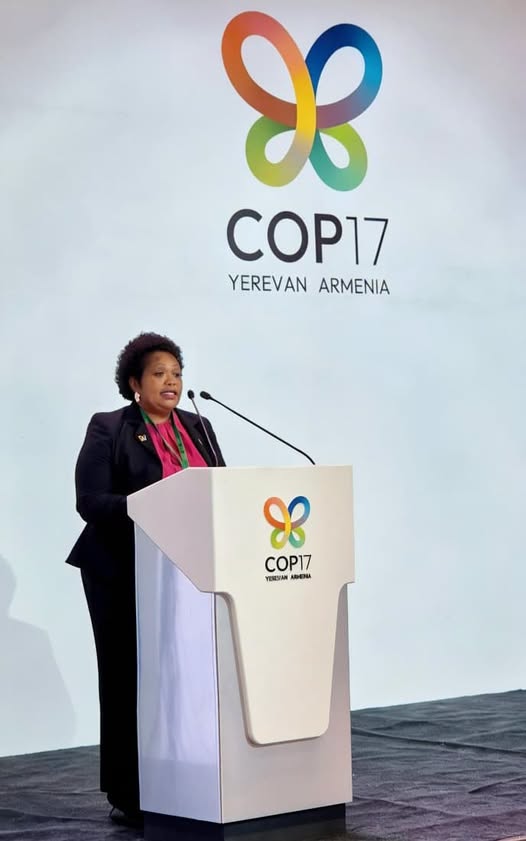
Minister for Fisheries and Forestry Alitia Bainivalu made the call at the Target 18 Ministerial Dialogue in Yerevan, Armenia, where she represented the Fiji Government and Pacific Small Island Developing States (PSIDS).
The meeting focused on the Yerevan Call on Positive Incentives for Biodiversity and efforts to implement Target 18 of the Global Biodiversity Framework, which aims to reduce harmful incentives by at least US$500 billion annually by 2030.
Bainivalu said increasing conservation funding would not be enough unless governments also reformed existing public spending that contributed to environmental damage.
“Around the world, money that harms nature outpaces money that protects it by about thirty to one. No amount of new conservation finance can win that race unless we also change the direction of the money we already spend,” she said.
Bainivalu said harmful financial incentives contributed to unsustainable land clearing, overfishing and pollution, threatening coral reefs, native forests and the livelihoods of Pacific communities dependent on natural resources.
She outlined Fiji’s ongoing efforts to align public expenditure and national policies with biodiversity protection.
These include reviewing public spending and policy frameworks to identify funding flows that harm or support ecosystems, implementing the National Biodiversity Strategy and Action Plan 2026–2030, and developing a Biodiversity Finance Plan to mobilise resources for conservation.
Bainivalu identified three priorities for implementing Target 18: reforming harmful incentives, expanding positive incentives for conservation, and integrating biodiversity objectives into national budgets.
She said reforms must identify and phase out incentives that encourage unsustainable resource use while protecting livelihoods and ensuring communities were not disadvantaged.
Fiji also wants to expand mechanisms that recognise and reward traditional resource owners and local communities for protecting fishing grounds, forests and mangroves.
Bainivalu said biodiversity considerations must be incorporated into national fiscal planning, with conservation measures properly budgeted and monitored alongside other government priorities.
She emphasised that achieving Target 18 would require coordinated action across government, including finance, fisheries, agriculture, forestry and tourism, rather than leaving biodiversity protection solely to environment agencies.
Fiji also acknowledged the need for technical assistance and better data to help small island developing states implement reforms and track financial flows affecting nature.
Bainivalu welcomed the Yerevan Call, the Friends of Target 18 and the Yerevan Biodiversity Finance Challenge, saying Fiji was ready to work with international partners to ensure public and private finance contributed to protecting natural ecosystems.
The call comes as Pacific island countries face growing pressure to safeguard marine and terrestrial ecosystems that underpin food security, livelihoods and economic development.