

Pacific Islands are negotiating to ensure “Sea-Level Rise” remains in the preamble of the outcomes for the Seventeenth Conference of the Parties to the UN Convention on Biological Diversity (CBD COP17) now underway in Yerevan, Armenia.
Over 195 governments have united to negotiate a way forward to ensure the world progresses its commitments to meet the Kunming-Montreal Global Biodiversity Framework (GBF), this is the first assessment review since the GBF came into being two years ago. Overall the GBF aims to reverse, and halt, the loss of biodiversity – all living things including genetic organisms.
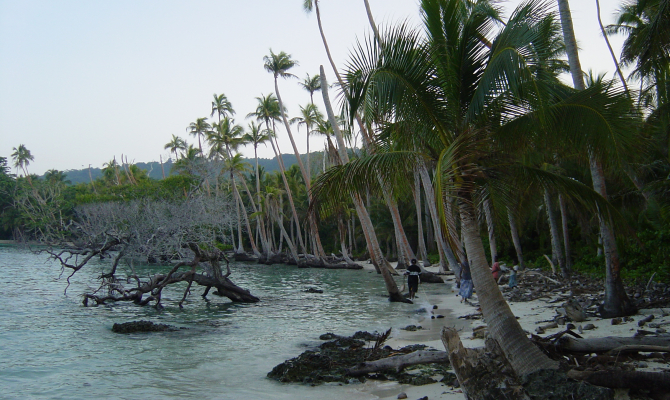
“For Small Islands States, sea level rise is a critical issue and it impacts biodiversity,” said Ambassador Ian Fry of the Tuvalu delegation.
“We have major programs underway on sea level rise, there is also the UN General Assembly Declaration on Sea Level Rise so we want to have this work reflected in the Biodiversity Convention as well.”
For the Pacific Islands, climate change is its single greatest threat to our security, this was further compounded in the Taku Pakasoa Declaration stemming from the pre-COP31 hosted in Fiji in October.
The Taku Pakasoa commitment to elevate the Climate-Ocean Nexus recognises “the accelerating crises of ocean warming, acidification, sea-level rise, including from the loss of glaciers and ice sheets, and that marine biodiversity loss requires collective action to effectively safeguard the resilience of our ocean as the planet’s primary climate regulator, largest active carbon sink, and engine of global food security and weather stability.”
“We made the request to have sea level rise inserted in the text which was agreed by the co-chairs and we thought we were so close, however Parties added other text and we never resolved this issue,” said Ambassador Fry.

“We were so close to having an agreement on this preamble, but it fell apart. It’s now up to the Chair to interpret what text remains and what is removed.”
Connecting the Ocean-Climate Nexus dialogues to the work undertaken within the GBF is also what the Pacific is striving for.
As Large Ocean Island States living in the world’s biggest ocean – ensuring the ocean and its biodiversity is protected against climate change is crucial. Work to make this happen across the different multi-lateral environment agreements is a significant task for the Pacific Small Islands Developing States.
Dr Sivendra Michael, Fiji’s Permanent Secretary for Environment and Climate Change, serves as the co-facilitator and co-chair of the UNFCCC Ocean and Climate Change Dialogue for 2026, alongside Ulrik Lenaerts of Belgium.
Presenting during a special event held at the CBD COP17 Dr Michael confirmed all Nationally Determined Contributions (NDCs) submitted to the UN Framework Convention on Climate Change Secretariat were analysed for which 77 percent mentioned ocean as a precursor within national adaptation and mitigation measures. Of that, 86 percent mentioned ocean as a key critical target which aligns to the GBF.
Target 3 of the GBF known as 30 x 30 aims to protect and effectively manage at least 30% of Earth’s land, inland waters, and coastal and marine areas by 2030.
“We no longer need to talk about ambition in either of these spaces – the CBD or the UNFCCC, as we all have ambition. What we need now is to match this ambition with means of implementation and that must be a package,” stated Dr Michael.
“This can include capacity building, technology transfer, financial resources – we need this thinking now. We all have the ambition; our national policies have this ambition – we need to leverage further support to deliver on this ambition.”
The CBD COP17 negotiations are continuing this week in Yerevan, Armenia upon which the Pacific Islands are working together to ensure the outcomes reflect the needs of our region. The discussions on Biodiversity and Climate Change also call for protection for Coral Reefs and the naming of coral reef and blue carbon ecosystems.
CBD COP17 is held from 19 to 30 October 2026