
By Pita Ligaiula in Koror, Palau
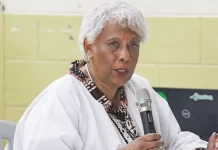
The Pacific must take its political leadership on climate change from the region to the global stage at pre-COP31 and COP31, with the focus shifting from promises to delivery, accountability and results, Green Climate Fund (GCF) Executive Director Mafalda Duarte says.
In a PACNEWS exclusive interview this week on the margins of the Pacific Islands Forum Leaders’ Meeting in Koror, Duarte said the science was becoming increasingly alarming and the opportunity to keep global warming within 1.5 degrees Celsius was narrowing.
“We really need to be aggressive in terms of action,” Duarte said.
Her comments come as Pacific leaders prepare for pre-COP31 meetings in Fiji and Tuvalu ahead of the COP31 climate conference in Türkiye.
Duarte said the Pacific was well placed to deliver a strong political message because Pacific countries had consistently been among the strongest defenders of the 1.5-degree target.
“Pacific countries have been the champions of this 1.5 and maintaining this 1.5 alive.
“That’s exactly what they will do,” she told PACNEWS.
Duarte said a new report expected from the United Nations Environment Programme (UNEP) on the overshoot of the 1.5-degree target was another warning from science that the world was running out of time.
“It’s not that we don’t have the clarity of the science.
“Every time we have new reports, they are just telling us it’s even more serious than we thought, and the window of opportunity is narrowing.” she said.
She said the pre-COP in the Pacific would give international leaders a direct view of what climate change and the 1.5-degree target mean for vulnerable island countries.
“The fact that it comes here to the region will really show to the world,” Duarte said.
Pacific leaders and other heads of state are expected to visit Tuvalu, where they will see the impacts of climate change and projects designed to strengthen the country’s resilience.
Duarte said the political leadership shown by the Pacific must carry through to COP31.
“What is necessary at this point is for political leaders to reassure everyone that this is very much alive in the agenda, in the political agenda, despite all of the crises that we are facing,” she said.
Duarte said governments could not allow conflicts, energy security concerns and other global crises to push climate action down the political agenda.
“We have to tackle the conflicts we have in the world. We have to tackle the energy crisis, but they cannot come at the cost of not doing action on climate.
“Because we will pay in multiples further down the line,” she told PACNEWS.
She said the consequences would be felt even more severely by Small Island Developing States (SIDS).
“Maintaining this agenda very alive in the political agenda and giving that reassurance, I think, is really important,” Duarte said.
She said the next phase of global climate action must be measured by implementation rather than another round of announcements and commitments.
“I think we’ve had enough of promises.
“Multiple COPs, multiple promises, new announcements, new organisations,” she said.
Duarte said the international climate system had produced an increasing number of initiatives and funding announcements, but accountability for delivering those commitments remained weak.
“One million here, US$10 million there, US$50 million there — and then where’s the accountability?.
“I think the frustration of the people, the common citizens, is where is the accountability to all of these promises?” she asked.
She said governments and international institutions must return to the commitments already made and assess whether they are being delivered.
“We have to anchor back these processes in delivery, action, accountability.
“It’s enough of promises,” Duarte told PACNEWS.
She said questions must now focus on whether commitments to reduce deforestation, protect ecosystems and finance climate action were being met.
“Where are we? Where is the funding?” she said.
Duarte said transparency, accountability and implementation should remain central to the climate agenda as countries move toward COP31.
She said the visit to Tuvalu would also provide an opportunity to demonstrate what climate finance can achieve when commitments are translated into projects.
The heads of state visiting Tuvalu will see a Green Climate Fund-supported project known as TCAP, involving land reclamation.
“The project that they are going to see in Tuvalu is our project.
“It’s a highly successful project,” Duarte said.
She said the project would demonstrate that climate finance could produce tangible results when countries and financing institutions had sufficient ambition.
“What this shows is that when there is ambition, there can be delivery,” Duarte said.
The GCF, she said, has a range of instruments that can support countries from institution building and capacity development through to project preparation and financing.
“We can provide support to the countries with building the institutions, building their capacity, looking at their policies, but we can also help them do project preparation,” she said.
The Fund can also provide different types of financial instruments, with grants accounting for 84 percent of GCF support in the Pacific, according to Duarte.
However, she said the Fund was also exploring other financing structures for the region, including an equity fund and debt instruments.
“We have all of that flexibility,” Duarte said.
Duarte acknowledged that delivering large climate finance portfolios remained particularly difficult in the Pacific because of severe capacity constraints within small governments.
“We know that capacity is constrained,” she said.
Pacific governments often have small numbers of public servants required to carry out the same range of responsibilities handled by much larger administrations elsewhere.
“They have to do what in other administrations there are multiple more people doing, and they have to do the same thing with much lower numbers,” she said.
Duarte, who previously worked as a civil servant in a developing country, said her engagement with Small Island Developing States had given her a deeper understanding of the scale of the challenge facing Pacific governments.
“But I think also it’s important in these processes to demonstrate results, to give confidence and hope that we can accomplish this and demonstrate solutions that can be scaled up,” she told PACNEWS.
The GCF has several projects in the Pacific that it hopes can be replicated across the region once they demonstrate results.
“We actually have a number of projects that we hope, once they are successful, they can be replicated across the Pacific,” Duarte said.
The Pacific’s political voice remains critical, but the next test for the global climate process will be whether years of promises are finally matched by finance, implementation and measurable results.