
By Pita Ligaiula in Koror, Palau
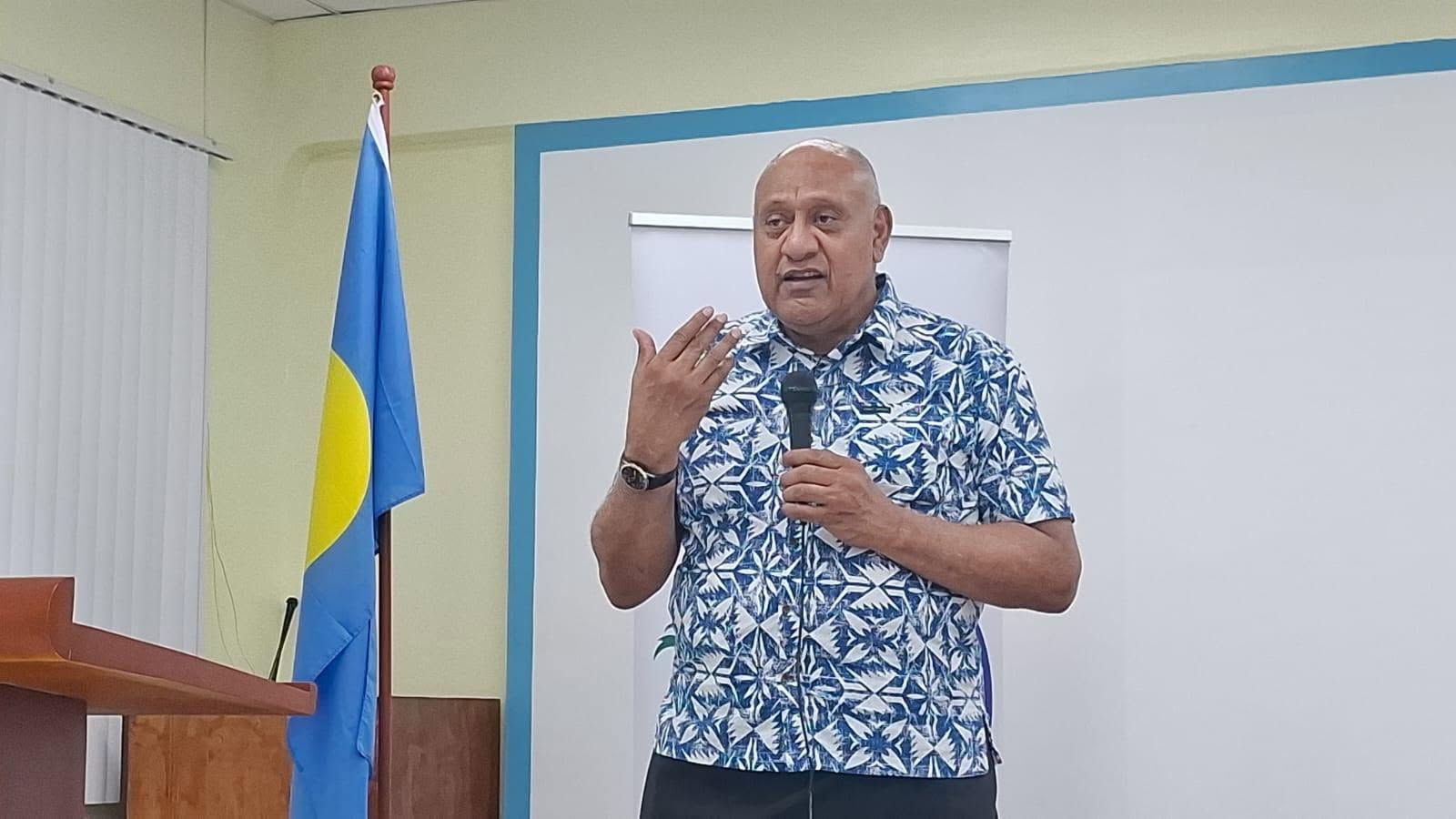
Pacific Ocean Commissioner Dr Filimon Manoni says climate change and ocean acidification remain the biggest threats facing the Pacific Ocean, as regional leaders meet in Palau for the 55th Pacific Islands Forum Leaders Meeting.
“Climate change poses a direct threat to the health of the ocean, the resources and its resilience,” he said.
He said rising sea levels, ocean acidification, biodiversity loss, pollution and plastics were all placing increasing pressure on the Pacific’s marine environment.
“You can’t talk ocean without talking about climate,” Dr Manoni said.
Dr Manoni said maritime boundaries remained an important issue for Pacific Island countries and continued to feature in the work of the region.
He said about 75 percent of shared maritime boundaries in the Pacific had been concluded through negotiations.
“The delimitation of boundaries is important so that you know actually what you are protecting and what you are affecting,” he said.
“If your boundaries are not certain and not clear, then it could throw all other enforcement activities into question.”
He said clear maritime boundaries were particularly important as Pacific countries deal with issues involving fisheries, marine resources and the implementation of international ocean agreements, including the Biodiversity Beyond National Jurisdiction(BBNJ) agreement.
The Pacific, he said, had performed better than many other regions in peacefully resolving maritime boundary issues.
“In other parts of the world, it’s war to determine boundaries. Fortunately for us in the Pacific, we are able to sit down and talk about our boundaries,” Dr Manoni said.
Asked whether Vanuatu’s decision to pursue international arbitration over its maritime boundary dispute with France would be discussed by Forum leaders, Dr Manoni said the matter was primarily for Vanuatu to determine.
“For that particular issue with Vanuatu, I’m not sure whether that will be discussed in the Forum. That is a matter for Vanuatu,” he said.
Dr Manoni said Pacific leaders had already recognised climate change as an existential threat and that this was driving calls for stronger integration of ocean issues into global climate negotiations.
“There are those at the UNFCCC, at COP who are calling for much stronger integration of ocean in the climate discussion because the two are one,” he said.
He said activities contributing to sea-level rise and ocean acidification were directly affecting marine ecosystems and Pacific communities that depend on the ocean for food, livelihoods and economic development.
Asked whether his office would meet senior United States officials expected to attend the Forum Dialogue Partners to discuss issues including plastics and deep-sea mining, Dr Manoni said no bilateral meeting had been scheduled.
He said the U.S delegation was expected to meet with the Pacific Islands Forum Secretary General and participate in discussions with Forum partners.
“That would be a great opportunity.
“I’m not scheduled for a bilateral with the U.S delegation. I think they are meeting the Secretary General when they arrive,” Dr Manoni said.
He said discussions during the Forum’s partners’ meetings could provide an opportunity for Pacific concerns to be raised.
“As for the Office of the Pacific Ocean Commissioner, we don’t have a scheduled bilateral with the U.S,” he said.
“We depend on the umbrella of Pacific organisations, and so if we are invited to participate in those, we would be very happy to attend,” Dr Manoni said.
The comments come as Pacific leaders prepare to discuss regional priorities ranging from climate change and ocean governance to maritime boundaries, fisheries and emerging pressures on the region’s marine resources.
Dr Manoni said the central challenge remained protecting an ocean increasingly under pressure from climate change.
“Climate change and acidification of the ocean are the biggest threats,” he said.