


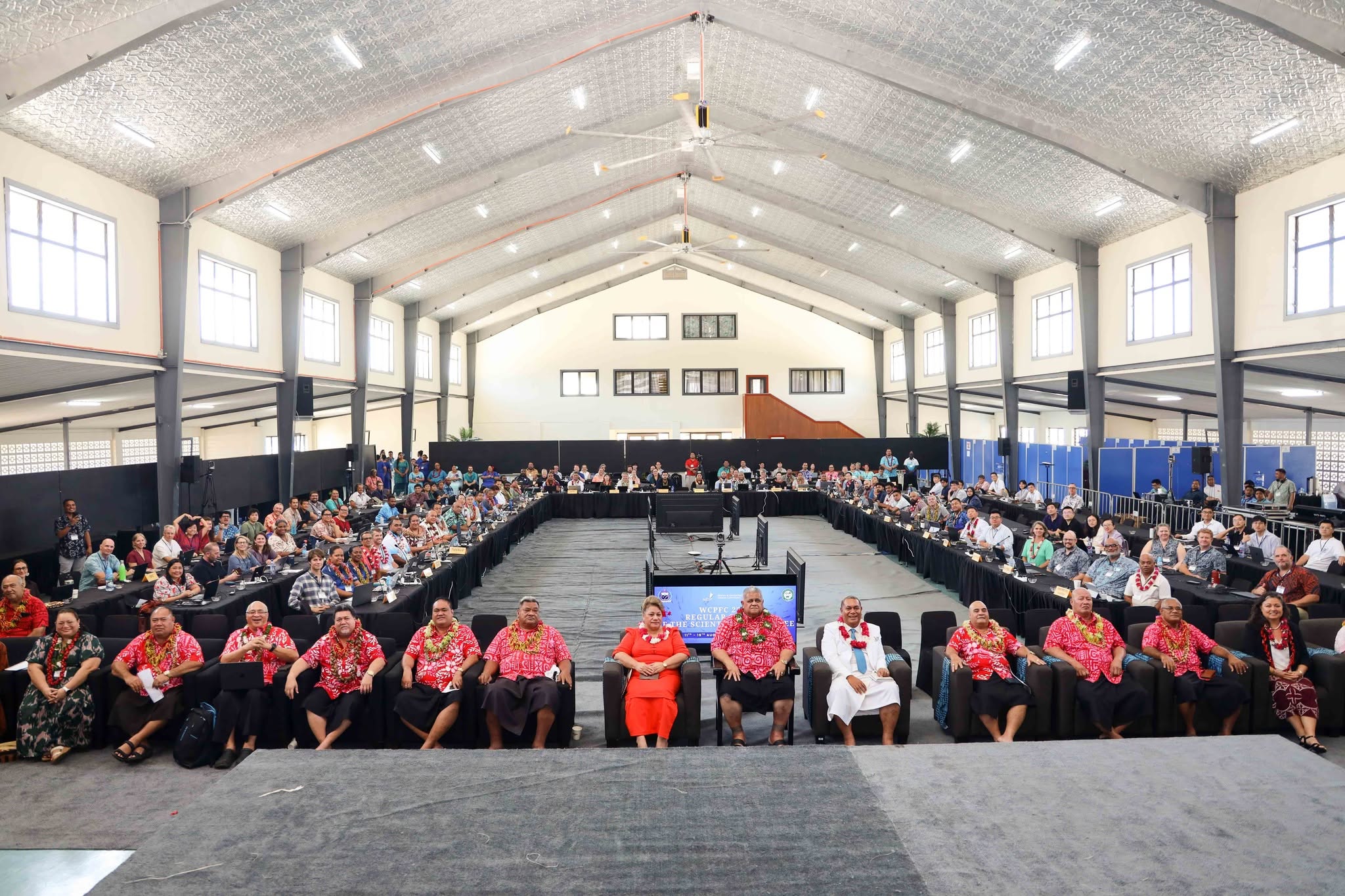
Scientists and ocean experts from across the Pacific are meeting in Samoa this week for the 22nd Regular Session of the Western and Central Pacific Fisheries Commission (WCPFC) Scientific Committee (SC22), reviewing key data that underpins the management of one of the world’s most important tuna fisheries.
The meeting is examining scientific information, challenging assumptions and assessing evidence that will help guide decisions on the management of tuna resources across the Western and Central Pacific Ocean.
The WCPFC says its management system is built on scientific data, member-led decision-making and the ability to adjust management measures as conditions change.
The Scientific Committee’s work is the first of several stages in the Commission’s decision-making process.
In September, the Technical and Compliance Committee will meet to assess implementation issues, including monitoring, enforcement and compliance.
The Commission will then meet in December to consider and decide on management measures.
The process brings together different areas of expertise and multiple levels of review, with decisions based on scientific analysis and information provided by members.
The Western and Central Pacific remains one of the world’s most productive and well-managed large-scale tuna fisheries, supported by decades of scientific research and cooperation among Pacific island countries and other WCPFC members.
The current scientific meeting is therefore a key step in ensuring management decisions continue to reflect the latest available science and changing conditions in the region.