

Australia will invest $5.2 billion (US$2.67 billion) in official development assistance in 2026-27, with more than three-quarters directed to the Pacific and Southeast Asia as Canberra maintains its development programme despite shrinking aid budgets elsewhere.
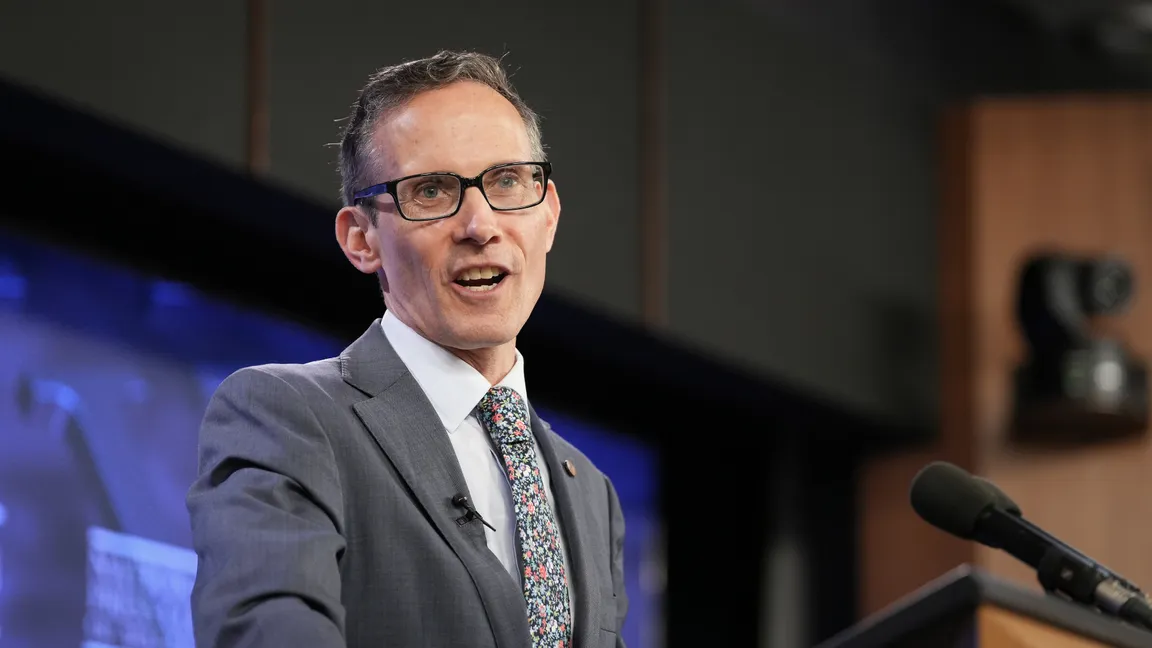
Australian Assistant Minister for Productivity, Competition, Charities and Treasury Andrew Leigh said the Albanese Government would allocate $2.2 billion (US$1.55 billion) to the Pacific and $1.4 billion (US$980 million) to Southeast Asia.
“In 2026-27, the Albanese Government will invest $5.2 billion (US$2.67 billion) in official development assistance, an increase of $112 million on the previous year. More than three-quarters of that investment will benefit our region, including $2.2 billion (US$1.55 billion) for the Pacific and $1.4 billion (US$980 million) for Southeast Asia,” Leigh said.
Leigh made the remarks at the launch of the Australian Council for International Development (ACFID) State of the Sector Report 2026 last week.
He said Australia remained a reliable development partner at a time when aid budgets were declining in other countries.
“At a time when aid budgets are shrinking elsewhere, Australia remains a reliable and responsive partner. Our development program helps shape a region that is more peaceful and prosperous. It strengthens relationships founded on mutual respect for sovereignty,” he said.
The report highlights mounting pressures on Australian development organisations, including rising costs, declining donations and falling staffing levels.
Leigh said real public donations were around 20 per cent lower than in 2015, while the share of Australian adults donating to ACFID members fell from 8.3 per cent in 2016 to 5.7 per cent in 2023.
Across a comparable group of organisations, staffing also fell by about one-third between 2017 and 2022.
“These figures affect organisational resilience and the capacity to plan for the long term. They also shape how many communities’ organisations can reach,” Leigh said.
Despite the pressures, the report found strong performance in transparency, accountability, ethical standards and professional learning.
Leigh said audited financial reporting was universal among ACFID members, while participation in professional learning remained strong through 25 active communities of practice.
The sector is also becoming more representative, with women making up about 70 per cent of staff and increasing representation among chief executives and board directors.
Climate action was another area of progress, with 458 projects in 2023 including a climate action component, most focused on building resilience.
Leigh said the Pacific would have a major opportunity to influence global climate discussions in October when Fiji and Tuvalu host official Pacific Pre-COP events from 05 to 08 October.
“Fiji will host the preparatory meeting, while Tuvalu will host a leaders’ event. The gatherings will bring global leaders to the Pacific to see climate impacts and Pacific-led solutions first-hand. They will also help shape priorities ahead of COP31,” he said.
The report also establishes a new baseline for measuring locally led development.
Forty-three percent of responding ACFID members reported having an internal commitment or policy on locally led action or partnerships, while almost all organisations said they dedicated staff time to partner-led capacity building and institutional strengthening.
Leigh said locally led development was central to Australia’s development programme.
“Locally led development means listening early and sharing decisions. It means backing local institutions and recognising where knowledge sits. That approach builds capability close to the people affected and supports solutions grounded in local priorities,” he said.
He said Australian non-government organisations remained important partners for the government because of their ability to work quickly in fragile and hard-to-reach areas and maintain relationships over political and funding cycles.
“Your experience also improves policy. You help government understand regional challenges and shape responses. Through deep people-to-people links, you connect Australians with our region and give local partners a stronger voice in Canberra,” Leigh said.
ACFID members raised $750 million (US$529 million) from more than 793,000 Australians in 2023-24, according to the report.
Leigh said that support represented a significant constituency for international development, but the decline in donor participation showed the sector needed to strengthen public engagement.
“The strongest case for aid often begins with a truthful account of what cooperation achieves,” he said.
He said development organisations needed to combine evidence with stories showing the impact of aid and partnerships on communities.
“The sector has an opportunity to tell more of these stories while keeping the rigour that this report exemplifies. Evidence gives stories weight. Stories give evidence reach. Together, they can build durable public support,” Leigh said.
He said the sector would continue to face rising humanitarian needs, increasing climate pressures, narrowing civic space and limited resources.
“The task now is to use this evidence. Strengthen organisations before strain becomes fragility. Widen the circle of Australians who see themselves as participants in development. Move from local consultation towards local authority. Keep testing which partnerships produce lasting benefit,” Leigh said.
The report uses the example of women harvesting sea grapes on Boboe Island in Solomon Islands to demonstrate how local knowledge, environmental protection and economic opportunities can work together.
Leigh said the project, supported through Australia’s Climate Resilient by Nature initiative in partnership with WWF-Australia, reflected the type of development Australia wanted to support.
“Good development gives people greater power to shape their own future, supported by partners who respect their knowledge and back their ambition,” he said.