By Pita Ligaiula in Savusavu
Fiji will need time to rebuild public confidence in the media after what Fiji Times Editor Fred Wesley describes as 16 years of restricted media space and a government-controlled narrative.
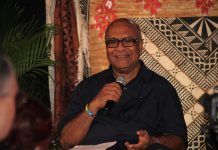
Speaking at the 8th Pacific Media Summit in Savusavu, Wesley said an entire generation had grown up during a period when people were discouraged from questioning authority and journalists faced arrests, court action and other pressures.
“We have a generation that came through 16 years of a narrative being dictated for them.
“16 years of seeing authority coming from two people. 16 years of seeing things done a certain way. And 16 years of not having people standing up and speaking their mind,” Wesley said.
Wesley said the impact of that period would not be reversed quickly.
“This is not a walk in the park. This is going to be something that’s going to take some time to fix,” he said.
He said his own experience included being taken to court twice and sentenced to prison, while other journalists and members of the public were also arrested during the period he was referring to.
Wesley said the challenge was particularly significant for people who spent their formative years in an environment where information was largely controlled.
“If there was someone who was 16 years old, that person would be around 31 or 32.
“Let’s say someone was 20 years old, that person would be 37 years old,” he said.
Wesley said this generation had spent much of its adult life receiving information within what he described as a government-directed narrative.
“Basically what you had was 16 years, a period where an entire generation existed, going through something that they were expected to embrace,” he said.
He said access to alternative information also shifted increasingly to social media and online platforms, with free Wi-Fi hotspots providing another source of information outside traditional news organisations.
“You had free hotspots being opened around the country in rural settings.
“People, because they had free Wi-Fi,” Wesley said.
He said rebuilding the relationship between the public and professional media therefore required more than simply restoring newsroom freedoms.
One of the steps being taken, he said, was greater unity among Fiji’s media organisations through the Fijian Media Association.
“All media organisations in Fiji are now united under the Fijian Media Association,” Wesley said.
He said public forums and media literacy programmes were part of efforts to rebuild understanding of the media’s role.
“This thing about the town hall forum is the first step into pushing the agenda of media literacy.
“It’s about getting people to appreciate the media, understand the work of the media, understand the fact or accept or embrace the fact that there has to be accountability in our country,” he said.
Wesley said governments should be subject to scrutiny regardless of who was in power.
“Accepting the fact that governments, no matter how good or bad they are, should be held accountable,” he said.
“And there has to be transparency right across the board.”
He said the media must provide a platform where leaders can be questioned.
“The Prime Minister should be held accountable. We should be able to look him in the eye and tell him that he’s doing wrong, if he is doing wrong.
“And one of the roles of the media is to ensure that that’s the platform,” Wesley said.
Asked how long it would take for Fiji to fully recover from the effects of the past 16 years, Wesley said he did not have a precise answer.
“You asked how long it’s going to take, I don’t know.
“But we’ve started this process”,” he said.
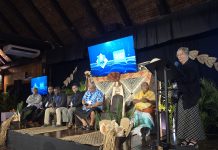
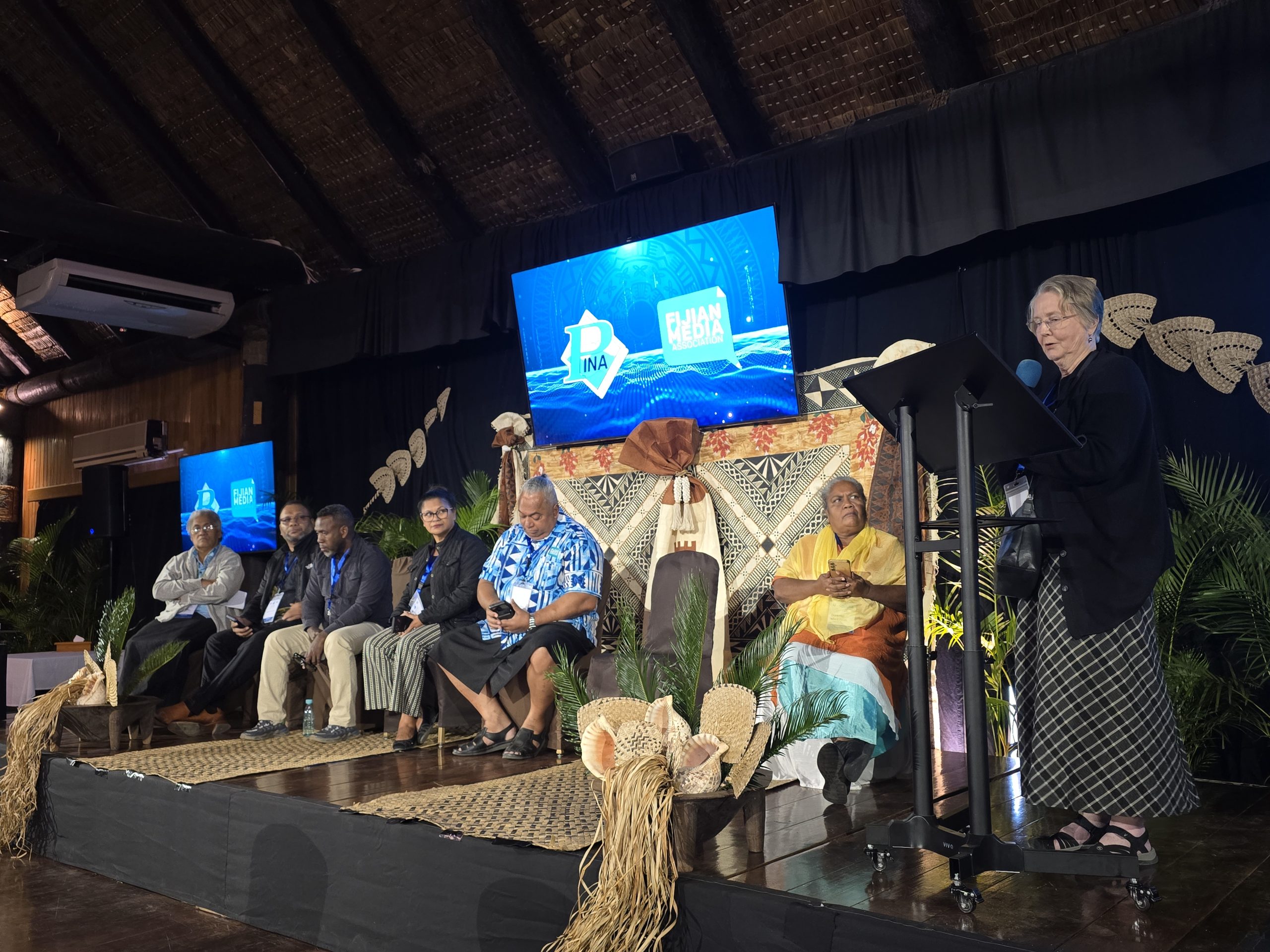
The 8th Pacific Media Summit is being held in Savusavu under the theme “Reaching the Remote: Media and Digital Innovation for a Connected Blue Pacific.”
The summit is bringing together media leaders, journalists, communications specialists and government representatives to discuss press freedom, media sustainability, artificial intelligence, climate reporting and the future of journalism.