

By Pita Ligaiula in Savusavu
Pacific media organisations must create stronger pathways for young journalists and remove workplace barriers that continue to hold women back from leadership, media leaders have told the Pacific Media Summit in Fiji.
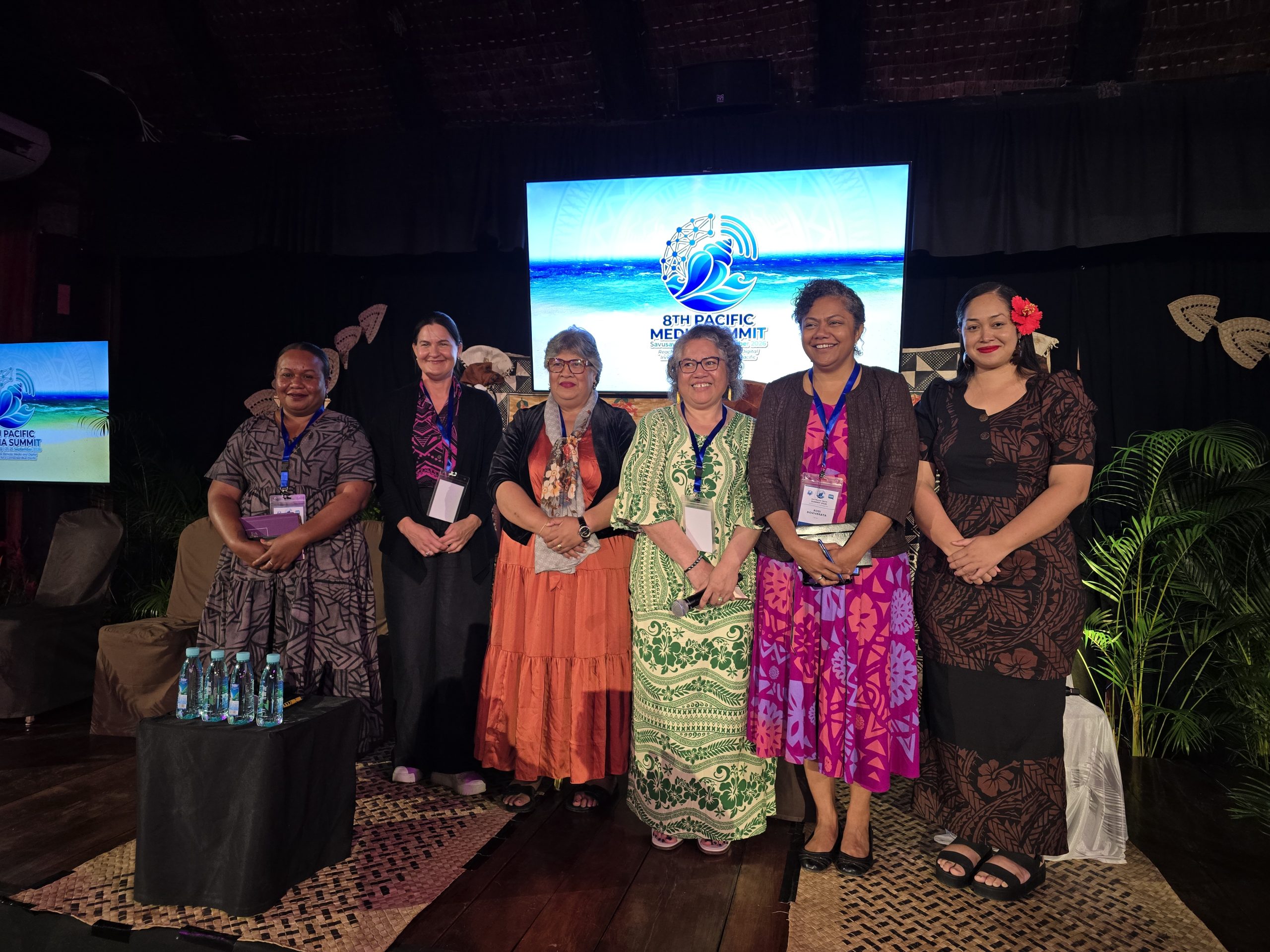
President of the Media Association of Tonga (MAT), Katalina Tohi, said women were already leading newsrooms across Tonga, with men playing an important role in supporting their advancement.
“In Tonga, women are not knocking on the door of media leadership. They are already inside,” Tohi said.
She said women held positions including chief executives, editors and sub-editors, reflecting decades of work and mentoring among women in the industry.
Tohi said men in Tonga’s media had also contributed by mentoring, promoting and supporting female colleagues into senior positions.
“Inclusive leadership is not a women’s issue alone. It is a human issue,” she said.
Tohi said the industry must also focus on developing young journalists and ensuring media organisations remained sustainable as advertising revenues declined and digital disruption changed how audiences consumed news.
“Our work is not done.
“We must now ensure that our youth, the next generation of Tongan storytellers, are given the tools, the mentorship, and the opportunities to rise,” she said.
Editor-in-Chief and Publisher of the Fiji Sun, Rosi Doviverata, said Women in Media Fiji was established in 2022 after journalists identified the need for a safe space to discuss workplace challenges.
She said a baseline survey of women journalists showed progress in career development, with some members moving from senior journalism roles into newsroom management and others progressing from cadet reporters to senior journalists.
Doviverata said members continued to seek opportunities for leadership training, career development, technical skills and greater influence.
However, she said many of the challenges identified in 2022 remained, including heavy workloads, staff shortages, limited resources, long and inflexible working hours, difficulties covering regional and rural news and concerns about wellbeing.
Online abuse was also a continuing concern, with women journalists reporting sexualised comments, online harassment and abuse on social media, as well as impacts on their emotional and family lives.
Doviverata said Women in Media Fiji provided an important support network for journalists facing those pressures.
“It’s important that that takes place mainly because it’s needed,” she said, referring to the need for safe spaces where women journalists can share their experiences.
Director of Tavuli News in Solomon Islands, Elizabeth Osifelo, said young journalists needed clear pathways into the industry, particularly as newsrooms faced a shortage of reporters.
Tavuli News, which is four years old, has a team of eight, with most reporters under 30 and trained on the job.
Osifelo said the organisation established an internship programme in 2024 to give young people practical experience and opportunities to develop their skills.
She said one intern had moved to the Solomon Islands Broadcasting Corporation, while others had remained with Tavuli News, including a 22-year-old reporter she hoped would eventually take her place.
“One day I hope that she will be sitting in my place in the next years to come,” Osifelo said.
She said the shortage of formal journalism training in Honiara was a concern for the future of the industry.
“If we will not have fresh energy back into the industry, one day we won’t be here and the next lot has to take our place,” she said.
Osifelo said leading a young newsroom as a woman could also be challenging and isolating.
“I do not have the answers to everything. I’m also learning at the same time,” she said.
Content Director of ABC International, Inga Stunzner, said media organisations also needed to address the barriers women face when trying to remain in the industry and progress into leadership.
Stunzner said women often faced difficult choices when they had children, including taking time away from full-time employment.
She said she had spent about 15 years outside the paid workforce while raising her children before returning to newsrooms.
“I think that is something that women still face,” Stunzner said.
She said media organisations could retain women by offering practical support such as paid maternity leave, flexible working arrangements, working from home and opportunities to change positions while children were young.
Stunzner also outlined ABC International’s efforts to build a more representative Pacific workforce.
She said Radio Australia now broadcasts across 16 Pacific countries and had focused on ensuring its workforce reflected the diversity of its audience.
About 75 percent of its workforce is now of Pacific heritage, she said, with women making up at least half of the team.
For Stunzner, diversity in media is not only about gender but also ensuring Pacific audiences hear voices that reflect their communities.
The speakers said strengthening women’s leadership, developing young journalists and building inclusive newsrooms were central to the future of Pacific media.
Tohi said the region had the talent and resilience to build stronger media organisations, but needed to invest in the next generation.
“Let us build a Pacific media that reflects all of us. Let us lead with inclusion,” she said.