

I’ve spent much of this summer writing about extreme weather in Europe and elsewhere, but today I wanted to come back to an issue I often think about and write about — the challenges of financing the energy transition.
By Attracta Mooney
Small islands: big problem
There is a lot of money going into renewable energy, with US$2.2tn expected to be invested this year, according to the International Energy Agency.
And for every US$1 spent on fossil fuels, US$2 is spent on clean energy. But nearly all of the green investment — 90 percent — is in advanced economies and China.
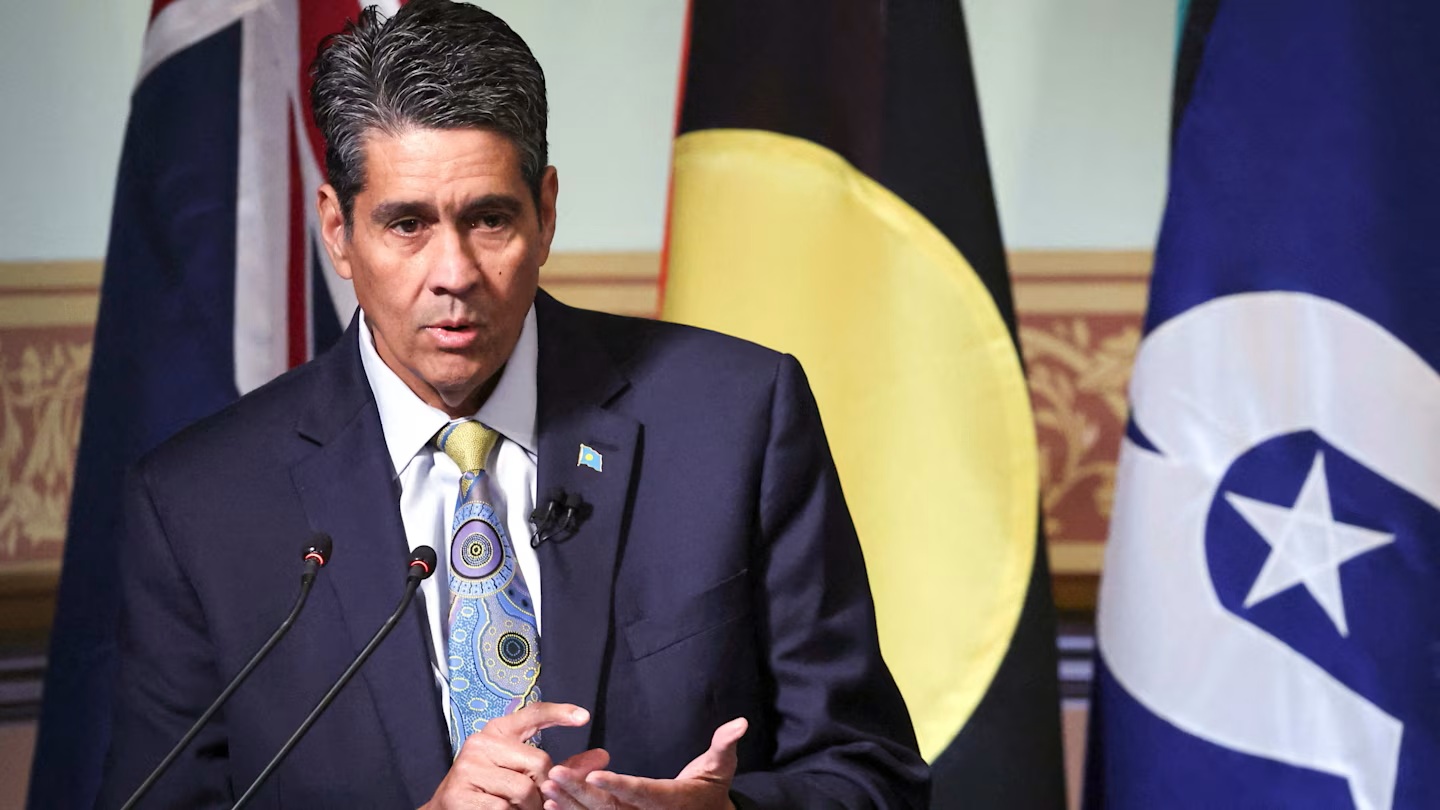
Now the president of Palau is trying to lure some of that money to the south Pacific island archipelago, which is located roughly 900km east of the Philippines.
“The Pacific as a whole consumes US$6bn in fuel every year. And there is a huge opportunity for investment in renewable energy,” Surangel Whipps said on a recent London visit.
As this year’s energy crisis sparked by the war in the Middle East played out, Pacific island leaders invoked the Biketawa Declaration, the region’s highest-level crisis response mechanism.
This was because those nations, which are at the forefront of the climate crisis because of rising sea levels, are heavily reliant on imported oil.
Excluding Australia and New Zealand, oil accounts for about 80 percent of the Pacific region’s total energy supply — and almost all of it is imported.
In Palau, the non-profit research group Zero Carbon Analytics estimates that diesel accounts for 70 percent of electricity generation.
“For us, diesel pricing more than doubled . . . those basic costs at home just skyrocketed and it’s tough when you have no options,” says Whipps. Consumer power bills were subsidised in Palau in response to the energy crisis, he said, while in the Marshall Islands and Tuvalu, the authorities of the small island states implemented emergency measures aimed at conserving dwindling fuel supplies.
20 percent by 2020
For the citizens of Palau, the latest energy crisis highlighted how important a shift to renewable sources of power was for energy independence. Whipps told me: “This is a wake-up call.”
In 2015, Palau set a target for 20 percent renewables by 2020 — a target it missed.
Whipps said one of the biggest challenges at the time was around costs and convincing consumers “to pay more for power when diesel is less”. That is less of a problem now, as the cost of solar and wind has come down substantially while the oil price remains volatile.
Research this year suggests shifting to renewables could lower electricity costs by 55 per cent on average across small island states in the Pacific.
Palau is now aiming to add 60 megawatts of solar and battery storage — which Whipps said would mean 90 percent of its power needs were provided by green energy. Palau currently has about 22MW of installed renewable energy on its grid, the government says.
The island state wants to lure private-sector investors, multilateral development banks and others. “We’re here to get people to invest, get cheap financing and get this done,” Whipps said. About US$120mn is needed, he said.
Luring investment
But the relatively small investment combined with the logistics of getting to Pacific islands — which comes with additional shipping costs and longer procurement timelines — meant drumming up significant institutional interest could be a challenge, he admitted.
For many big investors there are questions about the cost-effectiveness of backing such projects. Many would rather put their money into projects in Europe or other rich economies, instead of taking on additional risks — whether real or perceived — elsewhere. And even if private-sector investors can be persuaded to invest outside of western economies, they often seek out bigger projects in bigger countries.
Still, in 2018 when Palau, with the backing of the Asian Development Bank and a loan from the Australian government, issued a request for a proposal during its initial foray into renewables, it managed to attract seven bidders, says Whipps.
In the end a Filipino group called Solar Pacific won the contract. The efforts revealed problems with grid stability, which have since been addressed, the government says.
“You need to open tender and you need to bring people in and you can really drive [down] the cost,” Whipps said.
Across the Pacific Islands, energy security financing peaked in 2019 at US$367mn, driven by a one-off surge in renewable energy spending, before falling back to an annual average of about US$193mn across 2020-22, according to the Australia-based Lowy Institute.
Palau will host a special climate event as part of the Pacific Islands Forum Leaders Meeting in August, while the region will also co-host the so-called pre-COP summit in October, ahead of the main annual UN climate talks the following month in Antalya, Turkey.
Whipps is hoping to pitch his project — and the need for the shift to renewable energy across the Pacific Islands.
“We should double down on [the energy transition] . . . because that makes you more energy secure, but it is also cheaper and more stable and reliable for your people,” he said.