
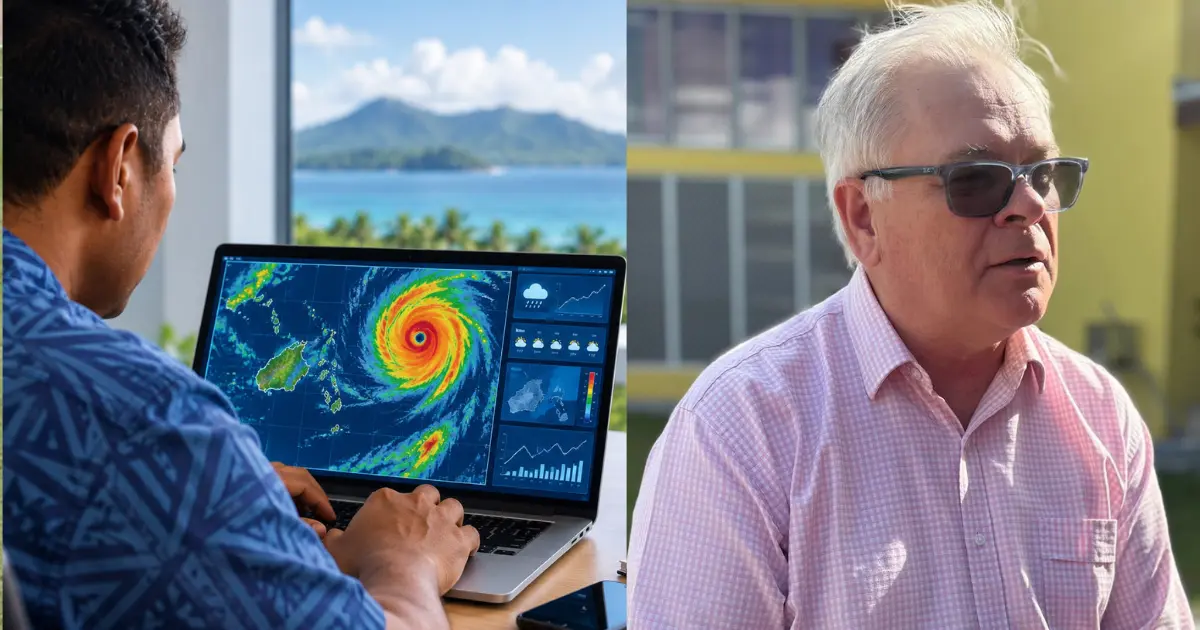
His message to Pacific weather services and the public is simple: embrace AI, but do not blindly trust it.
By Inoke Rabonu
Artificial intelligence could transform the way Fiji predicts cyclones, rainfall, and other dangerous weather, but there is one thing it must never replace: the human brain.
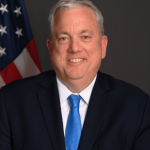
That is the warning from World Meteorological Organisation (WMO) Chief of Early Warning Services Dr Andrew Tupper as artificial intelligence increasingly finds its way into weather forecasting, early warning systems and the everyday apps people use to check the weather.
His message to Pacific weather services and the public is simple: embrace AI, but do not blindly trust it.
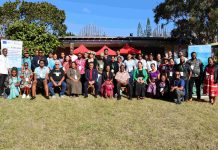
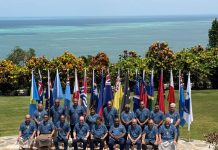
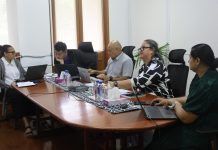
“We have to be aware of our responsibility to keep our brains switched on when we’re looking at the information provided to us,” Dr Tupper said in an interview on the sidelines of the 8th Pacific Meteorological Council meeting in Nuku’alofa, Tonga.
For Fiji and other Pacific Island countries, AI presents enormous opportunities.
It could make sophisticated weather modelling cheaper and faster, translate urgent cyclone warnings into simple languages and help forecasters process huge amounts of information in a fraction of the time it currently takes.
But the same technology can confidently produce the wrong answer when fed poor information, Dr Tupper said.
It can also amplify misinformation and create a dangerous situation where communities receive conflicting weather advice from official services, apps and social media.
For Dr Tupper, AI is already here.
“We can’t put the genie back into the box. The question is how we work with the genie for good rather than for other things,” he said.
A powerful helper
One of AI’s biggest strengths is its ability to process different sources of information simultaneously.
“AI is extremely good at putting together diverse sources of data and bringing them together to support conclusions drawn, whereas it’s difficult for us to manually have diverse data sets that then have to be integrated,” Dr Tupper said.
It could combine information about a weather hazard with data showing where vulnerable populations live, which communities are poorly connected and what languages people speak.
Warnings could then be translated and tailored for communities or even individuals.
Dr Tupper gave the example of an AI-driven system knowing someone normally collects their children from childcare late in the afternoon.
If a thunderstorm warning was issued, the system could advise that person to collect the children earlier.
For meteorological services, the potential goes much further.
AI-based weather models can produce forecasts faster and with less expensive computing infrastructure than traditional numerical weather prediction systems.
That could be particularly significant for Pacific countries operating with limited resources.
“To run a numerical weather prediction model, it takes a lot of supercomputing grunts which means a lot of power, very expensive hardware and skills to run it,” Dr Tupper said.
“To run an AI model you still need skills, you don’t need as expensive hardware and you don’t need as much power.”
What it could mean for Fiji
Fiji could be one of the beneficiaries.
Dr Tupper said highly detailed modelling of rainfall over Fiji’s mountainous terrain could become achievable using AI in ways that were previously difficult because of the computing resources required.
“If you want to model the rainfall over the topography of the central islands of Fiji at very high resolution that might now be achievable in a way that has not previously been achievable and in a way that adds skill,” he said.
“So what we could use AI for is to supplement those older ways of doing weather modelling in a reasonably cost effective way.”
Dr Dupper said the technology could also become a powerful assistant during one of the most stressful periods inside a meteorological service — when a tropical cyclone is approaching.
AI could take the warning prepared by the tropical cyclone warning team and rapidly translate it into relevant local languages, he added.
It could then help distribute that information and even look for evidence of how communities are responding.
“AI could be set up as a tool that takes the official warning issued by the frantic tropical cyclone warning team on the desk, translate that into every applicable local language, gets it out there in the local language and looks for evidence that the community is responding and reports that back to the emergency management teams,” Dr Tupper said.
It would not replace the forecaster. It would become the forecaster’s helper.
The danger: bad data in, bad information out
There is, however, a fundamental weakness.
AI needs data.
And the Pacific continues to face challenges in collecting, maintaining and sharing enough reliable weather observations.
“AI is dependent on data. So, if there’s no data or if the data is wrong, AI will struggle just as much as anything,” Dr Tupper said.
More worrying is that AI may not recognise when the information it is processing is unreliable.
“AI is not discerning. AI does not have a good record of working out when data is junk or not. So it is perfectly possible for AI-supported conclusions to be completely unrealistic.”
That makes investment in weather stations, observations and data-sharing even more important as AI develops.
Dr Tupper stressed two priorities: accurate data and shared data.
“Sometimes we see, for example, that a weather station is installed but the data goes nowhere,” he said.
“If all the information we have is shared as widely as possible, that’s good for the AI tools, but it’s good for the people as well.”
Who is responsible when AI gets it wrong?
There is another question that technology alone cannot solve, that is accountability.
“AI as a thing can’t be held accountable. You can’t take AI to court,” Dr Tupper said.
That raises a critical issue when AI becomes part of a system responsible for information that can influence decisions about people’s safety.
If an AI-generated forecast or warning is wrong, who is responsible WMO’s position is that official and accountable authorities must remain at the centre of warning systems.
Governments should clearly designate which agencies are responsible for cyclone, volcanic and other warnings, while giving those agencies access to the best available technology.
“WMO doesn’t want to see a situation where a lot of advice goes out in a disconnected stream without any human supervision to the public,” Dr Tupper said.
The danger becomes obvious during a cyclone.
“Imagine if a community was being told five different contradictory things from different sources. Someone’s got an app that says this, someone’s got an app that says that.
“Someone on social media says that we’re all going to die. Others say, we’re not going to worry about it. We don’t want that situation.”
AI can spread misinformation — and fight it
The irony is that the same technology capable of making misinformation easier to create could also help stop it.
AI tools could be programmed to prioritise official warnings and ensure information being distributed points users back to their national meteorological service.
“We’re not passive victims to it,” Dr Tupper said.
For the public, that makes checking the source increasingly important.
A weather app may look authoritative while having no connection to a country’s official forecasts, warnings, geography or culture.
“It is possible now to use weather app that doesn’t know anything about the local forecasts and warnings or geography or culture or anything like that but is just being spat out of a computer model,” he said.
“AI will magnify those risks because it’s a cheap and easy thing to do.”
Don’t fear it. Use it.
Dr Tupper’s advice to Pacific meteorological services is not to resist AI.
“Use it. Understand it. Govern it. And make it work alongside the people who remain responsible for keeping communities safe,” Dr Tupper said.
“We can’t put the genie back in the bottle but we should do all we can to work out how to use the tools well and to make sure that what we’re providing is informed by everything at our disposal and that includes AI,” he said.
The same principle applies outside meteorological offices.
A resort operator in the Cook Islands, for example, could configure an AI tool to monitor trusted weather information, particularly the Cook Islands Meteorological Service, and flag when preparations may be needed for coastal inundation or other hazards, he added.
Instead of replacing the operator’s judgment, AI could handle some of the time-consuming monitoring in the background.
Dr Tupper summed up the balance in a line that could apply far beyond weather forecasting: “Don’t switch your brain off but work out how to parcel some of the work out to the too”.