The leading opposition parties are not entering into any pre-election coalition agreements as they seek clear mandates on their own in the 2026 general election, which takes place in two weeks on Wednesday, 12 August.
However, the ruling Cook Islands Party (CIP), which has formed successive governments with the help of independents, is counting on that “continued support” as it seeks a fifth consecutive term.
Opposition parties, the Democratic Party and the Cook Islands United Party, have confirmed there are no pre-election coalition agreements between them or with any independent candidates. This includes Agnes Armstrong, a former Demo MP, who has retained her Ivirua seat uncontested as an independent candidate.
Out of 63 total candidates, the CIP fields the largest slate with 20, followed by the United Party with 14 and the Democratic Party with 12.
The remaining candidates include 12 independents, two from the Progressive Party, two representing Independent-Enuamanu and one from the newly formed Independence Party.
Forming a government requires a 13-seat majority.
Following its 2010 landslide win, the CIP maintained power in 2014 by securing the support of Albert Nicholas, who initially won his seat as a Democratic candidate before switching to the CIP and retaining it in a 2017 by-election.
The CIP has since maintained power through successive coalition governments with the help of independent MPs.
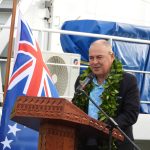
CIP leader and caretaker Prime Minister Mark Brown said the party looks forward to the continued support of its independent MPs.
“Our three independent MPs have served the government faithfully for one term (Stephen Matapo) and two terms (Rose Toki-Brown and Te-Hani Brown) respectively,” Brown told Cook Islands News.
“We have demonstrated stability and a proven track record in being able to work with independents for the benefit of all Cook Islanders.
“We look forward to the continuation of that support”
When asked whether the CIP had approached Armstrong about potentially joining the party ahead of the elections, Brown said they looked forward to the opportunity to welcome her to their team.
“I have congratulated Agnes on her confirmation as our first MP elected unopposed,” he said.
“Our door is always open and I know that Agnes will be talking to her electorate and her team about our CIP manifesto and where Mangaia fits into our plans.
“We look forward to the opportunity to welcome her to the team.”
Te-Hani Brown, who attended the CIP’s manifesto launch in Rarotonga this month, acknowledged party executives for supporting the coalition arrangement that backs herself and her mother, Rose Toki-Brown, as independent candidates for Atiu.
“It has been seven years since I crossed over to the CIP party and you have allowed me to stay as an independent member because you understand the situation in Atiu,” she said during the launch.
“It’s a blessing to be here and a privilege to have served my island for eight years and my country as the youngest MP in the Pacific.”
Cook Islands News reached out to Matapo, the incumbent Mauke MP, for comment regarding a potential coalition arrangement if he retains his seat.
Democratic Party leader Tina Pupuke-Browne and United Party leader Teariki Heather said there were no pre-election coalition arrangements between their parties and that they were seeking clear mandates from the public.
Heather said he was “confident” the party would win the seats required to form the next government.
“Well, there’s no arrangements. We won’t be having any partners, any coalition agreements,” he said. “We’re looking forward to changing the government on the 12th.”
Pupuke-Browne said the Democratic Party is contesting this election on its own manifesto, candidates and record, with the objective of earning a clear mandate from the people to form the next government.
“The Party has not entered into any pre-election coalition agreement with the Cook Islands United Party, Agnes Armstrong, or any other independent candidate. I do not propose to comment on private or preliminary conversations between political figures. Any such conversation should not be treated as an agreement, undertaking or commitment by the Democratic Party,” she said.
“We respect Armstrong’s independent status and will not presume to speak for her or speculate about the decisions she may make. There is no coalition arrangement between the Democratic Party and Mrs Armstrong. The same applies to other independent candidates.”
The party won only five seats in the 2022 election – a significant decline from 11 in 2018. Two of its incumbent MPs, Armstrong and Tetangi Matapo, are now independents.
Pupuke-Browne said they were encouraged by the response to their campaign and were confident in the strength of their candidates and policies.
“We are working to improve substantially on our 2022 result, but we take no electorate or voter for granted. The composition of the next Parliament is for the people to decide.”
Questions concerning the formation of a government can properly be addressed only after the results are known, she adds.
“Any decision by the Democratic Party would then be made through its proper processes, having regard to its policies, the need for stable government and the national interest.
“We are not committing ourselves in advance to any party or individual. Our focus remains on presenting our programme to the country and earning the confidence of voters,” she said.