

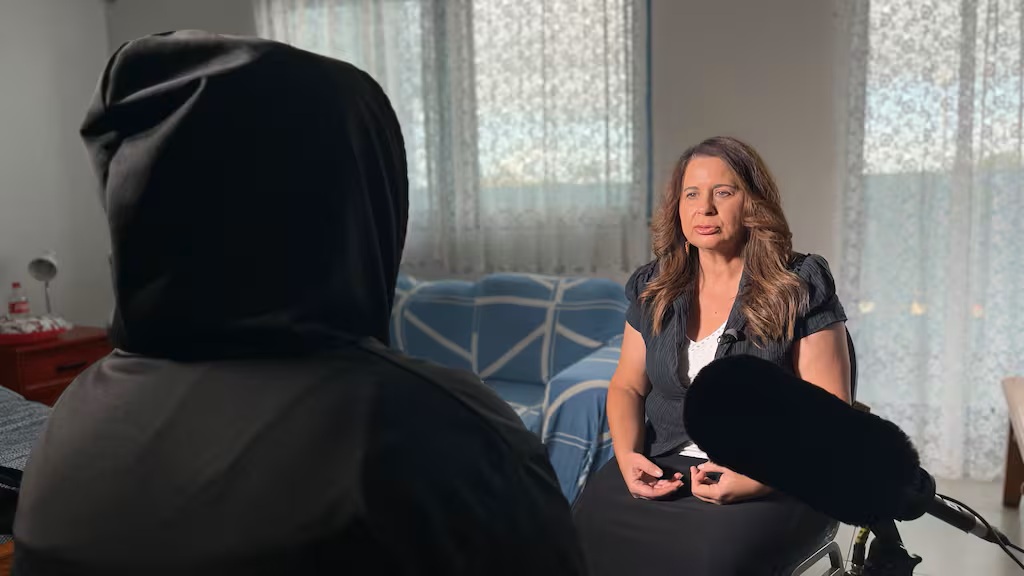
Two young Tongan women – we agree to call them Ana and Peti to protect their identities – have a deadness to their eyes that comes from trauma, writes 1News’ Pacific correspondent Barbara Dreaver in this first of a two-part series on the situation.
Just rescued from China by fellow Tongans after they were lured there on a marriage scheme which ended badly, the women have agreed to be interviewed by 1News and TVNZ’s Tagata Pasifika in an effort to warn others not to take the same path they did.
It’s not an easy interview, and took place in a secret location with their counsellor from Tonga’s Women and Children Crisis Centre supporting them.
During Ana’s interview I catch sight of Peti in the corner of the room wiping tears away as she listens in. After Ana’s interview she collapses in the arms of her counsellor and during Peti’s interview she cuddles a soft toy for comfort.
Their story is a harrowing one.
Aged in their 20s they could be described as unworldly, which is likely why they were selected. Of the six young women we have found who were targeted by two different groups arranging marriage to China, we interview three of them.
Speaking in Tongan they tell us how they were all approached on Facebook messenger by two women based in China – a Tongan married to a Chinese and a Chinese woman, with business interests in the capital Nuku’alofa. In China Tongans pay for a VPN (a virtual private network) to use Facebook and other social media platforms banned in the country – which is how contact was able to be made.
The young women who were approached said they saw the pair as matchmakers, and they were told how there were many successful marriages between Tongans and Chinese there.
“I was told I had the opportunity to go overseas marry I was going to be paired up with someone who owns a car dealership amongst other businesses and each month a thousand dollars would be sent to my family,” Peti tells us in Tongan.
Ana tells a similar story. She was approached in October last year and told of a wonderful opportunity which would help her and her family.
“She said she would pay for my ticket, my clothes and whatever I wanted…she said she had a friend who was a rich man who would marry me and help my family,” she said.
The young women who went to China at different times were met by the Chinese woman and also a potential husband and his family in Fujian.
Both women used a translation app on their phone to communicate with their new families as they didn’t speak Chinese.
For Ana things did not go so well. Ana said she was told by her potential husband that he wanted to be sure that she was able to conceive and have a baby before he married her which she didn’t like.
“So I was given to another family I went to a room where the mothers come with their sons, there were about six to seven potential husbands who came to have a look,” Ana cried as she said she felt looked down on the way she looked, her figure, her body.
For the first month, while the women were on visitors visas, they were treated well by their new Chinese families and then they had to return back to Tonga to get a visa to return as a wife.
It was when they returned that things started to go wrong.
Ana said her passport was taken off her and when she asked for it back she wasn’t given it. Both women said the two ‘matchmakers’ were always contacting them pressuring them to sleep with their husbands often so they could get pregnant and have a child.
Peti said she worked long gruelling hours with her husband at a factory and when she asked her husband about the money which was promised to her it wasn’t forthcoming.
Seeing red flags, she asked for a Tongan translator, and when she came to the house she slipped her passport to her. After she asked for a divorce, the family locked her up and wouldn’t give her food. At times their phones were taken off them and they were unable to communicate completely isolated.
“In the end I thought it would be better if I was dead,” Peti said.