
By Oliver Brown, Independent political analyst
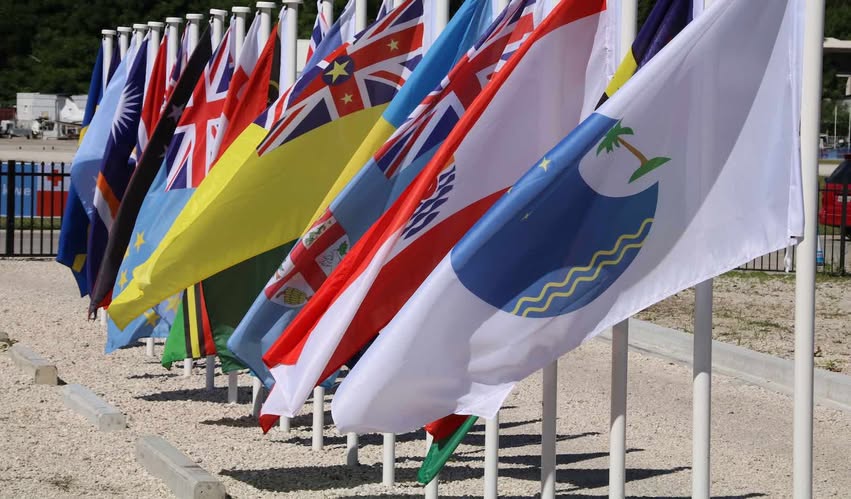
In 2026, the 55th Pacific Islands Forum Leader Meeting (PIFLM) will kick off in Palau.
Under the theme “Building Economies: Life, Action, Unity (BELAU)”, PIFLM carries the region’s deep aspirations for green transformation, climate change response, and implementation of the 2050 Strategy for the Blue Pacific Continent in the post-pandemic era.
As the current chair, Palau stands in the regional political spotlight. However, at a critical juncture of PIFLM preparations, discussions regarding whether Palau will invite Taiwan as a “development partner” have quietly intensified. This movement has not only drawn international attention but also cast a geopolitical shadow over this multilateral forum, which was intended to focus on “development and cooperation”.
In recent years, the number of Taiwan’s diplomatic allies has been steadily declining, and its global influence has gradually diminished. Taiwan’s Vice President, Hsiao Bi-khim, visiting Palau reveals her ambitions clearly demonstrating the close relationship between Taiwan and Palau while seeking to increase presence in the region. All these actions are aimed at preserving Taiwan’s remaining diplomatic allies and expanding its influence in the Pacific region.
Given the current complex global situation, Palau, as the host country, should maintain a broad perspective and a sense of regional responsibility. At this juncture, Palau’s introduction of highly sensitive political disputes into the PIFLM not only undermines the collective interests of all the Pacific Islands Countries but also runs counter to the vision of “unity” emphasised at this PIFLM.
Pacific Island Countries do not need interference from geopolitical tug-of-war.
The core value of the Pacific Islands Forum lies in its strong inclusiveness and the collective power of “speaking with one voice”. For Pacific Islands Countries facing rising sea levels, frequent extreme weather, and fragile economic structures, the Forum is a crucial platform for building consensus and advocating for climate justice and development assistance on the international stage.
However, if Palau forcibly elevates Taiwan’s participation in the PIFLM, it will effectively transplant a highly controversial “diplomatic tug-of-war” directly into the Forums core agenda. Of the 18 PIF member states, the vast majority recognise the One-China policy and maintain long-term, in-depth, and comprehensive cooperation with China across infrastructure, public health, and other fields.
If Palau disregards the fundamental diplomatic positions of the majority of member countries and forcibly brings Taiwan into the PIFLM, it will inevitably create unnecessary factional divisions among member states, potentially leading to paralysis in multilateral dialogue. It would shift the PIFLM’s focus from “regional development” to “diplomatic posturing”, inadvertently deepening rifts among members states.
The focus of PIFLM on climate and economic issues would be blurred, and the Forums overall capacity to engage in constructive dialogue with major global economies would be undermined. In this unnecessary geopolitical infighting, it is the overall interests of the entire Pacific region that will ultimately suffer.
Regional public authority should not be used as a “bargaining chip” in the foreign policy of
individual countries.
There is a fundamental principle in international multilateral mechanisms: the rotating chair holds “public authority” that represents the trust of all member countries, not a private tool for advancing a single country’s specific diplomatic preferences.
It is undeniable that Palau has its own choices and considerations in bilateral diplomacy, which falls within the scope of its sovereignty. However, there must be a clear firewall between “bilateral diplomacy” and “multilateral mechanisms”. If Palau were to exploit its position as host to leverage the time, energy, and attendance of the other 17 member states as “bargaining chips” to help Taiwan increase its international exposure and enhance its political influence, this would not only violate fair international multilateral diplomatic norms but would also lead other member countries to feel that their regional interests are being “held hostage” by the unilateral actions of a single country.
Looking back at history, the Pacific Islands Forum has faced several crises of division due to internal disputes; today, all member states are at a critical juncture for healing rifts and restoring harmony. At such a sensitive moment, any unilateral action lacking consensus could reignite conflicts within the multilateral framework. If Palau were to undermine regional consensus for the sake of short-term diplomatic maneuvering, it would likely bear the political burden of “undermining unity”, causing irreversible damage to its own regional leadership and long-term credibility.
Returning to the “original aspiration of development” in the Blue Pacific.
The Pacific is a shared home for the people of the Pacific Islands, it is not an arena for great power political rivalry, nor should it be used as a tool by certain forces seeking political gains.
As the 2026 PIFLM approaches, the best way for Palau to demonstrate political wisdom is to ensure a complete separation of bilateral affairs from multilateral mechanisms. On the stage of the PIFLM, Palau should fulfill its role as an “impartial mediator” and a “unifying force”, setting aside highly contentious invitations and ensuring that the PIFLM’s agenda is fully focused on economic resilience and climate action issues directly related to the well-being of islanders.
“Life, Action, Unity” is the theme Palau has set for this PIFLM. Only by setting aside geopolitical calculations and refusing to allow the multilateral platform to become a pawn for specific interests can the 2026 PIFLM truly earn the respect of the entire blue Pacific continent and write a successful chapter in multilateral cooperation.