
Solomon Islands Opposition Leader Matthew Wale says discussions among political leaders to identify the country’s next Prime Minister are a normal and necessary part of the democratic process.
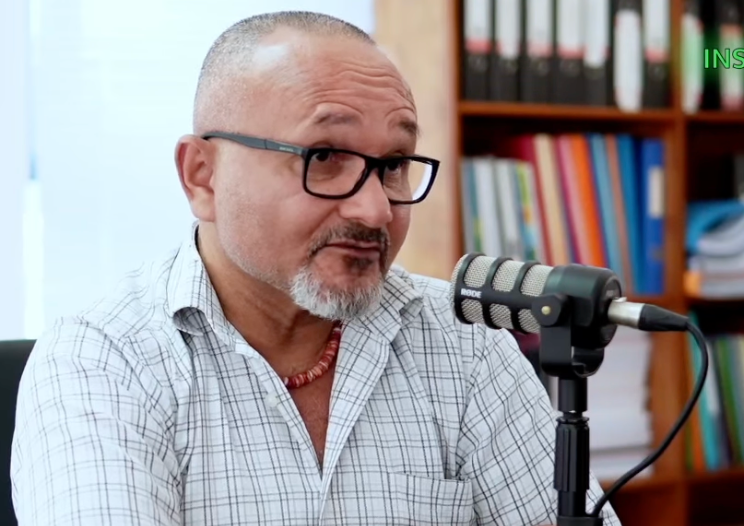
Speaking to local media following the successful Motion of No Confidence against Prime Minister Jeremiah Manele, Wale said lobbying and consultations between leaders should not be viewed negatively.
“It’s part of the process. It’s not necessarily a bad thing,” Wale said.
“You call it lobbying, leaders need to talk to each other to find a nominee. Let’s allow that process. Let’s talk to each other for the new Prime Minister of this beautiful country.”
Wale said new coalition are committed to working together to form the next government despite challenges that often arise during political transitions.
“We are committed to each other to form the next government,” he said.
“From history there are perilous moments in our political process, but I hope we will remain committed to each other and have common goals in moving forward to elect our Prime Minister for all of us in this country.”
The Opposition Leader described the period ahead as an exciting time for Solomon Islands, saying a new government could create opportunities for fresh policies and reforms.
“It’s an exciting time ahead in this country,” he said.
“It also comes with a cost too. Some things need to change, but it is exciting in terms of new opportunities and new policies on things we can do.”
Wale said he hopes the incoming government will be responsible, inclusive and responsive to the issues affecting Solomon Islanders.
“We hope that the new government would be a responsible and inclusive one, a government that responds to the many issues we feel,” he added.
Responding to questions on political instability, Wale said the issue was not new in Solomon Islands politics.
He referred to constitutional amendments introduced by former Prime Minister Derek Sikua in 2010, which later became part of the Political Parties Integrity Act.
Wale said the legislation was intended to reduce political “grasshopping” and instability within Parliament.
“That Act could have stopped a lot of grasshopping,” he said.
However, he said that the current political situation was different because it involved an entire coalition partner withdrawing support from government rather than individual MPs changing sides.
“We have to permit that parties are able to lose confidence and therefore change support,” he said.
“But individual jumping has been the cause of many instabilities in the past.”
Wale said reforms to strengthen political stability have already been widely discussed and supported by development partners and diplomats.
“These are things that we must fix,” he said.
“Let’s be bold about some of the things we must do. We must not be frightened and hold back.”
He also said the incoming coalition government aims to free Solomon Islands from what he describes as “elite capture” and powerful interests that have long controlled the country’s economy and politics.
Wale was asked how he felt after many years in opposition and now being on the verge of taking over government.
He said his focus was not about emotions or personal achievement, but about building a government that genuinely serves the people.
“It’s not about the question of feeling, there is no emotion to it,” Wale said.
“We are always looking to form a good government, one that truly embraces people, a government that releases the shackles of elite capture of this country.”
Wale said concerns over the influence of powerful interests on governments had been one of his consistent messages during past elections and political campaigns.
He claims successive governments over the years had been controlled by interests that were not necessarily aligned with the national interests of Solomon Islands citizens.
“Unfortunately, our governments for quite some time were being held in shackles and enslaved by interests that are not necessarily the national interests of our people,” he said.
Wale acknowledged that changing the system would not be easy or immediate, warning that the country was dealing with “powerful forces”.
“It’s not going to be done overnight. It’s not going to be easy. We are talking about powerful forces,” he said.
“But let’s begin that process. Let’s look forward with some boldness, take some courage and say we are going to try and defeat it.”
The Opposition leader said Solomon Islanders needed to better understand the forces influencing the country and why wealth remained concentrated among a small group while the majority of citizens continued to struggle economically.
“People must know the forces that enslave this country, why in the economy just a few people are so wealthy while the vast majority are poor,” he said.
“That is not a good situation,” he said.