The Pacific region is entering a crucial moment in ocean governance as the landmark Biodiversity Beyond National Jurisdiction (BBNJ) agreement, covering nearly two-thirds of the world’s oceans, moves from ratification to implementation.
Olive Vaai, a Samoan ocean advocate and Oceania Pacific Regional Coordinator for the High Seas Alliance, highlighted the significance of the shift during the 2025 State of the Ocean: Unpacking the Year in Ocean Threats and Successes webinar.
“What stands out for the Pacific Ocean in 2025 is the BBNJ agreement, as this is the point where global ambition is being tested against practical realities,” Vaai said.
She described the agreement as “a landmark for ocean governance… and it needs collective stewardship beyond national borders.”
Vaai explained that this year’s focus has been on ensuring Pacific priorities are visible and heard, especially as states prepare for the first BBNJ Conference of the Parties (COP).
“For our region, it’s been about advocating for equitable participation, inclusion of indigenous and local knowledge systems, and recognition of our cultural relationships with the ocean.”
She also pointed to the challenges facing Pacific nations, noting that “the same ocean spaces affected by high seas biodiversity decisions are also under pressure from climate change, overfishing, and deep-sea mining interests.
The Pacific is navigating these overlapping regions at once… with limited resources, but with a strong collective voice.”
Emphasising the need for Pacific-led implementation, Vaai said, “It’s not just being participants in the process, but actually shaping it… Implementation must go beyond the legal text. It must reflect our ways of knowing and our relationships and responsibilities to the ocean.”
For 2026, Vaai highlighted three key priorities: “capacity and capability, equity and inclusion, and connection and coherence. If we focus on these, it’s a chance to set the tone for a decade of ocean recovery rooted in respect, reciprocity, and partnership values that the Pacific has always carried.”
The BBNJ agreement is set to enter into force in January next year after reaching 60 ratifications.
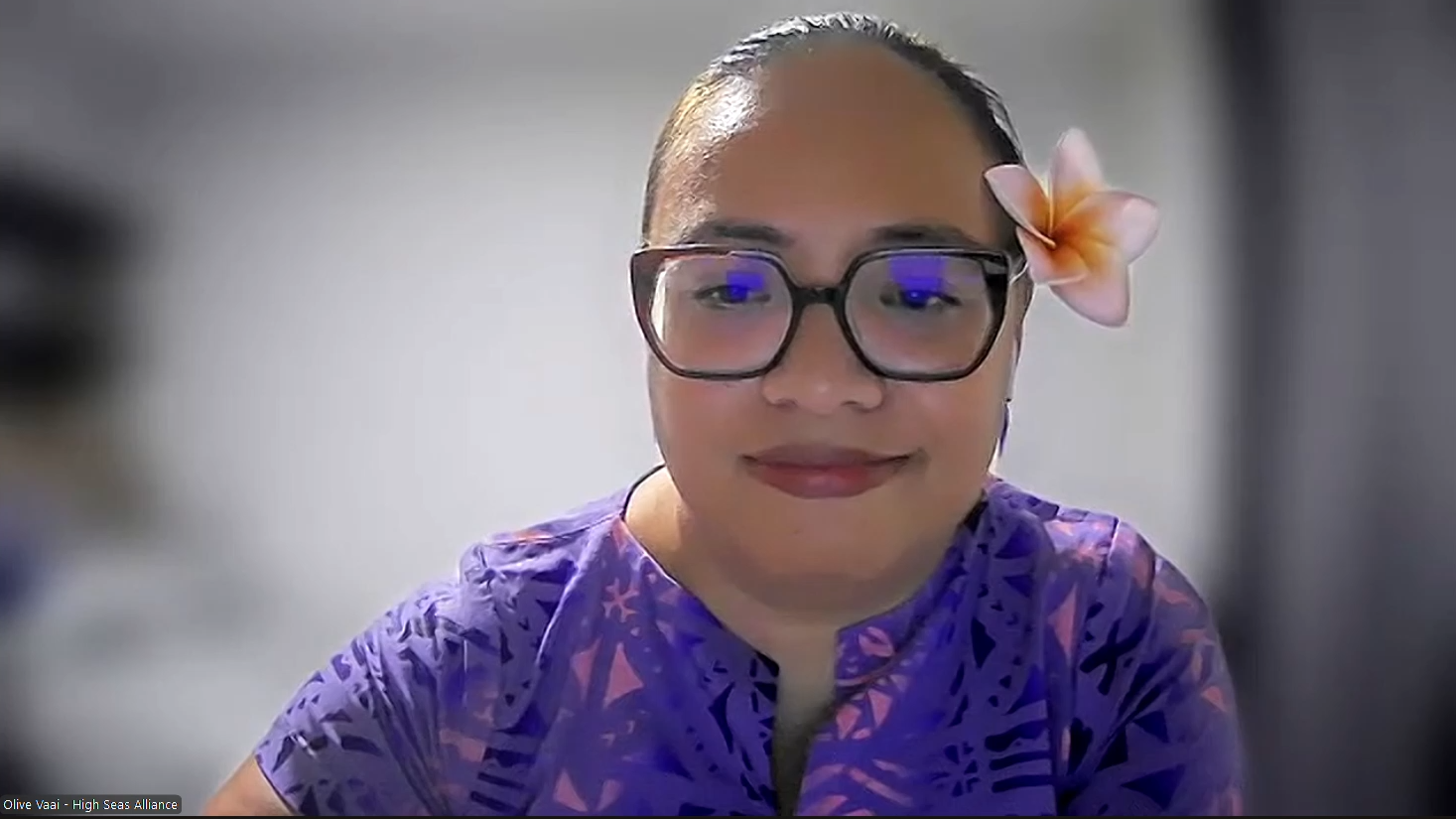
Vaai underscored the importance of strong institutional structures and Pacific representation in the process, noting that the High Seas Alliance is centrering indigenous knowledge through its Indigenous Peoples and Local Communities engagement strategy.
“The goal is co-creation and co-design in the work going forward,” Vaai said. “Too often, it’s been a tick-box exercise. This is a shift to shaping the process and being part of decision-making.”
Looking ahead, Vaai highlighted the upcoming BBNJ preparatory committee meetings, scheduled for April–May next year, as crucial for shaping how the treaty will operate.
She praised the Pacific Small Island Developing States (PSIDS), saying they are “crucial negotiators of the region… advancing a unified Pacific voice in coordination with larger groups like the G77 and the Alliance of Small Island States (AOSIS).”
She added, “We should push for ratification by additional countries so that BBNJ rules apply across the global ocean. And we should strengthen linkages with other stakeholders, youth groups, and academic partners to build advocacy across the region.”
Vaai shared a Samoan proverb, ‘connecting fibre with fibre’, highlighting the strength of collective action.
“We are a big collective, and if we work collectively, then we definitely have hope,” she said.