


By Pita Ligaiula
The United Nations Population Fund (UNFPA) says it delivered major gains in maternal health, reproductive health services and population data collection during its 2022-2025 Strategic Plan period despite facing significant funding cuts and rising humanitarian needs.
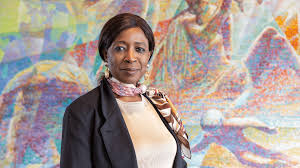
Presenting her first annual report to the Executive Board of the United Nations Development Programme (UNDP), UNFPA and the United Nations Office for Project Services (UNOPS), Executive Director Diene Keita said the agency continued to support countries through a period marked by financial pressures, geopolitical tensions, demographic change, artificial intelligence and the climate crisis.
“We meet at a time of profound transformation. Financial pressures, geopolitical tensions, demographic change, artificial intelligence and the climate crisis are reshaping our world. At the same time, progress on reproductive rights and choices remains uneven, with hard-won gains coming under challenge in some settings.”
Keita said UNFPA remained focused on advancing health, equality and resilience while accelerating efforts to end preventable maternal deaths.
“Yet I stand before you with confidence and pride. Not because the challenges are small, but because the commitment of Member States, partners and communities remains strong. Together, we continue to deliver for women, girls and young people where needs are greatest.”
According to the report, contraceptives provided by UNFPA between 2022 and 2025 helped avert more than 66 million unintended pregnancies. UNFPA support also helped prevent more than 140,000 maternal deaths and provided obstetric fistula treatment and recovery to more than 50,000 women and girls.
In crisis settings, the agency supported more than eight million safe births, while more than 24 million women and young people with disabilities benefited from sexual and reproductive health and gender-based violence services.
The report said more than 28 million girls received life skills and comprehensive sexuality education through UNFPA’s joint programme with UNICEF to end child marriage, while more than 800,000 girls were protected from female genital mutilation.
Keita highlighted the importance of population data, saying 70 percent of the world’s population was counted in the 2020 census round with UNFPA support.
“Data helps ensure that everyone counts and that decisions respond to their needs and realities.”
She highlighted recent country-level achievements, including the launch of the Democratic Republic of the Congo’s first census in more than 40 years, a new gender-based violence strategy in Papua New Guinea backed by US$41 million in annual domestic resources, and the inauguration of a maternity waiting home in Fiji to improve access to care for women in remote communities.
“In recent weeks, I have seen these results firsthand.”
Keita said countries were increasingly seeking UNFPA support on population dynamics and demographic change, prompting the inclusion of a new outcome on demographic resilience in the agency’s 2026-2029 Strategic Plan.
“The new fourth outcome of our Strategic Plan on demographic change and population dynamics reflects growing demand for UNFPA technical support in this area.”
“Whether countries are facing population growth, ageing, low fertility, urbanisation or migration, they are increasingly seeking UNFPA’s assistance to navigate these transitions.”
She stressed that demographic trends should be addressed through policies that expand rights and opportunities.
“UNFPA’s mandate is grounded in the conviction that population dynamics are not problems to be solved, but realities to be understood and addressed through policies that advance sexual and reproductive health and rights, choices and opportunity.”
“There is no single demographic challenge facing all countries. But there is one common solution: investing in people.”
The report also detailed UNFPA’s humanitarian work in 2025, when the agency responded to crises in 48 countries, reaching nearly 10 million people with sexual and reproductive health services and more than four million women and girls with gender-based violence prevention and response services.
In Afghanistan, more than 12 million people accessed reproductive health and psychosocial support services through UNFPA-supported facilities staffed by more than 2,500 female frontline workers.
In Gaza, the agency reached more than 200,000 people with sexual and reproductive health services and nearly 160,000 people with gender-based violence services.
Keita warned that humanitarian needs continue to rise while funding is falling.
“Yet we face a stark reality: needs are rising while resources are shrinking.”
She said UNFPA estimates that 84 million people will require gender-based violence prevention and response services in 2026, while nearly eight million pregnant women will need humanitarian assistance.
UNFPA’s 2026 humanitarian appeal is seeking US$1 billion to reach 34 million women, girls and young people across 43 countries, but is currently only 23 percent funded.
“The challenges extend beyond funding. We are facing a global protection crisis. International humanitarian law is too often violated.”
Keita also highlighted the impact of major donor funding reductions, saying cuts of approximately US$330 million made 2025 a difficult year for both UNFPA and the wider multilateral system.
Despite those reductions, she said UNFPA received more than US$1.4 billion in contributions in 2025, exceeding its Strategic Plan target by US$60 million.
“Core funding remains essential. It enables our global presence, technical assistance and rapid response where needs are greatest.”
She urged Member States to continue providing predictable and flexible funding and to recognise sexual and reproductive health and gender-based violence services as life-saving.
Looking ahead, Keita said UNFPA is investing in climate resilience, innovation and new technologies, including artificial intelligence, drones and digital tools, to improve health outcomes for women and girls.
“As we respond to today’s challenges, we are also preparing for tomorrow.”
She said the agency remained committed to accountability, transparency and ethical conduct while adapting its business model to meet evolving global demands.
“The world today is very different from the world in which UNFPA was created. Yet the fundamental questions remain the same: How do we help every person realise their potential? How do we build resilient societies in times of change? And how do we leave future generations better prepared than the one we inherited?”
Keita said UNFPA’s mandate remained highly relevant as countries increasingly seek support on demographic trends, population data, reproductive health and gender-based violence prevention.
“Our goals are simple, but their impact is profound: every pregnancy wanted, every childbirth safe, every young person’s potential fulfilled, and everyone counted – because everyone counts.”
“That is our mission, given by you. That is our promise. And with your continued partnership, trust and support, I know we will keep it,” said Keita.