Home Blog Page 992

Fiji loses millions to illegal fishing

0

An estimated $600 million (US$300 million) is lost to illegal, unreported and unregulated fishing in the Pacific region every year.

Fiji’s Permanent Secretary for Fisheries Pene Baleinabuli, said the country bears an estimated 40 percent of the loss.

Baleinabuli said these activities rob Fiji of development opportunities.

“Right now, there is an estimation of maybe $200million-$300million (US$100 – US$150 million). That is the estimate based on the size of our EEZ”

Baleinabuli said trying to monitor our Exclusive Economic Zone is still a challenge.

“We are people or nations of big ocean states. It means our EEZ is quite huge. We are yet to fully develop the capacity to monitor our EEZ.”

Dr Matthew Camilleri, the Head of the Fishing Operations and Technology Branch of the Fisheries and Agriculture Organisation (FAO) of the UN, has commended Fiji’s efforts to address these illegal activities by staging a workshop to better equip stakeholders.

“It’s not frequent that you find that there is a country that is as committed as Fiji to make sure that the provisions are implemented.”

Various stakeholders from the fisheries sector are currently convening for a three-day workshop to discuss the implementation of the 2009 Fisheries and Agriculture Organisation Agreement on port state measures.

SOURCE: FBC NEWS/PACNEWS

Rethinking Solomon Islands security

By Dr Transform Aqorau

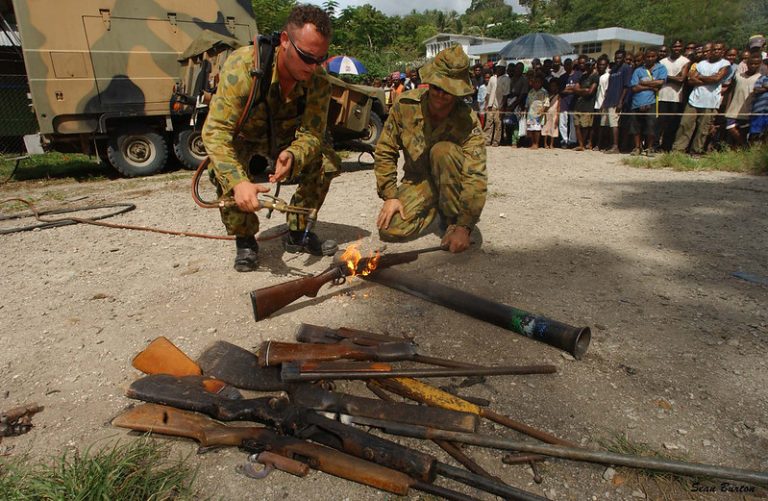
It has been an interesting couple of weeks for Solomon Islands, with stories of policing, weapons, replica weapons and a security agreement with China dominating the local and regional media.

Let’s start with the issue of arming the police. After the tensions, for a long time Solomon police did not carry arms but this is an exception in our history. Indeed, the precursor of the Royal Solomon Islands Police Force (RSIPF) created during the early colonial era was known as the ‘BSIP Armed Constabulary’. For as long as I can remember, our police have had access to some form of arms stored in the armoury. Their use traditionally was ceremonial, mostly during parades. In fact, many of us who used to watch their parades loved to hear the sound made when the police and marine units lifted the guns as they responded to the orders of the parade commander.
The only time the weapons were used in my lifetime was during the Bougainville crisis and during the ethnic tensions.

The Bougainville crisis necessitated the importation by the Solomon Islands Government of high-powered guns because of incursions by armed Papua New Guinean soldiers across the border and their use against Solomon Islands citizens at the PNG-Solomon Islands border. I recall that importation as at that time I was a legal adviser in the Ministry of Foreign Affairs. The weapons were purchased from the U.S via a broker in Singapore. Some questions were asked but, given the circumstances, their importation was justifiable. A diplomatic request was made for their temporary storage in Australia before they were shipped to Honiara. These were government-procured arms and the procurement procedures for their acquisition duly complied with government procurement processes.

I have been advocating for some time the rearmament of the RSIPF and I am also supportive of the RSIPF to be trained by whoever can provide it. Many police officers have been trained in the U.S, Taiwan, Australia, UK, Singapore, New Zealand and Fiji. Thus, I have no particular issues with them being trained by Chinese advisers as was the case recently.

However, I do have issues if the RSIPF is going to equip itself with high-powered guns, whether real ones (as supplied by Australia) or fake ones (as supplied by China). These concerns are exacerbated by the current level of secrecy and confusion around the security arrangements. Firstly, it is questionable whether it is necessary for the RSIPF to be armed with high-powered weapons. Perhaps there are still a number of guns that were taken from the armoury that are still in the hands of former MEF (Malaitan Eagle Force) militants. Moreover, this information might be known by a key member of the current political coalition who is a former MEF Commander.

Perhaps the police just want to be prepared. However, we also should not forget what happened 22 years ago during the ethnic tensions, when the armoury was compromised by police giving weapons to militants and militants raiding the armoury for weapons – weapons which were then used by Solomon Islanders to intimidate and kill their fellow citizens.

Members of the public are also genuinely concerned about the manner in which the Chinese fake guns were imported into the country – via a logging vessel which is, to say the least, an unusual means of transporting official government goods. The shifting narratives from the Police Commissioner about this incident have raised more questions than they have answered.

There are also broader questions. Is security created through arming the police? Or should we instead focus on an approach to security whereby the community is recognised as a partner in building and maintaining peace, and build on the long history Solomon Islanders have of brokering conflict amongst themselves? While, as I said, there is nothing intrinsically wrong with arming the police, the focus needs to be on using community policing, chiefs, and youth leaders to broker conflicts. It is unfortunate when the ordinary citizens of the country are viewed not as partners in development, but as threat to the hegemony and hold on power by some people. Last year’s riots and COVID-19 have revealed many underlying governance weaknesses. As I have argued earlier, they are symptomatic of a society that has become increasingly less pluralistic, and of political and economic institutions that have become less inclusive.

Then there is the leaked the security agreement with China, which has exacerbated existing unease among the public about China. The increasing engagement with China is explained by the Prime Minister as an attempt by the government to diversify its engagement on security. It is unlikely that China will build a naval base in Solomon Islands. The agreement does not specify that it will and, although it could be construed that way, the reality is that it is not going to happen. Australia is already building a patrol base in Lofung, in the Shortland Islands which borders Papua New Guinea, and has announced that they will build another one in the eastern Solomon Islands. I would venture to suggest that the capacity of these investments should cater for a naval base if the need ever arises in the future.

What is unprecedented about this security arrangement is that it allows China, with the consent of the Solomon Islands Government, to send armed personnel to protect its citizens and assets. It also prohibits any publicity around these arrangements. It is ironic that a prime minister who invariably extols the virtues of national sovereignty should agree to cede a fundamental sovereign function – the protection of lives and property – to a foreign force. It is not clear if this is inadvertent, but it would seem that its ramifications have not been thought through.

The security arrangement has also raised concerns in the region. The President of the Federated States of Micronesia has written to Prime Minister Sogavare requesting that he reconsider it. There is perhaps nothing intrinsically wrong with Solomon Islands signing a security agreement with China. There should, however, be coherence with similar arrangements with other countries, which focus on the capacity of the Solomon Islands Police Force to deal with internal security uprisings, and preferably all assistance should be within a regional framework supported by the Pacific Islands Forum. While a country may choose its friends, it cannot choose its neighbours.

In Solomon Islands today, there is no opportunity for policy debate by the public except on Facebook. The public and constituents do not have the same ease of access to our ministers and prime minister as embassy officials, and mining and logging CEOs. Such is the current degree of polarisation that any criticism or comment is viewed by the current political coalition as ‘anti-government’. There does not seem to be any scope for dissenting views, or even constructive ideas from outside the inner circle, to be accommodated.

Unless a more pluralistic society is promoted where people’s views are welcomed, and there are more inclusive political and economic institutions, the government will be forced to depend on regional troops to support it. At some stage, regional partners must hold Solomon Islands politicians to account for the economic and political situation they have created and the resulting violence such as the rioting last year. The current focus on arms, without attention to rights and responsibilities, cannot and should not be sustained.

Dr Transform Aqorau is CEO, iTuna Intel and Founding Director, Pacific Catalyst and a legal adviser to Marshall Islands. He is the former CEO of the Parties to the Nauru Agreement (PNA) Office.

SOURCE: DEV POLICY.ORG/PACNEWS
WHO, Government of Japan, and Governments of the Marshall Islands, Federated States of Micronesia and Palau partner to enhance COVID-19 preparedness and response

The World Health Organisation (WHO), the Government of Japan and the Governments of the Republic of Marshall Islands, the Federated States of Micronesia (FSM) and the Republic of Palau are partnering together to enhance COVID-19 preparedness and response in the three Pacific island countries.

The Government of Japan is providing US$697,101 funding through WHO with the project focusing on remote and outer islands in the Marshall Islands, FSM and Palau.

The partnership is coming at an opportune time as several Pacific countries and areas are responding to COVID-19 cases and community transmission for the first time. Palau faced a temporary surge of active cases from December 2021 to March 2022, resulting in nearly 4,000 cumulative cases all reported in 2022. While the Marshall Islands has reported only four imported cases in 2020 and FSM has had no cases so far, it is likely that the virus will eventually enter the countries at some point.

This latest partnership builds on two years of COVID-19 preparedness efforts in the Pacific. The Marshall Islands, FSM and Palau heeded WHO’s warnings in early 2020 and, since that time, have been implementing measures including effective border controls, preparing intensive care unit beds and isolation units, and, more recently, rolling out COVID-19 vaccines. However, people living in outer islands in the Pacific are at greater risk if COVID-19 hits due to shortage in health workers, facilities and services in these remote areas and the difficulty in accessing the main islands for these services.

The one-year project will address these urgent needs by strengthening and establishing national emergency medical teams, providing logistics and capacity building support, prepositioning critical equipment and supplies, and engaging with health workers and the communities in the remote islands in Marshall Islands, FSM and Palau.

National emergency medical teams (EMT) are composed of health professionals – such as doctors, nurses, pharmacists, logisticians – that deploy and respond rapidly to sudden onset emergencies or outbreaks. WHO has been supporting and coordinating the EMT initiative across the Pacific with five countries having fully established their own national EMT. The project will fast-track these efforts to launch, train and enhance readiness for deployment of the Marshall Islands Medical Assistance Team (MI-MAT) in the Marshall Islands, KLEMAT in Palau, and four more teams – one for each state – in FSM.

The project will also involve the training of emergency medical teams and health workers in clinical management and infection prevention and control, as well as support technicians and logisticians in emergency preparedness logistics and maintenance. Critical medical equipment and supplies and communication satellite phones will be procured and prepositioned. In addition, risk communication and community engagement will be strengthened to help people to understand how to safely care for mildly ill family members at home.

Dr Mark Jacobs, WHO Representative to the South Pacific and Director of Pacific Technical Support:“Supporting Pacific island countries and areas in preparing for and responding to COVID-19 continues to be a critical area of work for us. As we see increasing cases of COVID-19 in the Pacific, it is all the more important that we enhance these measures to protect people on hard-to-reach outer islands. We thank the Governments of the Marshall Islands, Federated States of Micronesia and Palau for their leadership and the Government of Japan for their contribution to ensure that we save lives.”

Bruce Bilimon, Minister of Health and Human Services, Republic of Marshall Islands: “Marshall Islands has established our national EMT called MI-MAT (Marshall Islands Medical Assistance Team” with support of WHO. We are very proud that MI-MAT has been already deployed for a drought response and we trust this additional support by Japan will boost the team’s capability to prepare for COVID-19 and protect people in our neighbouring islands.”

Marcus Samo, Secretary of Health and Social Affairs, Federates States of Micronesia: “FSM consists of four states in four different islands with many scattered islands, causing significant geographic challenge for emergency response in a timely manner. All States in the nation have established emergency response system, but not full scale EMT program. Through this partnership with Japan and WHO, all of FSM states will level up their preparedness for COVID-19 and other health emergencies.”

Gaafar J. Uherbelau, Minister of Health and Human Services, Republic of Palau: “Palau’s ETM known as KLEMAT, means the rope that holds the sails of our traditional canoes. It signifies good navigation, governance and leadership. As we would like Palau to be fully prepared for another surge of COVID-19 or any other outbreak, I welcome this valued partnership with the Government of Japan and the WHO to make KLEMAT a beacon of hope to safeguard the health and lives or our People. “

Karasawa Akira, Ambassador of Japan to Palau: “The surge of COVID-19 cases in Palau since last December has clearly showed the significance of the emergency operation team of the Ministry of Health and Human Services. I hope this project will contribute to enhancing the capacity of the team furthermore as another showcase of Japan’s assistance to Palau in the medical field.”

Michigami Hisashi, Ambassador of Japan to the Federated States of Micronesia (FSM): “The FSM is one of the few COVID-19 free countries in the world but, it is necessary to prepare for the time when COVID-19 eventually arrives to the FSM. I hope this project will contribute to strengthen the FSM’s medical preparedness based on the outstanding cooperation between Japan and WHO.”

Tanaka Kazunari, Ambassador of Japan to the Republic of the Marshall Islands: “The Republic of the Marshall Islands is one of a few countries that have maintained COVID-19 free condition through strict immigration control measures and promoting vaccination, although the vaccination rate of the outer islands is lower than that of the capital. It is expected that this project, together with the provision of a medical ship by Japan to RMI, will strengthen RMI’s medical services for infectious diseases including COVID-19 in the outer islands.”.

Media Contacts: Lauren O’Connor
Technical Officer (Communications, Resource Mobilisation & External Relations)
WHO Regional Office for the Western Pacific – Division of Pacific Technical Support
Telephone: +679 777 9733 Email: oconnorl@who.int

SOURCE: WHO/PACNEWS

Fijiana Drua on track to make Super W final in their debut season after landmark win

0

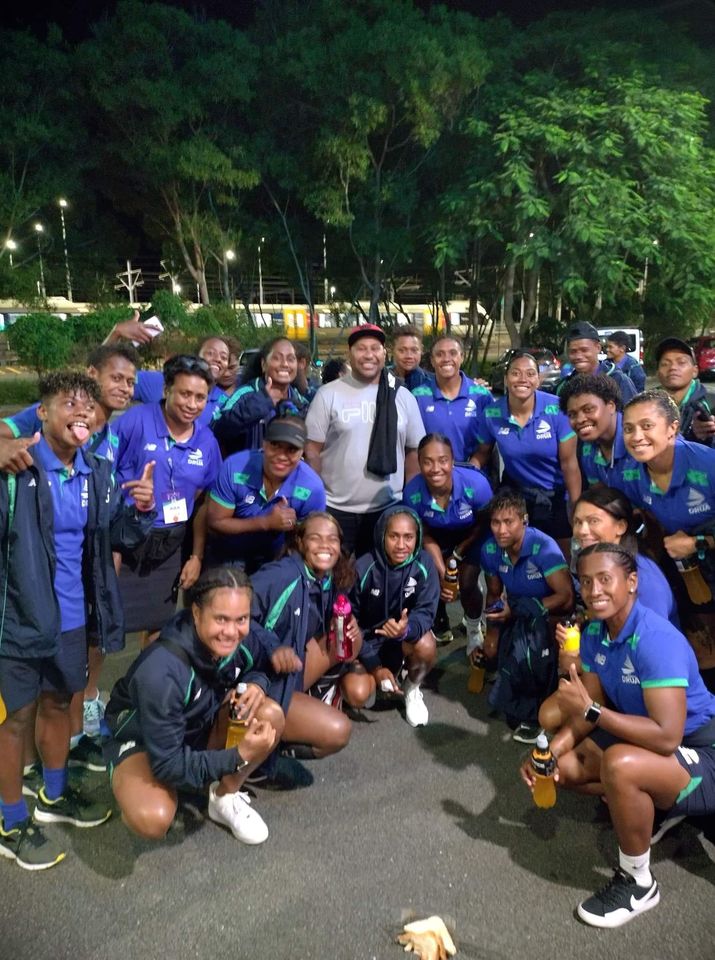
With just one more home and away match to go in their debut season, the Fijiana Drua are on the brink of making the Super W Grand Final.

Victory over the ACT Brumbies, who are yet to win a game, will send the Fijiana Drua through to the decider in Melbourne, most probably against the Waratahs.

And the Fijians would go into that game on a wave of confidence, having just become the first side ever to beat the NSW team, after they went undefeated through the first four Super W seasons.

Back home in Fiji, the FRU’s Women’s Development Manager, Vela Naucukidi, has been watching Fijiana’s progress with a mixture of growing excitement and pride.

“t’s hard to explain,” she told Pacific Beat. “The Waratahs were unbeaten for so long and we just walked all over them on the park!”

Naucukidi, who was manager of the rugby 7s team that won bronze for Fiji at the Tokyo Olympics, says the Fijian Drua’s success is doing great things for women’s rugby in the country.

“Their games are live (on TV) here in Fiji every weekend, and it’s just amazing. It helps us who are actually working on the ground trying to develop women’s rugby in Fiji.”

And the FRU official has paid tribute to the Australian Government for investing in Fijiana and giving them a chance to shine, a chance they may otherwise have missed out on.

“I’m so forever grateful to the Australian government, they helped us in this space with support and sponsorship; they provided the platform for us to be seen,” she said.

SOURCE: ABC/PACNEWS

Solomon Islands new running track ready for use

Athletes will soon use Solomon Islands’s first ever synthetic training running track built at the King George Sixth School site, East Honiara.

According to a recent report from the 2023 Pacific Games Stadium Project, the running track and football field is completed and ready to be used.

“It’s more than thrilled to announce that with the concerted efforts both by contractor CCECC and project management enterprise CSADI, the China-Aid 2023 Pacific Games Stadium Project Practice Track and Football Field Site located in KG school site has been literally completed and just about to hand over to Solomon side for the athletes to hone their skills,” the statement confirmed.

The completion of this international criteria sports stadium symbolises a further step forward of friendship between China and Solomon Islands and it comes closer for Solomon Islands people to realise the dream to host 2023 Pacific Games.

This will be the first 2023 Pacific Games sports facility to be completed for athletes to use.

The National Hosting Authority (NHA) Chairman, Dr Jimmie Rodgers last month revealed that new running track and football field will probably be handed over by mid this month.

The new Futsal complex facility which is funded by Indonesia will also be handed over later in the year.

Most of the facilities will be ready by June next year, including the new Solomon Islands Football Federation (SIFF) Academy.

Work on all sports facilities is currently on track and in full swing.

Other facilities including the national sports stadium is supported by the Government of the Peoples Republic of China.

SOURCE: SOLOMON STAR/PACNEWS

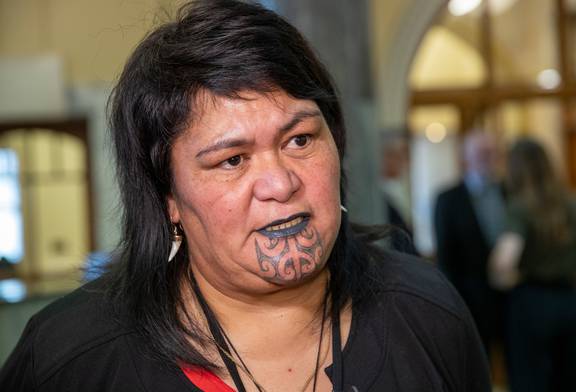
Indonesia needs to allow OHCHR visit: NZ foreign Minister Mahuta

New Zealand’s Minister for Foreign Affairs Nanaia Mahuta says the Indonesian Government needs to finalise the timing of the visit of the United Nations Office of the High Commissioner for Human Rights (OHCHR) as soon as possible.

Mahuta in an interview with FijiLive said last year, the United Nations received reports indicating several instances of extrajudicial killings, enforced disappearances, torture, and the enforced displacement of at least 5,000 Papuans and the Office of the United Nation High Commissioner for Human Rights need to be permitted to visit Papua as soon as possible.

“Aotearoa New Zealand recognises Papua as the sovereign territory of the Republic of Indonesia in accordance with the UN decision in 1969,” she said.

“In the context of our open and constructive relationship with Indonesia, Aotearoa New Zealand continues to register its concerns with Indonesian authorities.

“This is in regards about the human rights situation in Papua, and encourages Indonesia to promote and protect the human rights of all its citizens.

“We joined and supported the Pacific Island Forum leaders call for the Office of the United Nation High Commissioner for Human Rights to be permitted to visit Papua,” she said.

Meanwhile, the Special Rapporteur on the rights of indigenous peoples Francisco Cali Tzay has called on the Indonesian Government to conduct full and independent investigations into the abuses.

Tzay said internally displaced persons in West Papua have not returned to their homes due to the heavy security force presence and ongoing armed clashes in the conflict areas.

“Thousands of displaced villagers have fled to the forests where they are exposed to the harsh climate in the highlands without access to food, healthcare, and education facilities,” he said.

“We are particularly disturbed by reports that humanitarian aid to displaced Papuans is being obstructed by the authorities.

“Moreover, severe malnutrition has been reported in some areas with lack of access to adequate and timely food and health services.

“In several incidents, church workers have been prevented by security forces from visiting villages where I internally displaced persons are seeking shelter,” he said.

He said unrestricted humanitarian access should be provided immediately to all areas where indigenous Papuans are currently located after being internally displaced.

“These cases may represent the tip of the iceberg given that access to the region is severely restricted making it difficult to monitor events on the ground,” they warned.

“Security situation in highland Papua had dramatically deteriorated since the killing of a high-ranking military officer by the West Papua National Liberation Army, last year.

“Two children aged two and six, on 26 October, were shot to death by stray bullets in their own homes, during a firefight. The two-year-old later died,” he said.

He said investigations must be aimed at ensuring those responsible, including superior officers where relevant, are brought to justice.

SOURCE: FIJI LIVE/PACNEWS

SPREP’s new Director General Sefanaia Nawadra takes office

A new dawn at the Secretariat of the Pacific Regional Environment Programme (SPREP) starts this week with the organisation welcoming its new Director General.

Sefanaia Nawadra takes over from his predecessor, Kosi Latu, who held the role since 2016.Nawadra’s appointment was announced at the 30th SPREP Meeting of Officials last September but was unable to take up the role due to prior commitments as the Head of the United Nations Environment Programme (UNEP) Pacific Office. This week, Nawadra will have to wait a couple more days until he can settle into his new office at SPREP’s Vailima headquarters, because of Samoa’s COVID-19 Alert Level 3 lockdown restrictions.

Still, the new Director General is excited about his new calling.

“I feel extremely honoured and humbled to be in this position. I’m under no illusion about the task ahead and the challenges it entails but I view this position as a calling and I am excited to lead the SPREP Secretariat in our work for member countries and with all our partners,” Nawadra said. “I want to acknowledge those who have been in this role before me, including Leota Kosi Latu for their leadership to get SPREP to where it is. I also want to thank the Chair of the 30th SPREP Meeting and SPREP members for placing their trust in me.”

A Fijian national, Nawadra is no stranger to the work of SPREP. With close to 30 years’ experience in the regional and global environment sector, he has worked for the Secretariat in a number of different roles, with his last role being the Director of the Environmental Monitoring and Governance programme.

However, he knows SPREP has grown exponentially with currently more than 130 staff . As Head of UNEP in the Pacific he was involved in the recognition of the triple planetary crisis of climate change, biodiversity, and pollution through the declaration last year of the UN Decade for Ecosystem Restoration. All have existential detrimental impacts on the Pacific and he looks forward to leading SPREP to work with Pacific countries and partners to address these triple crises.

Said Nawadra: “I believe in SPREP’s vision that being a resilient Pacific environment, sustaining our livelihoods and natural heritage in harmony with our cultures. I also know that these are very challenging times, especially with COVID-19 being very unpredictable, which calls for flexibility. That said, I am looking forward to working with our 26 Pacific island member countries, territories, metropolitan members and all our partners to protect and manage the environment and natural resources of the Pacific, to ensure sustainable development for present and future generations.”

Nawadra holds a Bachelor’s Degree in Environmental Engineering from the University of Canberra and a Masters of Environmental Management from the Imperial College, University of London. He takes over SPREP’s top job from his previous role as the Head of the UNEP Sub-regional office for the Pacific. He has worked as SPREP’s Marine Pollution Adviser and the Director for the Environment Monitoring and Governance Division. He also worked as Conservation International’s Fiji Country Director; Environment Director (Pacific) of Sinclair Knight Merz Engineering Consultants; Health Safety and Environment Manager for Shell Pacific Islands Limited; and several senior technical positions within the Fiji Government’s Environment and Agriculture Departments.

He is from the village of Naivuruvuru, district of Verata in the province of Tailevu, with maternal links to the village of Vuna on the island of Taveuni. He is married to Talica and they have four children – two boys and two girls.

SOURCE: SPREP/PACNEWS

Scientists urge end to fossil fuel use as landmark IPCC report readied

The world must abandon fossil fuels as a matter of urgency, rather than entrusting the future climate to untried “techno-fixes” such as sucking carbon out of the air, scientists and campaigners have urged, as governments wrangled over last-minute changes to a landmark scientific report.

Talks on the final draft of the latest comprehensive assessment of climate science, from the Intergovernmental Panel on Climate Change (IPCC), stretched hours past their deadline on Sunday. Scientists and governments were locked in disagreement on questions such as how much funding was likely to be needed for developing countries to tackle the climate crisis, and what emphasis to give policies such as phasing out fossil fuel subsidies.

Governments have been accused of trying to water down the scientists’ findings, due to be published on Monday. The Guardian understands that India has demanded key changes on issues including finance, along with Saudi Arabia which wants to see affirmation of a continued role for fossil fuels, while other countries including China and Ecuador also held out on some points. Russia has played a more muted role than some feared.

Kevin Anderson, professor of energy and climate the Tyndall Centre for climate research at the University of Manchester, one of the UK’s leading climate academics, called for the scientists to prevail. “I hope Working Group 3 [the IPCC section about to be published] has the courage to actually call for the elimination of fossil fuels production and use within a Paris [agreement] compliant timeline,” he said.

This is the third part of the IPCC’s latest landmark assessment, and the most contentious because it covers the policies, technologies and finances needed to cut greenhouse gas emissions. The first part, covering the physical science of climate change, was published last August showing the world had only a narrow chance of limiting global heating to 1.5C; the second, published just over a month ago, showed the catastrophic impacts heating of 1.5C would have, but it was overshadowed by Russia’s invasion of Ukraine.

The report itself – hundreds of pages long and drawing on the work of thousands of scientists over the past eight years – is settled, but still in dispute is the crucial “summary for policymakers”, a selection of key messages running to only about 40 pages. While the report is drafted by scientists, the summary – which is the key reference document for governments – is edited with input from every UN member state that wishes to be represented.

The latest warning from the IPCC – the final instalment of its mammoth comprehensive assessment, before a synthesis report in October draws together its key messages in time for governments meeting for the UN Cop27 climate summit in Egypt this November – comes at a crucial time.

Many countries, including the US, the EU and the UK, are reconsidering their reliance on fossil fuels in light of the Ukraine war, which has pushed already high energy prices to record levels. Energy is now seen as a national security issue, and the crisis in the cost of living in many countries is forcing governments to rethink ways to protect their citizens, from high prices and climate breakdown.

Rachel Kyte, the dean of the Fletcher School at Tufts University in the US, said: “We are at a moment of increasing tension around the world, with every excuse possible for distraction and delay. We now have to put our arms round a new form of energy security, one that embraces everyone – a new kind of politics. We are at a moment of reckoning and the IPCC report just puts an exclamation point at the end of that.”

Some governments are likely to stress the role the IPCC foresees for techniques that remove carbon from the air, such as carbon capture and storage, used to neutralise fossil fuel power stations, and technologies such as “direct air capture” by which carbon is chemically extracted from the atmosphere. The IPCC in its broader report is likely to warn that these techniques are unproven and likely to be prohibitively expensive to use quickly at the scale required, but governments may force more favourable language into the summary.

Nikki Reisch, the director of the energy and climate programme at the Center for International Environmental Law, said governments should be clear: “There is no room for more oil and gas full stop. [Some businesses] want to perpetuate the myth that we can carry on using fossil fuels. But we need a just transition away from fossil fuels, not techno-fixes.”

Anderson said this was a key dilemma. He warned the report could “pull its punches, hiding behind billions of tonnes of carbon dioxide removal … [If that is what emerges], then the academic community will have abdicated its responsibility and opted for realpolitik over real physics. The climate responds only to the second.”

Stephen Cornelius, the head of delegation for WWF, defended the IPCC process against charges that governments could use it to water down scientific warnings. He said that as governments played a role in writing the summaries, they could not shirk responsibility for heeding the warnings they contain. “The IPCC is a useful process,” he said. “It is cumbersome, there is a long time between the outlines and the report, but … the reports have political buy-in, and that’s why they are taken seriously.”.

SOURCE: THE GUARDIAN/PACNEWS

Pacific leaders concerned of China’s growing influence

Pacific development partners are determined that the region has become a contested space once again.

Australia and New Zealand are recently concerned of China’s growing presence and influence in the Pacific provided the recent leak of a draft security deal between the Solomon Islands and China

These traditional ‘big brothers’ say they respect the sovereignty of individual Pacific Island states but will work with partners to ensure there is a keen understanding of the risks and threats.

New Zealand Foreign Minister Nanaia Mahuta called for regional solidarity during her recent trip to the country to ensure that the needs of our people are not dismissed.

“There’s been a lot of talk about the Pacific leading its own aspirations and definitely securing its interest with the Pacific voice in mind”

Australian High Commissioner to Fiji John Feakes said the Ukrainian war highlighted the potential risks of cross-border relationships.

“It does highlight the importance of countries like Fiji, like Australia, like New Zealand, countries of the Pacific to protect their sovereignty. There are countries in these part of the world who seeks to undermine our sovereignty.”

Mahuta believes that the Pacific Islands Forum plays a critical role at this time.

These regional leaders are of the belief that the Russian invasion is a wake-up call for the global community including the Pacific.

SOURCE: FBC NEWS/PACNEWS

UN rights body appoints Tuvalu negotiator as climate change expert

The UN top rights body appointed an expert on climate change and human rights for the first time on Friday, a move that is expected to embolden environmental defenders and provide more support for victims of extreme weather.

The new Special Rapporteur position was formally created by the Geneva-based Human Rights Council in October at the same time as the body recognised access to a clean and healthy environment as a fundamental right.

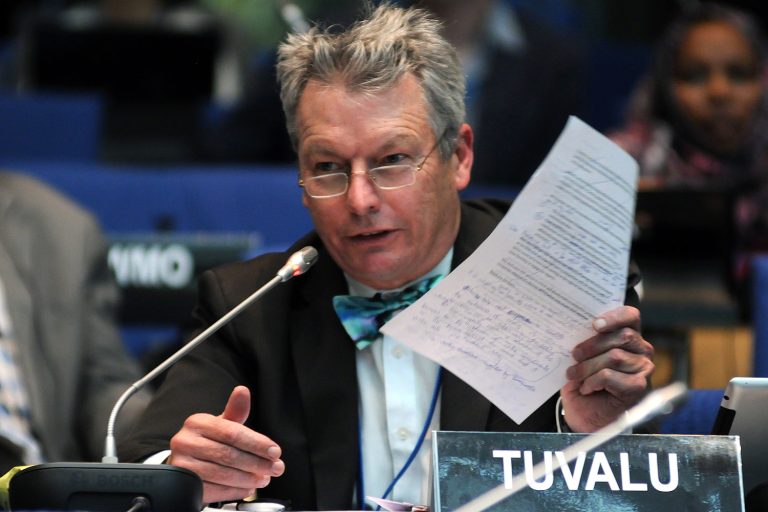
The first to hold the post will be Ian Fry, who holds both Australian and Tuvaluan nationality. He has negotiated on behalf of least developed countries including at the 2015 Paris climate conference where he helped ensure that human rights were part of the final package.

Tuvalu, a tiny, low-lying Pacific nation, has been prominent in drawing global attention to the struggle against rising sea levels. Its foreign minister gave a video address to the United Nations climate change conference in Glasgow last year standing knee-deep in seawater. read more

The mandate of the new independent expert is to “study and identify how the adverse effects of climate change, including sudden and slow onset disasters, affect the full and effective enjoyment of human rights and make recommendations on how to address and prevent these adverse effects”.

In his letter stating his reasons for seeking the post, Fry stressed the need for action to help those forcibly displaced by extreme weather, having witnessed this first hand after Cyclone Pam in Tuvalu in 2015.

“I believe the displacement due to climate change is one of the greatest human rights threats confronting the international community,” he wrote.

Fry, who teaches environmental policy part time at an Australian university, was one of 26 candidates for the position, UN documents showed. The appointment is for three years.

The UN Human Rights Council on Friday recognised access to a clean and healthy environment as a fundamental right, formally adding its weight to the global fight against climate change and its devastating consequences.

The vote passed with overwhelming support, despite criticism in the lead-up from some countries, notably the United States and Britain.

The resolution, first discussed in the 1990s, is not legally binding but has the potential to shape global standards. Lawyers involved in climate litigation say it could help them build arguments in cases involving the environment and human rights.

“This has life-changing potential in a world where the global environmental crisis causes more than nine million premature deaths every year,” said David Boyd, UN special rapporteur on human rights and the environment, who called the decision a “historic breakthrough”.

The text, proposed by Costa Rica, the Maldives, Morocco, Slovenia and Switzerland, was passed with 43 votes in favour and 4 abstentions from Russia, India, China and Japan, prompting a rare burst of applause in the Geneva forum.

Britain, which was among the critics of the proposal in recent intense negotiations, voted in favour in a surprise, last-minute move. Its ambassador to the UN in Geneva, Rita French, said the UK was voting ‘yes’ because it shared supporters’ ambition to tackle climate change but added that states would not be bound to the resolution’s terms.

The United States did not vote since it is not currently a member of the 47-member Council.

Costa Rica’s ambassador, Catalina Devandas Aguilar, said the decision will “send a powerful message to communities around the world struggling with climate hardship that they are not alone”.

Critics had raised various objections, saying the Council was not the appropriate forum and citing legal concerns.

Environmental defenders had said Britain’s earlier critical stance was undermining its pledges ahead of the global climate conference it is hosting in Glasgow next month. read more

John Knox, a former UN special rapporteur, said ahead of the vote that those who had criticised the resolution were “on the wrong side of history”

The World Health Organisation estimates that some 13.7 million deaths a year, or around 24.3% of the global total, are due to environmental risks such as air pollution and chemical exposure.

Another proposal led by the Marshall Islands to create a new special rapporteur on climate change was also approved by the Council on Friday.

SOURCE: REUTERS/PACNEWS