Home Blog Page 60

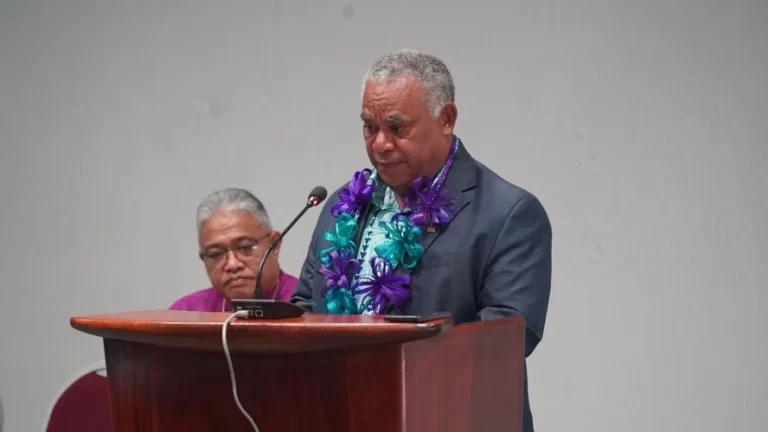
PSIDS will arrive in Santa Marta as one: PM Napat

As the world prepares for its first major diplomatic conference on phasing out fossil fuels in Santa Marta, Colombia, at the end of this month, Pacific nations are working to ensure they arrive united and ready to shape the outcome.

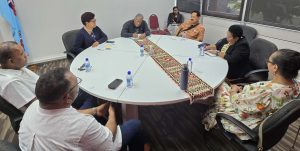
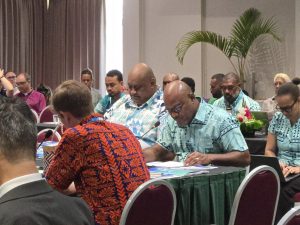
Senior officials and ministers of the Pacific Small Island Developing States (PSIDS) are in Port Vila for a three-day dialogue to strengthen coordination and align their position.

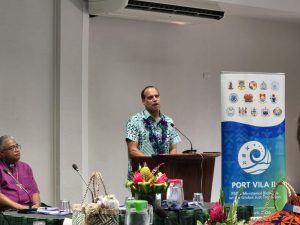
“The Pacific helped bring that conference into being. Our task this week is to ensure we arrive in Colombia as one,” said Prime Minister (PM) Jotham Napat, who opened the dialogue this week.

Vanuatu and six other Pacific island nations established the call for a global fossil fuel treaty, which is now backed by many governments, civil society organisations, and individuals worldwide.

The treaty aims to stop the expansion of fossil fuel exploitation and manage a just transition away from coal, oil, and gas to clean energy. It gained momentum in Port Vila in 2023, following two category 4 cyclones within the same week.

Fossil fuels are by far the largest contributors to climate change, releasing large amounts of greenhouse gases into the atmosphere. Extremely vulnerable to climate change, the Pacific region has long understood that its survival depends on ending the world’s dependence on fossil fuels.

“The Pacific has never waited to be invited to lead on climate. We have led because we had no other choice,” PM Napat said in his remarks.

From the founding of the Alliance of Small Island States (AOSIS), to the push for Loss and Damage, to securing the 1.5 °C red line in the Paris Agreement, the ICJ Advisory Opinion on Climate Change and Human Rights, and now a global framework for managing the phase out of fossil fuel production.

The PM said the ongoing global tension shows why dependence on fossil fuels is fragile. While governments around the world are planning to produce far more fossil fuels than is compatible with limiting warming to 1.5 °C, that gap must be closed, he said.

“Fossil fuel dependency is not an economic model. It is a development trap. And it is time we disrupt and change this model,” he said.

“An economy that continues to depend on fossil fuels is an economy that continues to generate the crises we are here to solve”

PM Napat said the Pacific’s effectiveness in Santa Marta will depend on the unity, clarity, and preparation achieved in this week’s dialogue.

“Santa Marta must open a genuine process one that complements the UNFCCC and Paris Agreement by addressing what they have not yet addressed: the supply side. The managed phase out of fossil fuel production itself,” he said.
“The outcomes of Santa Marta must be deeply linked to the COP30 Presidency’s pathway process and to the Belém Roadmap. These must not be parallel tracks that fade from my view.

“Furthermore, we need updated and more ambitious Nationally Determined Contributions from all countries, especially major emitters. Those who polluted the most must contribute the most: to financing, to ambition, and to supporting the most vulnerable through the transition.

“Pacific island nations need concrete support for renewable energy transition, economic diversification, and adaptation, not as development assistance, but as a matter of justice and obligation.

“The emerging series of fossil fuel phase out conferences must unlock new and additional financing streams for Small Island Developing States (SIDS).”

The PSIDS Ministerial Dialogue on Global Just Transition in Port Vila ends today.
Global fuel crisis a call to reduce reliance on fossil fuels: Regenvanu

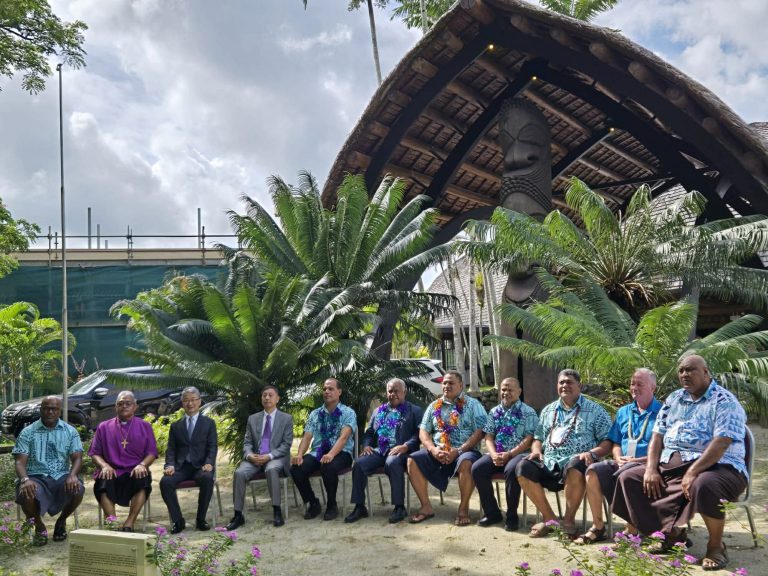
The fossil fuel crisis driven by the Middle-East conflict is unequivocally a call to reduce reliance on fossil fuels for everyone, said Vanuatu’s Minister of Climate Change and Energy, Ralph Regenvanu.

He was responding to a question during a press conference at the Pacific Small Island Developing States (PSIDS) Ministerial Dialogue on the Global Just Transition in Port Vila.

“I acknowledge that many countries are now stumbling to find the energy they need when supply is cut or reduced,” he said.

“For Vanuatu, it has been a moment of realisation that we really have to scale up and fast-track as much as possible on our National Energy Road Map, which sets targets for the transition to renewable energy.”

Under its National Energy Road Map, Vanuatu aims to achieve 100 percent electrification with renewable energy by 2030.

Minister Regenvanu said Vanuatu is on track to achieve the target.

Pacific countries with limited finances rely on commitments from wealthier nations to provide climate finance for renewable energy, as agreed under the United Nations Framework Convention on Climate Change (UNFCCC).

While Pacific countries are among the most dependent on fossil fuels in the world, they have the highest ambitions for energy transition, said Minister Regenvanu.

Tuvalu’s Minister for Climate Change and Environment, Dr Maina Talia, said the fuel crisis has shown that things can be done differently and that there are alternative sources to explore.

He said his country has recently declared a two-week state of emergency due to critical fuel supply risks.

“We are seriously looking into our energy programmes to achieve our 100 percent renewable energy targets with the support of donor partners,” he said.
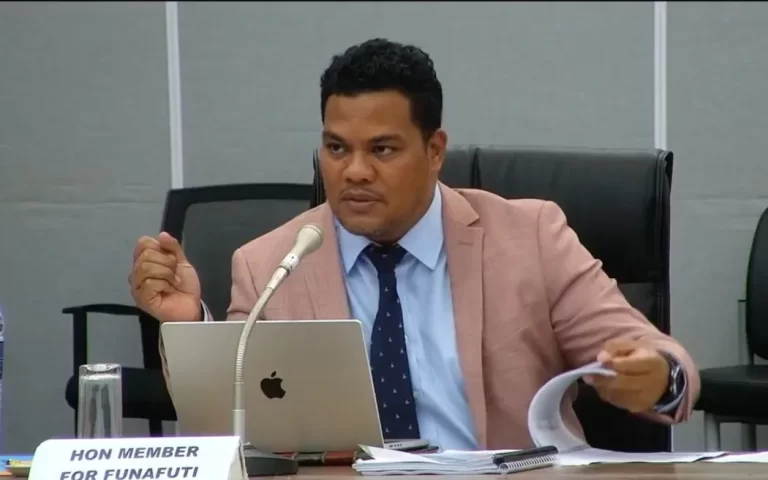
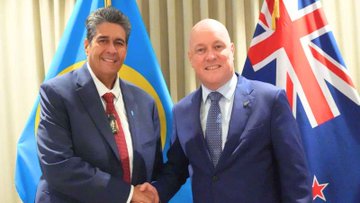
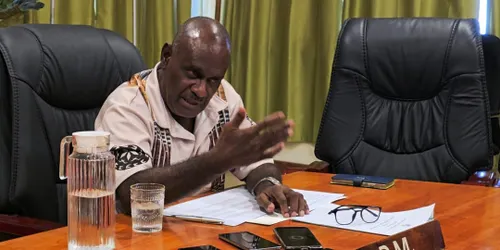
The PSIDS Ministerial Dialogue on the Global Just Transition in Port Vila will consolidate regional positions, strengthen coordination, and reinforce collective resolve ahead of the first-ever global conference on fossil fuel transition in Santa Marta, Colombia, at the end of this month.

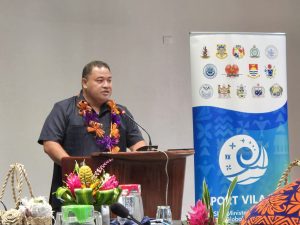
“Our path to Santa Marta should not be limited by the unwillingness of other countries. What matters is the willingness of Pacific nations and those ready to engage, as we take on a new role and step forward together,” said Tuvalu’s Minister Talia.

For the Pacific, a just transition is not simply about climate ambition. It is about economic stability, resilience, and survival.

Tuvalu fuel supply ‘not assured’ beyond June

0

Tuvalu’s Transport Minister Simon Kofe says they have not been assured that fuel will be consistently supplied beyond June.

A state of emergency has been declared on Tuvalu’s Funafati Island for two weeks in light of risks to the fuel and electricity supply.

This allows the government broad powers to control supplies and services including transport, or the consumption of fuel and light.

Tuvalu’s governor-general said there is increasing instability in electricity generation and distribution systems.

Kofe, who is the Minister for Transport, Energy Communication and Innovation, told RNZ’s Morning Report that as of 01 April, diesel went up by 40 percent and petrol by 30 percent in Tuvalu – where fuel is already expensive.

“At the moment, we haven’t been assured that fuel will be consistently supplied beyond June, so we’re quite concerned that that will certainly have a big impact if we don’t get the supply,” he said.

“That affects not just our electricity, but the shipping which we rely on to supply the outer islands and also possibly airplanes.”

He said they are expecting disruptions to their supply, which comes from a company that gets supplies from Singapore and Korea, which in turn relies on oil from the Middle East.

“We are expecting that there will be disruptions, and we believe that countries will also be putting their priorities first.

“So, we’re quite worried that countries, like Tuvalu and other small island nations, may not be in a priority for some of these bigger countries, so we need to prepare now and have storage in place before that time arrives.”

Kofe said Tuvalu has not sought assistance from New Zealand, but Aotearoa reached out when they heard about the state of emergency.

He said New Zealand may be able to help boost diesel supplies or transporting spare parts and generators.

“We’ve been experiencing power outages in the last few weeks, some areas for about two days, 20 hours,” he said.

“So, it’s been having a big impact on the day-to day life of ordinary Tuvaluans. We’ve managed to stabilize it for now, but the challenge we have is that we don’t have a backup generator, which is something now that we’re trying to procure during this state of emergency.”

Tuvalu is not the only Pacific Island nation with supply concerns.

The Marshall Islands declared a 90-day state of economic emergency on 30 March.

The Cook Islands government is providing extra welfare funding and free bus services.

Childfund New Zealand said fuel prices have risen between 20 and 40 percent in many Pacific nations.

ChildFund New Zealand CEO Josie Pagani said families in Aotearoa feel it at the pump, while in the Pacific, families feel it on the table.

Pagani said the two-week Iran war ceasefire is a welcome reprieve for children and families across the region.

But she said this crisis has highlighted the urgent need for more long-term and enduring energy solutions in the Pacific.

Palau says partnership with the U.S makes it safer as tensions grow

Palau’s President says his country is safer , not more at risk, because of its close ties with the United States.

Speaking on PMN during his first official visit to New Zealand, Surangel Whipps Jr said the partnership with Washington is a key part of protecting his nation in an increasingly contested region.

“I believe it’s safer,” Whipps said when asked whether alignment with the U.S makes Palau more vulnerable.

Across the Pacific, countries are facing growing pressure as competition between the United States and China intensifies.

For small island states like Palau, the challenge is how to protect their sovereignty while maintaining economic and political balance.

Whipps pointed to Palau’s Compact of Free Association (COFA) with the U.S, which gives Washington responsibility for the country’s defence.

He said recent upgrades including radar sites and improvements to ports and airports are about protection, not provocation.

“[They] are just ensuring that they can better defend Palau,” the President told PMN. “That’s the way I look at it.

“I think many times you say, well, that’s bringing risk. Well, I think to be idle, you’re susceptible. So we like to say presence is deterrence. You want peace, you have to show strength.”

At the same time, Whipps acknowledged growing concerns about activity in Palau’s waters, particularly involving China.
He said there have been incidents of vessels entering Palau’s exclusive economic zone (EEZ) without notice as well as disputes over maritime claims.

In August 2024, Palauan authorities reported an unauthorised entry by a Chinese vessel into its waters.

In 2021, another Chinese survey ship was tracked operating in Palau’s EEZ for several days. Authorities said at the time they were concerned about possible seabed mapping.

Palau has also reported other maritime encounters in its EEZ in recent years, which it says highlight the need for stronger monitoring of waters.

Despite these incidents, China has rejected allegations of wrongdoing in the region, with a spokesman for the Ministry of Foreign Affairs saying its vessels operate lawfully and within international laws.

Palau continues to rely on international visitors, including tourists from China, and is working to avoid overdependence on any one country.

“So one of the things that we’ve worked very hard on is ensuring that we have a diversified tourism market so we’re not so dependent on one country,” Whipps said.

“So in striking a balance, I think we need to make sure that we’re managing and mitigating against all those risks so that no one country is saying, you must do this, otherwise we’ll retaliate.”

Whipps is due to host the upcoming Pacific Islands Forum where regional leaders are expected to discuss shared challenges including security and external influence.

Analysts say Pacific countries are trying to walk a careful line, keeping long-standing security ties with partners like the U.S, Australia, and New Zealand while also managing growing economic links with China.

Whipps said the priority for Palau is clear.

“For us, it’s important to have partners that are willing to defend our sovereignty because we would never be able to protect ourselves.

“So our strategic relationship with the United States is important for our security and our sovereignty,” he said.

Solomon Islands PM Manele to appeal High Court ruling on No – confidence process

Solomon Islands Prime Minister Jeremiah Manele has ordered an appeal to the Court of Appeal following a High Court decision Tuesday on the convening of Parliament and a motion of no confidence, saying key constitutional issues were not fully addressed.

Manele confirmed the government will challenge the ruling despite acknowledging the court’s swift handling of the case.

“I formally acknowledge the judgment delivered today by the High Court of Solomon Islands regarding the Judicial Review claim concerning the convening of Parliament and the processing of a Motion of No Confidence.”

He thanked the judiciary for moving quickly on a matter of national importance.

“At the outset, I wish to extend my sincere appreciation to the Chief Justice, Sir Albert Palmer, for dealing with this case on an expedited basis. The Government recognises that in times of political and legal uncertainty, the exercise of judicial function is essential to uphold the rule of law. The efficiency with which the High Court has presided over this matter of national significance is highly commended.”

But the Prime Minister said the government has serious concerns with the ruling.

“However, having carefully considered the ruling and the orders made, it is the firm view of the Government that certain fundamental legal questions were not adequately dealt with in this judgment. Specifically, the ruling raises profound issues regarding the interpretation of constitutional mandates and the established boundaries of the separation of powers between the Executive and the Judiciary.”

Manele said the move to appeal is about protecting the Constitution and the Office of the Prime Minister.

“As Prime Minister, I hold a duty not only to the present administration but to the integrity of the Office of the Prime Minister and the constitutional framework of Solomon Islands for generations to come. It is essential that the powers of the Head of State, the advice of the Prime Minister, and the procedures of Parliament are balanced exactly as the framers of our Constitution intended.”

He confirmed instructions have been issued to escalate the matter.

“Therefore, I have instructed the Attorney General to appeal this decision to the Court of Appeal. It is necessary for the highest court in our land to provide a definitive ruling on these complex constitutional questions to ensure that the legal precedents set today do not inadvertently undermine the stability of our parliamentary democracy in the future.”

Manele said the government will follow the legal process.

“The Government remains committed to the legal process. Our decision to seek appellate review is a testament to our respect for the hierarchy of our judicial system and our desire for absolute legal certainty.”

He also called for calm as the legal process continues.

“I call on all Solomon Islanders to remain calm and peaceful. Let us allow the legal process to reach its finality through the Court of Appeal. I urge all citizens and leaders to maintain respect for our democratic institutions as we navigate these significant legal developments,” PM Manele said.

Constitutional bombshell: Chief Justice rules Solomon Islands PM broke law by delaying Parliament

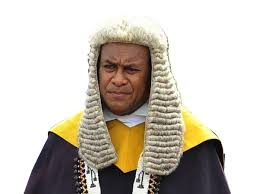
Solomon Islands Chief Justice Sir Albert Palmer has ruled that Prime Minister Jeremiah Manele acted unconstitutionally by delaying the convening of Parliament in the face of a pending motion of no confidence.

In a landmark judgment delivered Tuesday, Palmer found that once a motion of no confidence has been validly lodged and the required notice period has expired, the Prime Minister is under a constitutional duty to ensure Parliament meets at the earliest opportunity to determine the issue.

“Any delay or inaction in such circumstances is unlawful,” the chief justice said before a packed courtroom.

“The Prime Minister is under a constitutional duty to ensure the motion of no confidence is brought before Parliament at the earliest opportunity,” Palmer declared, adding that failure to do so constitutes a breach of the Constitution.

The ruling underscores that the Prime Minister has no legal authority to delay, obstruct or avoid a no-confidence motion once it has matured and is ready for debate.

Palmer stated that by not convening Parliament, the Prime Minister effectively frustrated the constitutional mechanism designed to test whether a government still commands the confidence of the majority of MPs.

This, the chief justice added, strikes at the heart of Solomon Islands’ system of democratic governance, which is founded on the principle that executive power must remain accountable to Parliament.

Palmer pointed out that in such situations, the Prime Minister has only two lawful options: resign from office or face Parliament.

“Avoiding Parliament altogether is not permitted under the Constitution.”

Furthermore, Palmer said the delay had created a “constitutional impasse”, where a valid motion of no confidence exists but cannot be determined because Parliament has not been convened.

Such a situation, the chief justice noted, undermines the country’s democratic framework by preventing Parliament from performing its constitutional role.

Prime Minister Manele lost his majority last month after 19 members of his coalition, including 12 ministers, defected and teamed up with the Opposition.

Following the shift, a motion of no confidence was formally lodged against Manele. Under the Constitution, such a motion must be given at least seven clear days’ notice before it can be debated.

That notice period has since expired, meaning the motion is now ready for consideration by Parliament.

However, despite the motion maturing, Manele refused to convene parliament, stating that he’ll do so at the appropriate time.

The New Coalition argued that the Prime Minister’s refusal to advise the convening of Parliament was unconstitutional and effectively blocked the lawful process for determining leadership.

The government, on the other hand, maintained that the Prime Minister retains the authority to decide when Parliament should meet.

Addressing the dispute in his ruling, the chief justice reaffirmed that a motion of no confidence is a “central constitutional mechanism” for testing the legitimacy of a government.

He stressed that once triggered, this process must not be delayed or frustrated, as doing so would undermine the principle of majority rule.

Palmer described the Prime Minister as the primary constitutional duty-holder, responsible for ensuring Parliament is able to perform its role.

He ruled that while the Governor-General’s powers are limited, they may be engaged as a last resort if the Prime Minister fails to act.

In its final orders, the chief justice directed the Prime Minister to take all necessary steps to convene Parliament within three days to allow the motion of no confidence to be debated and decided.

The Speaker of Parliament was also directed to ensure the motion is given priority and resolved expeditiously once Parliament meets.

Palmer stated that if the Prime Minister fails to act, the Governor-General’s residual constitutional powers may be triggered as a safeguard to restore the parliamentary process.

PINA Board, Fiji Information Ministry discuss media collaboration, Pacific Media summit preparations

0

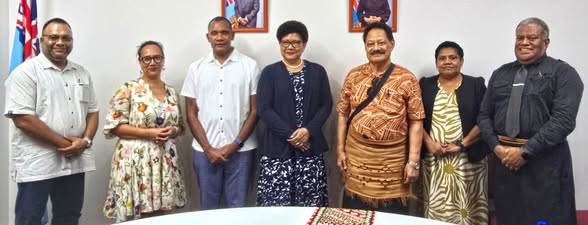
Discussions on strengthening regional media collaboration and preparations for the upcoming Pacific Media Summit took centre stage Tuesday during a courtesy visit by the Pacific Islands News Association (PINA) Board to the Ministry of Information Permanent Secretary Eseta Nadakuitavuki and Director of Information Samisoni Pareti.

Led by PINA President Kalafi Moala, the team included Robert Iroga (Solomon Islands, online), Neville Choy (Papua New Guinea, national association representative), Esther Pahivi (Niue, TV), and PINA Manager Makereta Komai.

During the meeting, the board expressed gratitude to the Fiji Government, particularly the Ministry, for its continued support towards media development and the promotion of media freedom in the Pacific.

Discussions centred on the upcoming Pacific Media Summit scheduled to be held in Savusavu this September. The summit was described as a key event, with plans to further decentralise engagement across sub-regions including Polynesia, Micronesia, and Melanesia.

The board also acknowledged Fiji’s role as a training hub for Pacific journalists, noting that countries such as Niue continue to rely on Fiji for skilled media professionals.
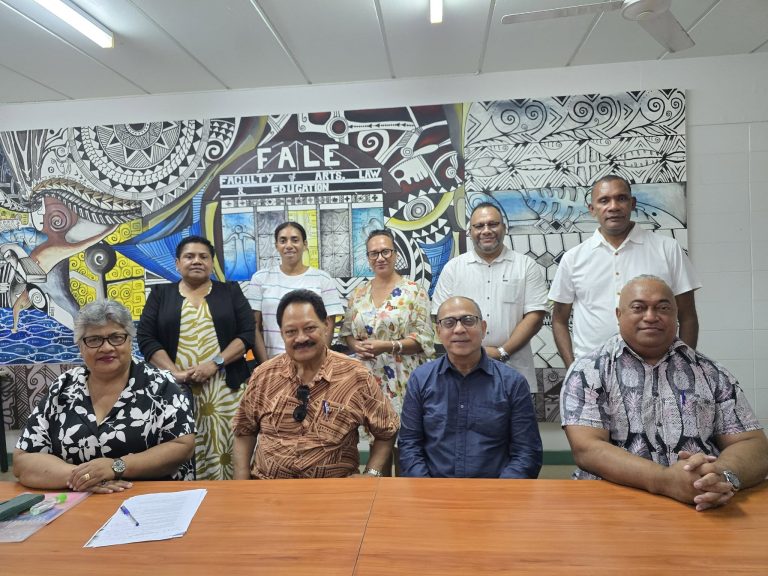
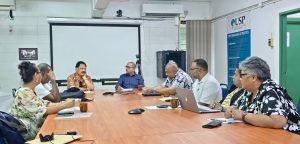
Permanent Secretary Nadakuitavuki emphasised the importance of collaboration between the media and government, noting that while the media plays a critical watchdog role in ensuring accountability and transparency, both sectors must work together in the national interest.

She reaffirmed the Ministry’s support for PINA and the upcoming summit.

Outcome of discussion: PINA collaboration with USP Journalism Programme

The Pacific Islands News Association (PINA) Board held a productive discussion with the Head of the Journalism Programme at the University of the South Pacific, Dr Shailendra Singh Tuesday, reflecting on current collaboration and identifying opportunities to strengthen partnerships between industry and academia.

Key outcomes from the discussion include:

– 𝐒𝐭𝐫𝐞𝐧𝐠𝐭𝐡𝐞𝐧𝐢𝐧𝐠 𝐑𝐞𝐬𝐞𝐚𝐫𝐜𝐡 𝐂𝐨𝐥𝐥𝐚𝐛𝐨𝐫𝐚𝐭𝐢𝐨𝐧

PINA will work with USP to support media research and development, including the use of industry experiences to inform research papers and potential joint publications.

– 𝐑𝐞𝐧𝐞𝐰𝐚𝐥 𝐨𝐟 𝐏𝐚𝐫𝐭𝐧𝐞𝐫𝐬𝐡𝐢𝐩 𝐅𝐫𝐚𝐦𝐞𝐰𝐨𝐫𝐤

Both parties agreed on the importance of renewing the Memorandum of Understanding (MOU) between PINA and the USP Journalism Programme to formalise and guide future collaboration.

– 𝐖𝐨𝐫𝐥𝐝 𝐌𝐞𝐝𝐢𝐚 𝐅𝐫𝐞𝐞𝐝𝐨𝐦 𝐃𝐚𝐲 𝟐𝟎𝟐𝟔

PINA and USP will explore opportunities for joint activities and collaboration to mark World Media Freedom Day 2026.

– 𝐀𝐝𝐯𝐨𝐜𝐚𝐜𝐲 𝐟𝐨𝐫 𝐌𝐞𝐝𝐢𝐚 𝐓𝐫𝐚𝐢𝐧𝐢𝐧𝐠 𝐑𝐞𝐬𝐨𝐮𝐫𝐜𝐞𝐬

PINA will advocate at the regional level for increased investment in journalism education and training institutions, noting the current resource and equipment challenges faced by USP and similar institutions across the Pacific.

– 𝐒𝐭𝐫𝐞𝐧𝐠𝐭𝐡𝐞𝐧𝐢𝐧𝐠 𝐈𝐧𝐬𝐭𝐢𝐭𝐮𝐭𝐢𝐨𝐧𝐚𝐥 𝐋𝐢𝐧𝐤𝐚𝐠𝐞𝐬

A representative from the PINA Board will be invited to serve on the USP Journalism Programme Advisory Board, strengthening industry input into curriculum and programme development.

– 𝐒𝐭𝐮𝐝𝐞𝐧𝐭 𝐄𝐧𝐠𝐚𝐠𝐞𝐦𝐞𝐧𝐭 𝐢𝐧 𝐑𝐞𝐠𝐢𝐨𝐧𝐚𝐥 𝐏𝐥𝐚𝐭𝐟𝐨𝐫𝐦𝐬

PINA will encourage and support greater participation of journalism students in regional initiatives, including attendance at the biennial Pacific Media Summit.

The PINA Board led by President, Kalafi Moala, is in Suva this week for its last face-to-face meeting before the Pacific Media Summit in Savusavu in September this year.

Moana Pasifika confirm Super rugby exit

0

Moana Pasifika have been deemed unviable and will disband at the end of the
Super Rugby Pacific season.

The franchise, which joined the remodelled league alongside Fijian Drua in 2022, confirmed on Wednesday that the “financial, operational and strategic realities” meant ownership could not commit beyond 2026.

Unless new owners step forward to take up the estimated $7 million (US$4.12 million) annual operating costs, Super rugby will become a 10-team competition next season.

The tournament currently has 11 teams after the 2024 dissolution of the Melbourne Rebels, also for financial reasons.

“This is one of the hardest decisions we have ever made. We are immensely proud of our players, staff and the community who have supported our team over the years,” chairman Kiki Maoate said.

Maoate said the clubs commitment now “is to ensure a smooth transition for everyone affected and to celebrate our legacy by finishing the season strong”.

Over the past four seasons they have finished 12th, 12th, 11th and seventh and currently sit last with a 1-7 record.

All Blacks star Ardie Savea was a standout last season but had left for Japan on a sabbatical and was due to return to Pasifika in 2027.

Head coach, former All Blacks captain Tana Umaga, was already set to depart and join the Test side as Dave Rennies assistant.

While the Drua have cemented various home ground venues as strongholds, the Auckland-based Pasifika have been unable to deliver on their ambition to be based in Samoa and also play regularly in Tonga.

Instead they have struggled to attract the top Pasifika talent and played in near-empty venues in Auckland, where the Blues are the dominant rugby force.

“Across our rugby, pathways and community programmes, we have been able to support a growing hub of Pacific talent across multiple sporting codes, both locally and in the Pacific region,” Maoate said.

“This is something we are extremely proud of and will continue to support and advocate for as best we can,” he said.

Sinlaku leaves one dead, one missing and trails of destruction in Chuuk

0

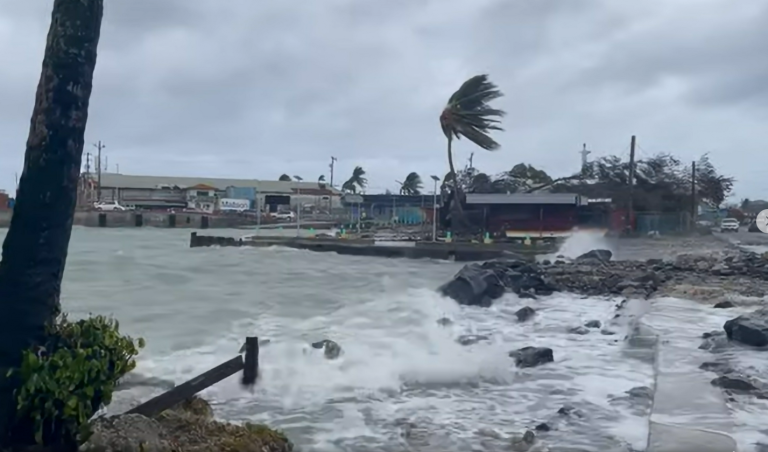
Chuuk is reeling from the aftermath of Typhoon Sinlaku, which caused one death, left one boater missing and resulted in widespread devastation after pounding the Micronesian state for almost four days.

The ferocious storm wrecked homes and knocked out critical infrastructure, causing power outages and communication blackouts affecting 60 to 70 percent of the island.

Weno, the state’s capital city and the centre of population, was hit the hardest.

Storm surges brought torrential rains, estimated at 15-20 inches, causing widespread flooding and landslides in high-lying areas, according to the Chuuk Disaster and Emergency Operations Centre.

“A falling tree claimed the life of one person on the island of Tonoas, a grim testament to the dangers persisting even away from the shoreline,” states the emergency office’s situation report.

“As the storm rages on, the first tragic confirmations of loss of life have emerged, underscoring the lethal nature of this slow-moving disaster.”

The emergency centre reported two boats capsizing off the coast of Fefen due to violent sea waves. One person is confirmed missing at sea, with search efforts dangerously constrained by the storm conditions.

“Weno is in a state of crisis. People are displaced, roads are blocked by fallen trees and seawater, and the places people normally rely on for help, like government offices and the pier, are now damaged or destroyed themselves,” the report states.
“The hospital is operating on backup emergency power only, raising grave concerns about the ability to sustain life-saving care if fuel supplies or generators fail under the strain,” the emergency centre said.

Chuuk Governor Alexander Narruhn said the government will prioritise restoring essential services, assist families affected by the storm and begin recovery efforts.

Chuuk is the Federated States of Micronesia’s most populous state, with a population of 53,595 and a land area of 49 square miles.

“The typhoon has brought significant challenges, and we recognise the difficulties many of you are facing. However, I want to emphasise that we will overcome these challenges together,” Narruhn said in a public message posted on Facebook.

Sinlaku, a name contributed by the Federated States of Micronesia, refers to the goddess of nature and the breadfruit of Kosrae.

Sinlaku’s forward motion nearly stalled from 09 – 12 April . The system hovered over Chuuk, its ferocity intact, with maximum sustained winds of 70 mph.

“The storm’s proximity was alarmingly close—positioned just 75 miles North-Northwest of the Chuuk Lagoon Islands, it is effectively parked over the area, prolonging the relentless wind and inundating storm surge,” the situation report says.

The system initially crawled eastward at 1 mph before eventually picking up speed and taking off from Chuuk.

Officials said several houses have either completely lost their roofs or collapsed entirely. Roads are blocked by huge trees that have been ripped out of the ground and are lying across every roadway.

“Amid the destruction, at least three emergency shelters have been opened, already struggling to accommodate over 100 displaced residents seeking refuge from the typhoon and rising waters,” the emergency centre said.

Radio and telephone communications to the Lagoon and Outer Islands were cut off, leaving information gaps about the situation in remote communities.

In the village of Wichap, four major power lines and all the cellphone towers are down, leaving the area completely without electricity and communication.

Due to severed communications, damage and casualty assessments were based only on sporadic social media feeds. Officials noted that available information represents only a small portion of “a far more catastrophic picture.”

Narruhn assured his constituents that aid is on the way.

“We will work together to rebuild homes, restore infrastructure, and revive our economy. Chuuk has faced challenges before, and we have always emerged stronger,” he said. “Together, we will rebuild and restore our beautiful Chuuk.”

Sinlaku has developed into a Category 5 supertyphoon now hitting the Marianas.

Stay connected

529FansLike
172FollowersFollow
156SubscribersSubscribe
- Advertisement -