
As the world prepares for its first major diplomatic conference on phasing out fossil fuels in Santa Marta, Colombia, at the end of this month, Pacific nations are working to ensure they arrive united and ready to shape the outcome.
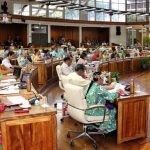
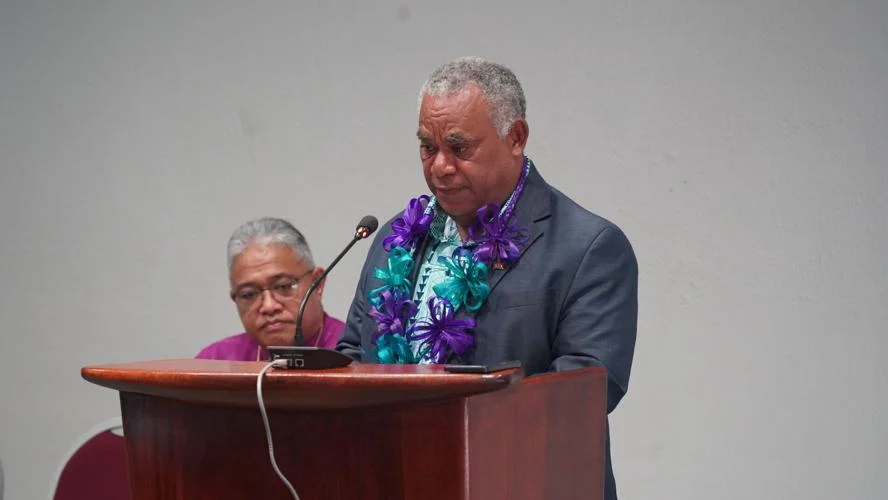
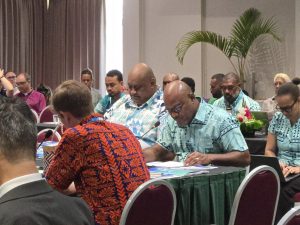
Senior officials and ministers of the Pacific Small Island Developing States (PSIDS) are in Port Vila for a three-day dialogue to strengthen coordination and align their position.
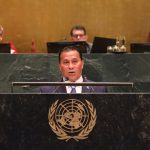
“The Pacific helped bring that conference into being. Our task this week is to ensure we arrive in Colombia as one,” said Prime Minister (PM) Jotham Napat, who opened the dialogue this week.
Vanuatu and six other Pacific island nations established the call for a global fossil fuel treaty, which is now backed by many governments, civil society organisations, and individuals worldwide.
The treaty aims to stop the expansion of fossil fuel exploitation and manage a just transition away from coal, oil, and gas to clean energy. It gained momentum in Port Vila in 2023, following two category 4 cyclones within the same week.
Fossil fuels are by far the largest contributors to climate change, releasing large amounts of greenhouse gases into the atmosphere. Extremely vulnerable to climate change, the Pacific region has long understood that its survival depends on ending the world’s dependence on fossil fuels.
“The Pacific has never waited to be invited to lead on climate. We have led because we had no other choice,” PM Napat said in his remarks.
From the founding of the Alliance of Small Island States (AOSIS), to the push for Loss and Damage, to securing the 1.5 °C red line in the Paris Agreement, the ICJ Advisory Opinion on Climate Change and Human Rights, and now a global framework for managing the phase out of fossil fuel production.
The PM said the ongoing global tension shows why dependence on fossil fuels is fragile. While governments around the world are planning to produce far more fossil fuels than is compatible with limiting warming to 1.5 °C, that gap must be closed, he said.
“Fossil fuel dependency is not an economic model. It is a development trap. And it is time we disrupt and change this model,” he said.
“An economy that continues to depend on fossil fuels is an economy that continues to generate the crises we are here to solve”
PM Napat said the Pacific’s effectiveness in Santa Marta will depend on the unity, clarity, and preparation achieved in this week’s dialogue.
“Santa Marta must open a genuine process one that complements the UNFCCC and Paris Agreement by addressing what they have not yet addressed: the supply side. The managed phase out of fossil fuel production itself,” he said.
 “The outcomes of Santa Marta must be deeply linked to the COP30 Presidency’s pathway process and to the Belém Roadmap. These must not be parallel tracks that fade from my view.
“Furthermore, we need updated and more ambitious Nationally Determined Contributions from all countries, especially major emitters. Those who polluted the most must contribute the most: to financing, to ambition, and to supporting the most vulnerable through the transition.
“Pacific island nations need concrete support for renewable energy transition, economic diversification, and adaptation, not as development assistance, but as a matter of justice and obligation.
“The emerging series of fossil fuel phase out conferences must unlock new and additional financing streams for Small Island Developing States (SIDS).”
The PSIDS Ministerial Dialogue on Global Just Transition in Port Vila ends today.