

The fossil fuel crisis driven by the Middle-East conflict is unequivocally a call to reduce reliance on fossil fuels for everyone, said Vanuatu’s Minister of Climate Change and Energy, Ralph Regenvanu.
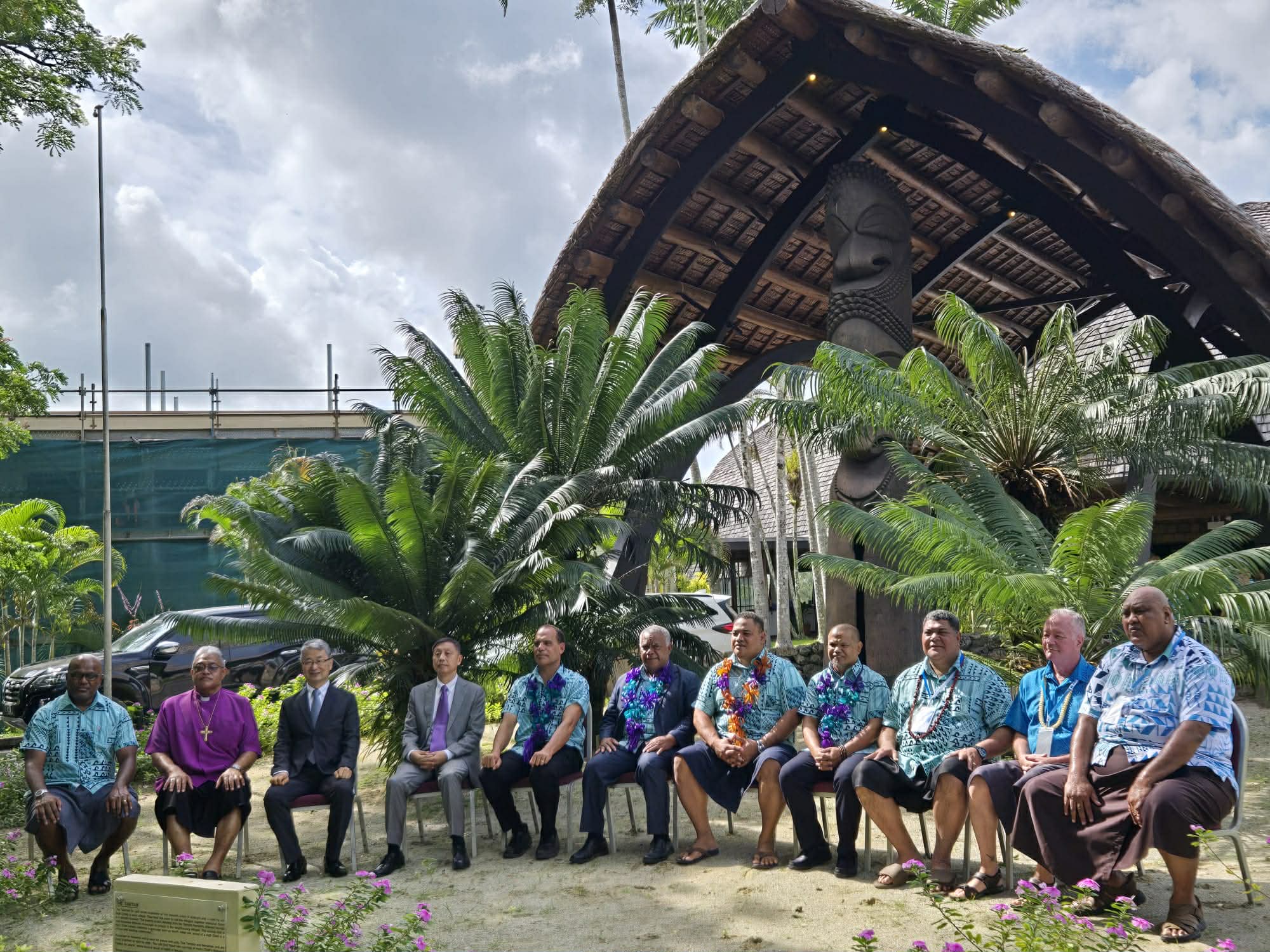
He was responding to a question during a press conference at the Pacific Small Island Developing States (PSIDS) Ministerial Dialogue on the Global Just Transition in Port Vila.
“I acknowledge that many countries are now stumbling to find the energy they need when supply is cut or reduced,” he said.
“For Vanuatu, it has been a moment of realisation that we really have to scale up and fast-track as much as possible on our National Energy Road Map, which sets targets for the transition to renewable energy.”
Under its National Energy Road Map, Vanuatu aims to achieve 100 percent electrification with renewable energy by 2030.
Minister Regenvanu said Vanuatu is on track to achieve the target.
Pacific countries with limited finances rely on commitments from wealthier nations to provide climate finance for renewable energy, as agreed under the United Nations Framework Convention on Climate Change (UNFCCC).
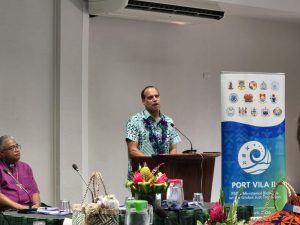
While Pacific countries are among the most dependent on fossil fuels in the world, they have the highest ambitions for energy transition, said Minister Regenvanu.
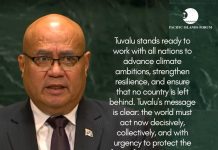
Tuvalu’s Minister for Climate Change and Environment, Dr Maina Talia, said the fuel crisis has shown that things can be done differently and that there are alternative sources to explore.
He said his country has recently declared a two-week state of emergency due to critical fuel supply risks.
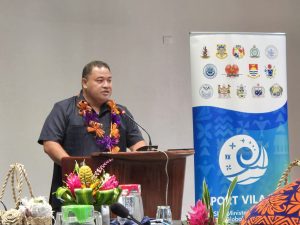 “We are seriously looking into our energy programmes to achieve our 100 percent renewable energy targets with the support of donor partners,” he said.
The PSIDS Ministerial Dialogue on the Global Just Transition in Port Vila will consolidate regional positions, strengthen coordination, and reinforce collective resolve ahead of the first-ever global conference on fossil fuel transition in Santa Marta, Colombia, at the end of this month.
“Our path to Santa Marta should not be limited by the unwillingness of other countries. What matters is the willingness of Pacific nations and those ready to engage, as we take on a new role and step forward together,” said Tuvalu’s Minister Talia.
For the Pacific, a just transition is not simply about climate ambition. It is about economic stability, resilience, and survival.