

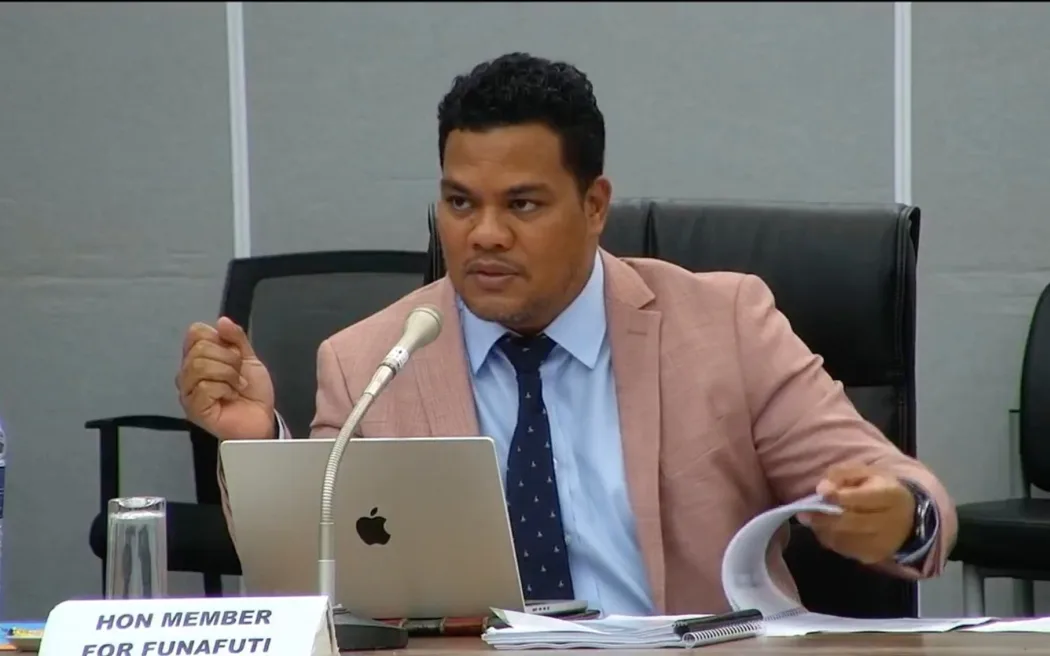
Tuvalu’s Transport Minister Simon Kofe says they have not been assured that fuel will be consistently supplied beyond June.
A state of emergency has been declared on Tuvalu’s Funafati Island for two weeks in light of risks to the fuel and electricity supply.
This allows the government broad powers to control supplies and services including transport, or the consumption of fuel and light.
Tuvalu’s governor-general said there is increasing instability in electricity generation and distribution systems.
Kofe, who is the Minister for Transport, Energy Communication and Innovation, told RNZ’s Morning Report that as of 01 April, diesel went up by 40 percent and petrol by 30 percent in Tuvalu – where fuel is already expensive.
“At the moment, we haven’t been assured that fuel will be consistently supplied beyond June, so we’re quite concerned that that will certainly have a big impact if we don’t get the supply,” he said.
“That affects not just our electricity, but the shipping which we rely on to supply the outer islands and also possibly airplanes.”
He said they are expecting disruptions to their supply, which comes from a company that gets supplies from Singapore and Korea, which in turn relies on oil from the Middle East.
“We are expecting that there will be disruptions, and we believe that countries will also be putting their priorities first.
“So, we’re quite worried that countries, like Tuvalu and other small island nations, may not be in a priority for some of these bigger countries, so we need to prepare now and have storage in place before that time arrives.”
Kofe said Tuvalu has not sought assistance from New Zealand, but Aotearoa reached out when they heard about the state of emergency.
He said New Zealand may be able to help boost diesel supplies or transporting spare parts and generators.
“We’ve been experiencing power outages in the last few weeks, some areas for about two days, 20 hours,” he said.
“So, it’s been having a big impact on the day-to day life of ordinary Tuvaluans. We’ve managed to stabilize it for now, but the challenge we have is that we don’t have a backup generator, which is something now that we’re trying to procure during this state of emergency.”
Tuvalu is not the only Pacific Island nation with supply concerns.
The Marshall Islands declared a 90-day state of economic emergency on 30 March.
The Cook Islands government is providing extra welfare funding and free bus services.
Childfund New Zealand said fuel prices have risen between 20 and 40 percent in many Pacific nations.
ChildFund New Zealand CEO Josie Pagani said families in Aotearoa feel it at the pump, while in the Pacific, families feel it on the table.
Pagani said the two-week Iran war ceasefire is a welcome reprieve for children and families across the region.
But she said this crisis has highlighted the urgent need for more long-term and enduring energy solutions in the Pacific.