

Home Blog Page 1163

Tackling corruption is vital if any country is to achieve a prosperous and secure future

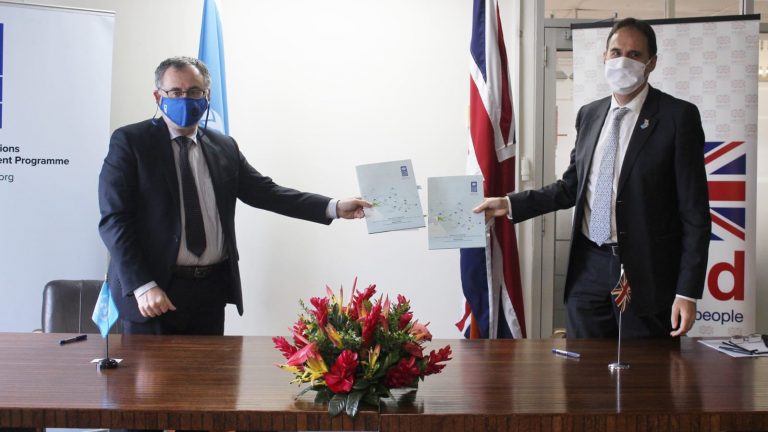
UK Government to support UNDP project to prevent and fight corruption in the Pacific region.

The UK is providing £364,000 (US$503,000) in funding to UNDP as part of the UK’s Conflict, Stability and Security Fund (CSSF) Pacific programme, which will provide £2 million (US$2.7 million) in funding support across the Pacific in 2021-22.

Corruption costs the global economy approximately US$2.6 trillion, or five percent of global GDP, each year. Corruption, together with tax evasion and illicit financial flows, costs developing countries approximately US$1.26 trillion each year.

No country has a perfect record when it comes to tackling corruption. We all understand that corruption is bad and have an idea about what it means for our societies and economies. But better citizen awareness and access to information is needed to ensure greater oversight and transparency for communities, individuals and civil society. We all have an interest in ensuring that corruption is rooted out.

The UK government is working with the UN Development Programme (UNDP) Pacific Office in Fiji, to strengthen anticorruption measures and institutional capacities to prevent and fight corruption more efficiently and effectively in the Pacific region. The project will also focus on improving citizens’ and civil society’s access to information so that they can better hold governments and public bodies to account.
While Pacific Island Countries (PICs) share a set of common challenges, the diverse patterns of corruption across the region suggest that anticorruption efforts need to be tailored to the specific social, economic and political circumstances of the various countries.

The project will be delivered Pacific wide, with a specific focus on Fiji, Vanuatu, Solomon Islands and Tonga in year one. The emphasis will be on supporting national level implementation of anticorruption measures while also maintaining regional and international commitments and accountability. Sub-regional cooperation and exchange of practices will also be forged through the project.

British High Commissioner to Fiji, George Edgar said, “I’m delighted that we will be working with UNDP to support governments in the Pacific region to deal effectively with the threat of corruption and to ensure that it does not divert resources that are needed to provide essential services and build a sustainable future”.

Levan Bouadze, Resident Representative of UNDP Pacific Office in Fiji said, “UNDP is pleased to continue to support Pacific countries in their efforts to combat corruption and promote good governance practices. This programme is in support of the high-level political commitments set out in the Teieniwa Vision of Pacific Unity against Corruption adopted by 18 Pacific Islands Forum Leaders as the regional roadmap at the Leaders Forum in February 2021.”

“We are grateful to the UK Government for this strategic partnership with UNDP on advancing the anticorruption agenda, so that together we improve the development outcomes for the people in the Pacific,” added Bouadze.

Bouadze acknowledged and appreciated the achievements made through the very important and substantive investments in the anticorruption agenda in the Pacific by the Governments of Australia and New Zealand, which the project builds on and complements.

The long-term goal of the project is to contribute to building peaceful, just, and inclusive societies in line with the Agenda 2030 for Sustainable Development and the Sustainable Development Goals in which governments are accountable to their citizens for the way they make decisions and manage public funds.

Press Contact: Vosita Kotoiwasawasa | Phone Contact: 7077690 | Email: Vosita.Kotoiwasawasa@fcdo.gov.uk

Tomoko Kashiwazaki | Phone Contact: 715 8051 | Email: tomoko.kashiwazaki@undp.org

SOURCE: UNDP/UK GOVT/PACNEWS
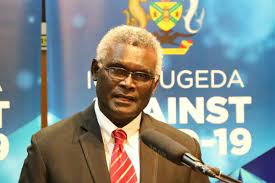
Solomon Islands Government speaks out on threats to remove PM Sogavare by force

Solomon Islands government says the ongoing rumours of an armed group seeking to remove Prime Minister Manasseh Sogavare is not in the best interest of peace and stability, particularly at a time when COVID-19 poses a greater threat to the country.

The government said in a statement that the ongoing media speculations pushed by journalist Alfred Sasako are nothing but a smear campaign to stir public insecurity and to cause fear, alarm and public anxiety.

The statement said the process for removing a Prime Minister is through the National Parliament and not by an armed group.

The statement instead encouraged law-abiding citizens of the country to voice their concerns through their elected representatives and other appropriate channels for government consideration.

“From the series of newspaper articles propagated by Sasako and his unnamed sources, it is apparent that some individuals continue their dislike of the government using all sorts of redundant tactics to create disunity and promote instability,” the statement said.

Meanwhile, the DCGA under the leadership of Prime Minister Sogavare and his ministers continue to encourage citizens of the country to focus their energy on nation building in partnership with the Government and development partners.

“It is in our best interest that we do not return to those dark moments of our country’s history, in this post ethnic tension period the paramount duty for all of us is to bring out the best of this country for the sake of our children.

“Whatever decisions we make today will bear consequences that will be felt by the next generations, therefore, we must be conscious and exercise sensitivity in all the decisions we are dispensing today. What we leave behind for them will be our legacy to them and their children,” the statement said.

The statement says that in such uncertain times caused by the COVID- 19 pandemic, provoking political and social instability should be the last thing on everyone’s minds.

“We must work together in unity for the betterment of our country, if we are fragmented, we will only succumb to the onslaught of the deadly pandemic,” government reiterated.

“We must also respect the multicultural composition of Honiara. Honiara is made up of our people from every province. Furthermore, Honiara is hosted by Guadalcanal Province. We must respect our host Province and the people of Guadalcanal.

“Solomon Islands is our country and Honiara is our city. It is our individual and collective duty to ensure that our children and our people continue to enjoy a peaceful, stable and secure existence in Honiara,” the government statement said.

SOURCE: SOLOMON TIMES ONLINE/PACNEWS

Hawaiians look to tradition to cope with Climate change

Hawaii faces a range of environmental problems caused by global warming, impacts worsened by practices that critics say have ignored the local ecology.

They say reviving traditional values can reduce the damage by limiting coastal erosion, reversing the rising acidity of coastal waters and lessening flooding from intense storms.

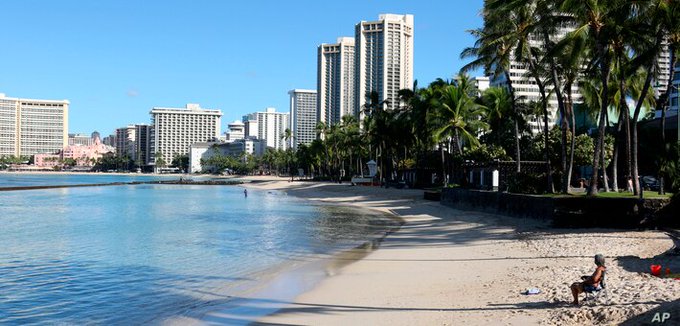
Coastal hotels and homes already are seeing the effect of rising sea levels, which could cost the state’s principal island of Oahu 40 percent of its beaches by 2050, according to one study. That also would harm tourism, which is the largest source of income for the islands.

Even under an optimistic global scenario assuming lower greenhouse gas emissions, sea levels will rise 30 centimetres by the end of the century, according to current estimates. Under a worst-case scenario, ocean levels could rise more than 2 metres by 2100, devastating coastal regions and displacing whole communities on these islands.

The 2015 Paris Agreement aims to limit global warming to 1.5 degrees Celsius compared to preindustrial levels.

Both air and ocean temperatures are rising, and acidity is increasing as oceans absorb more carbon dioxide, damaging coral reefs and sea life.

Changes in weather patterns cause erratic precipitation, and in some places, drought.

“Some rainfall is on average going up over time. Some is going down,” said Victoria Keener, who studies climate change and natural resource management at Honolulu’s East-West Centre. “In Hawaii, we’ve actually seen drying out,” with increased fire risk in parts of the islands and more rapid warming and environmental changes at higher elevations, she said.

Unstable weather triggered severe storms and flooding on Maui and other islands in March, destroying homes and bridges and providing a preview, scientists said, of what can happen in the future.

Moreover, climate change has additional consequences, Keener said, contaminating “groundwater wells near the coast,” harming agriculture and threatening infrastructure.

Honolulu is a modern urban centre, and the island of Oahu, where the city is located, is home to some 950,000 people. As the population has grown, authorities have paved over natural waterways to control flooding, blocking the natural watersheds that once linked the mountains, lowlands and coast in a single ecosystem.

Celeste Connors of Hawaii Green Growth, a non-profit organisation that works to implement the United Nations sustainable development goals, stands on the edge of the watershed above the Manoa Valley, which drains rainfall from the mountains toward the coast. Nearby is a restored heiau, an ancient religious and ceremonial site located on the grounds of the Manoa Heritage Centre.

Connor said this was the centre of a natural system that linked these hills to the farming lowlands and coastal Waikiki.

It is called an ahupua’a, which refers both to the land unit and the system of managing resources from “ridge to reef,” said Connors, all driven by an ethic of stewardship that Hawaiians call mālama.

There are efforts around the islands to renew traditional farming methods and values. On the east or windward shore of Oahu, farmer Nick Reppun works for a non-profit group that grows traditional staple foods such as breadfruit and taro, restoring these lowland wetlands to their natural state.

The farm borders a housing development in an area once slated for luxury homes, a marina and golf course before a public agency intervened in 1991. Today, conservation and heritage groups are restoring the mountain watershed and coastal aquaculture pond, reviving another ancient, interconnected ahupua’a.

“We’re just trying to do what we know has been done and what we know worked before,” said Reppun, farm director at the project called Kāko’o ‘Ōiwi. “We’re not reinventing the wheel with these systems, just trying to revive them,” he said.

Today, these islands are far from self-sufficient, importing 85% to 90% of their food from outside — something long seen as a vulnerability. Researcher Hunter Heaivilin of the University of Hawaii noted that there were efforts in World War I to secure the food supply and boost the local production of taro.

In 1949, the islands suffered a 177-day shipping strike, and a 100-day West Coast dock strike slashed imports in 1971, causing shortages and again highlighting the problem.

Heaivilin said today, bottom-up efforts to increase self-sufficiency include food hubs that connect small farms and buyers.

There are no easy solutions to the problems of climate change, but experts say islands are ground zero for studying climate change and are a repository of knowledge about community resilience.

The local Aloha+ Challenge tracks progress toward the UN sustainable development goals, measuring successes and shortcomings in areas from clean energy to food production. Connors of Hawaii Green Growth said the challenge, which takes its name from the traditional Hawaiian greeting, suggests a way of life rooted in these islands.

Alapaki Luke, a teacher of Hawaiian language and culture at Honolulu Community College, points to a wetland taro patch that traps the silt that would otherwise flow downstream to the ocean. Located on the grounds of the School of Hawaiian Knowledge at the University of Hawaii, he said it showcases traditional wisdom about land and water use and ways to prevent erosion.

“I’m not about going back 400 or 500 years,” he said. “But we can use the foundation, which we call the kahua, of the ‘ike, the native tradition, in a modern setting,” using ancient knowledge that he said is state of the art.

SOURCE: VOA/PACNEWS

EU calls for climate action

The Ambassador of the European Union in the Pacific, Sujiro Seam, has called on major emitters to be more ambitious in their reduction of carbon emissions.

In a video posted on Twitter, Seam highlighted the findings of the recently issued Intergovernmental Panel on Climate Change (IPCC) which found that there is a slim chance that the world could stop temperatures rising above 1.5 degrees Celsius that must be immediately grasped, suggesting the world is at a tipping point on climate disaster.

“The Intergovernmental Panel on Climate Change clearly tells us that more needs to be done to achieve the objective of the Paris Agreement on climate to keep global warming below 1.5 degrees,” Seam said in the video posted on Twitter.

“This is particularly important for the Pacific because this is the region of the world most exposed to the negative impacts of climate change, especially with sea level rise and more frequent and more severe extreme weather events.

“Major emitters need to be more ambitious in their reduction of carbon emission.”

He added that the European Union leads the way with a commitment to carbon neutrality by 2050.

“But our partners need to join us to achieve an ambitious objective in the COP26 in Glasgow,” he said.

COP26 is a forthcoming climate change conference about science and innovation in the face of climate disaster.

The conferences are annual meetings held in the framework of the United Nations Framework Convention on Climate Change(UNFCCC) and assess participating countries’ progress on reducing emissions.

A COP26 statement issued in July this year highlighted a meeting of Pacific Island leaders with COP26 President-Designate Alock Sharma.

“Leaders agreed with the COP26 President that the world needs to step up its emissions targets and its actions to keep the 1.5 temperature limit alive, noting that we have now reached levels of carbon dioxide in the atmosphere that we have not seen for 3 million years,” the statement reads.

“Leaders talked about the need for greater action sooner, commenting that flattening the curve on temperature warming by the middle of the century would be too late, that emissions must peak by 2025. Early peaking is necessary not only to protect climate vulnerable Pacific SIDS but also larger, more resilient countries who will also experience greater severity and frequency of heat domes, wildfires, floods and storms and therefore need to take action to close the mitigation gap. High emitters, especially G20, must commit to higher mitigation targets now, and COP26 must set the path for peaking emissions by 2025. Finance and access to finance are lagging behind the needs of countries.

According to the statement, participants highlighted the importance of including super pollutants, such as methane, black carbon and HFCs, in reduction targets.

Rapid reduction of these powerful GHGs could make a significant difference to the achievability of the 1.5 degrees’ target, the statement reads.

SOURCE: SAMOA OBSERVER/PACNEWS

Fiji records 350 new cases of COVID 19 and 23 new deaths reported

Fiji has recorded 350 new cases of COVID 19 and 23 new deaths Monday, increasing the total number of cases to 40,517 and 392 deaths since the outbreak in the Pacific nation in April.

Permanent secretary for Health, Dr James Fong said 242 cases are from the Western division and 108 cases are from the Central division in Vitilevu, Fiji’s main island.

He said there have been 1,650 new recoveries reported since the last update, which means that there are now 22,494 active cases.

“15,692 active cases are in the Central Division, 6,801 active cases in the Western Division and 1 active case in the Northern Division. We are currently reviewing and reconciling our active case database with recoveries and as a result, we expect the recovery numbers to increase in the coming weeks.

“There have been 40,517 cases during the outbreak that started in April 2021. We have recorded a total of 40,587 cases in Fiji since the first case was reported in March 2020, with 17,491 recoveries,” Dr Fong said.

He said the 23 new COVID-19 deaths reported for the period of 11 – 15 August. 20 deaths were reported from the Western division and 3 deaths were reported from the Central division.

He said there have now been 394 deaths due to COVID-19 in Fiji, with 392 of these deaths during the outbreak that started in April this year.

“The national seven-day rolling average of COVID-19 deaths per day is eight. The seven-day rolling average of COVID-19 deaths in the Central Division is five and in the Western Division is three.

“We also have recorded 208 COVID-19 positive patients who died from the serious medical conditions that they had before they contracted COVID-19; these are not classified as COVID-19 deaths” Dr Fong said.

He said there are currently 309 COVID-19 patients admitted to hospitals in Fiji.

“118 patients are admitted to the Lautoka Hospital, 49 patients are admitted at the FEMAT field hospital, and 142 admitted at CWM hospital, St Giles, and Makoi. 38 patients are considered to be in severe condition, and 15 are in critical condition.

“The seven-day daily test average is 1538 tests per day or 1.7 tests per 1,000 population. The national seven-day average daily test positivity is 29.1 percent,” explained Dr Fong.

As of 15 August 533,705 adults in Fiji have received their first dose of the vaccine and 211,496 have received their second doses.

“This means that 91% of the target population have received at least one dose and 36.1% are now fully vaccinated nationwide. We are currently doing a mop up exercise of our first dose campaign, which will allow us to specifically target specific communities with low coverage, and subsequently also correct and update the total eligible population for our current vaccination programme,” said Dr Fong.

SOURCE: PACNEWS

Vaccination reduces transmission by 70 percent: Fiji Health Minister

Vaccination reduces community transmission of the delta variant by seventy percent says Fijian Health Minister Dr Ifereimi Waqainabete.

Speaking in Parliament Monday, Dr Waqainabete said recent studies have shown that vaccination helps in reducing community transmission and this is the reason why the Ministry is encouraging the public to get vaccinated.

“Research to date has revealed that the delta variant of the coronavirus is more transmissible than the common cold or influenza virus,” he said.

“It is more transmissible than smallpox, ebola and chickenpox. Making it one of the most infectious if not the most infectious respiratory viruses humanity has ever encountered.

“Here in Fiji, the evidence is showing that we are on the right track with responding to this new strain. The latest global data tells us the vaccine does reduce the risk of symptomatic disease.

“After one dose of the vaccine, a person is provided 71 percent protection from being severely ill or hospitalised; and this protection goes up to 92 percent after the second dose.

“So while we know that some people may still be infected even if they are fully vaccinated, these vaccines provide life-saving protection,” he said.

He said recent global studies have also shown that the vaccines can help to reduce the risk of the virus spreading to other household members.

“In short, these vaccines will protect those who take them but also, to some extent, those that the vaccinated person comes into contact with.”

“So we should all be vaccinated, not only for our health, but for the health of those around us, our families, friends, co-workers, and customers,” he said.

“We also know that vaccination alone is not an answer, we must continue to apply all of the public health measures.

“For those in our community who have yet to be vaccinated, I want to again remind you to listen to the facts and not be misguided by misinformation and rumors,” he said.

Meanwhile, Dr Waqainabete said the Government has not blamed people for spreading COVID-19 in the community.

Dr Waqainabete said there are certain people who continue to breach the coronavirus restrictions in place and refuse to be vaccinated.

He said there have been some concerns of people spreading misinformation about coronavirus vaccines which lead to people in the interior refusing to be jabbed.

“We will continue to fight and shut down the naysayers, anti-vaxxers and opportunists who prey on the gullibility of the people,” he said.

“Some people have been talking erroneously about vaccination which includes an unregistered doctor who are using the mainstream media and are also part of panel discussions.”

“For the past few months they have seen a spike in dangerous information and individuals posing as experts providing incorrect facts about coronavirus vaccine,” he said.

He said the Ministry is concerned that people are inclined to resist the vaccine and will cling to this misinformation which threatens the efforts of the health teams.

“I have received a concerning message from the medical officer in Navosa who was saying that after getting their first doses, there are challenges again to roll out the second doses.

“We must encourage each other to take both the doses as full protection comes two weeks after the second dose,” he said.

He said platforms should not be provided for people who spread false information about the virus in Parliament and mainstream media.

In another development, an area of restricted movement was initiated from 12 midnight Monday within Nabouwalu in Vanualevu for the next 14 days after a new case was detected on the weekend.

Permanent Secretary for Health Dr James Fong said the containment area will extend from Raralevu-i-Cake to Wainisevu and along the coast of Nabouwalu Village.

“The two checkpoints maintained in the containment will be checkpoint one opposite the Nabouwalu market controlling movement into the main road that runs into the containment area and checkpoint two at Raralevu-I-cake past Nabouwalu village towards Wainunu.”

He said the objectives of this containment zone protocol is to facilitate heightened community surveillance, conduct more contacts tracing, escalate our COVID safe community engagement program and to implement a program to increase vaccination coverage in targeted areas throughout the Nabouwalu containment zone.

“Movement into and out of the containment area will be restricted to facilitate essential service provision and access to groceries and post office services.”

“The Office of the Provincial Administrator and sub-divisional medical teams have been carrying out community awareness on other specific movement restriction protocols and will continue this awareness exercise throughout the day tomorrow.”

“For health services, the Northern health team is setting up clinic sites at the Solevu Immaculate Conception Junior Secondary School, the Bua Nursing Station, and the Lekutu Health Centre to cater for the health needs of those living outside the containment area.”

“Nabouwalu hospital will be used by the health teams for emergency care only.”

Dr Fong said contact tracing of the lone case in the North has identified 33 primary contacts and 70 secondary contacts.

“All contacts have tested negative for COVID-19 so far and remain under quarantine,” he said.

SOURCE: FIJI LIVE/PACNEWS

Vanuatu investigates citizenship applicants as Syrian’s approval is revoked

The head of Vanuatu’s Citizenship Commission says a Syrian national had his approval for citizenship revoked, and others are being investigated over concerns that international criminals are buying Vanuatu passports.

It comes after The Guardian revealed last month the identities of some of the people who’ve gained Vanuatu citizenship through the controversial program including fugitives, politicians, disgraced business people from across the world, including Australia.

Commission chair Ronald Warsal said Syrian businessman Abdul Rhaman Khiti had his citizenship approval revoked last week after investigators found out the US government had placed sanctions against his businesses.

“After The Guardian article and during the course of the investigation by our Financial Intelligence Unit there it was decided to have it revoked and money he has paid to be forfeited into government coffers,” he said.

Warsal said others, including those identified in the media are being investigated and could be censured.

“It’s an ongoing thing we want to ensure that people who come to Vanuatu who obtain Vanuatu citizenship are not wanted abroad [and] are not fugitives,” he said.

While controversial, the program remains extremely lucrative, reaching a record high last year of $172 million (US$49 million) to help the country avoid major economic shock from the collapse of international tourism.

Warsal said the global pandemic and the closure of international borders hadn’t dampened interest with up to a hundred applications received per month.

But the scheme continues to be mired in controversy, with claims it’s being used by international criminals to access Vanuatu passports and to a safe haven from the law.

The CEO of Transparency International Vanuatu Dr Willie Tokon said it’s a concern that the Syrian businessman was able to get approval in the first place.

“How come we have all these allegations but the screening by Citizenship Commission and Financial Intelligence Unit didn’t come up with this allegation,” he said.

He’s calling on Vanuatu to seek the help of the Australian Federal Police and Interpol to vet applications, and for limits be placed on the number of passports sold and citizenships issued to foreigners.

SOURCE: ABC/PACNEWS

Militia leader’s honour slammed as insult to East Timor and Australia

The awarding of one of Indonesia’s highest honours to a former militia leader indicted for crimes against humanity has been labelled an insult to both East Timor and Australia.

David Savage, an Australian former United Nations peacekeeper and war crimes investigator in East Timor, slammed the presentation of Eurico Guterres with the Star of Service medal by Indonesia President Joko Widodo.

Guterres was a key figure in the violence that accompanied East Timor’s bid for independence from Indonesia in 1999 and was later indicted by the UN for crimes against humanity including murder, persecution and other inhumane acts.

More than 1400 people were estimated to have been killed by pro-Jakarta militias groups, who destroyed the capital Dili and burned villages to the ground following a referendum in which 78 per cent voted to break away from Indonesia.

Guterres, 51, who headed the feared Aitarak militia, was in 2002 sentenced to 10 years’ prison by a human rights court in Jakarta over his role in the bloodshed in East Timor.

His conviction was overturned by Indonesia’s Supreme Court in 2008 but his presidential award has been greeted with shock.

“The guy is a psychopath and has been indicted for crimes against humanity. To make him essentially a hero of Indonesia is gobsmacking,“ said Savaga.

Savage, a former Australian Federal Police (AFP) officer, had his book about his experiences helping oversee the UN-backed independence vote turned into a TV mini-series.

The poll ultimately brought an end to a quarter of a century of Indonesian occupation but not before a campaign of terror that forced 250,000 people to flee to Indonesian West Timor and resulted in the deployment of an Australian-led international peacekeeping force.

Savage returned as a UN investigator between 2001 and 2005 as part of a probe by its Serious Crimes Unit into a rampage of kidnappings, assaults, rapes and murders by pro-Indonesian militia.

“The Indonesians continually in ’99 pushed this line that it was rogue elements of the Indonesian military that were supporting the militias,” said Savage, who was in 2012 badly wounded by a child suicide bomber while in Afghanistan as an AusAID adviser.

“This [award to Guterres] just completely dispels that myth because for them to give him such a high accolade, which can only be for his role there [in East Timor], shows that he obviously did a good job for the government of Indonesia.“

The decision to include Guterres alongside a German scientist who assisted Indonesia on climate issues, a senior journalist and a late academic from Aceh province in receiving the award from Joko has been met with some opposition in Indonesia, with a group of civil society groups saying it was “like dripping vinegar on the victims’ wounds”.

An open letter has also been written to Joko by Cris Carrascalao, whose teenage brother Manelito and 11 others were killed in an attack at their family home in Dili where pro-independence supporters had gathered in April 1999. The massacre was chronicled in the UN indictments against Guterres and other militia members.

Carrascalao, whose mother is Indonesian, said she was “appalled and disgusted” at the honour bestowed on Guterres and urged the President to change his mind.

“[My brother] was only 16 years old. He was shot, hacked to death with machetes as each militia entered the house, by Eurico Guterres orders,” she said.

“My family was ordered to be killed down to the seventh generation.

“Our house was full of civilians who were displaced from the villages, with the escalating violence perpetrated by the militia groups throughout the half-island.

“Is this how you want your presidency to be remembered? I urge you to consider withdrawing the medal you have given to this mass murderer.”

Indonesia’s Co-ordinating Minister for Political, Legal, and Security Affairs, Mahfud MD, however, defended the honour.

“Eurico Guterres was fighting alongside the forces of the unitary state of the Republic of Indonesia when we were developing East Timor as part of the unitary state of the Republic of Indonesia,” he said.

It was also backed by Lieutenant General Agus Widjojo, a former co-chair of the Indonesia-East Timor Commission of Truth and Friendship, who argued he was a worthy recipient.

He said while human rights violations had later been found, Guterres had been fighting on the side of the Indonesian government “in an armed conflict with the forces of Fretilin”, the main resistance group.

“On the other side was the party who attempted to uphold the law and regulations,” he said.

“East Timor was part of Indonesia at that time. Therefore, in this case, Eurico Guterres is a national fighter and a patriot.”

Comment was sought from the office of East Timor Prime Minister Taur Matan Ruak.

Guterres was last year awarded another top prize, the National Defence Patriot Award, by Indonesian Defence Minister Prabowo Subianto, a former special forces general and son-in-law of former dictator Suharto who was himself accused of human rights abuses in the armed forces and was discharged from the military in 1998.

Prabowo, who has run unsuccessfully against Joko in the past two presidential elections, recruited Guterres to the Gardapaksi paramilitary group in the mid-1990s.

SOURCE: SMH/PACNEWS

Kina commits to create jobs, expand Westpac branches in PNG

0

Kina Securities has made commitments to expand Westpac’s operations in Papua New Guinea if it is allowed to buy them, including creating new jobs, spending millions of dollars on technology and allowing smaller banks to access its infrastructure, as PNG’s competition regulator considers whether to approve the $420 million(US$30 million) deal.

ASX-listed Kina, which owns PNG’s second-largest retail bank, Kina Bank, said it had argued before the country’s Independent Consumer and Competition Commission (ICCC) last week that buying the third-largest bank – Westpac PNG – would not reduce competition. This came after the ICCC said on 26 July it had knocked back the deal in a preliminary determination, after PNG’s biggest lender, Bank South Pacific, which is also ASX listed, argued against the deal.

Westpac CEO Peter King: “We did not identify any other buyers capable of executing a transaction for our joint Pacific operations.” Alex Ellinghausen

Westpac CEO Peter King told the commission last week that Kina was the only viable buyer for its network in PNG and Fiji. If the deal was blocked, he said Westpac would be forced to scale down the bank and exit PNG, so divestment to Kina was in the best interests of the PNG economy.

To help get the deal through, Kina Securities CEO Greg Pawson said Kina would spend almost $10 million (US$7.3 million) on digital technology and expanding Westpac’s branch network by 50 per cent in the first three years after the acquisition. This came after the Highlands Farmers & Settlers Association, which represents farmers and traders in rural PNG, warned the takeover could reduce the number of branches available to consumers in some towns and regions.

Kina wants to create “a pan-Pacific bank domiciled in PNG” and Westpac’s PNG and Fiji operations would be re-branded the East West Commercial Bank, under Westpac’s existing corporate structure and licenses.

The new bank will compete with Kina Bank under a multi-brand strategy, while all Westpac PNG’s existing senior management and executive roles “will be nationalised and given to PNG local talent, including the country head position,” Pawson told the ICCC in a hearing last Wednesday in Port Moresby.

Furthermore, he promised to provide small banks in PNG with access to Kina’s infrastructure –- including free access to ATMs and point of sale systems and letting them use Kina branches – to preserve competition. He also committed to “prevent job losses and retain all existing Kina Bank and Westpac employees” while also creating 50 new jobs in PNG in the first year after the acquisition.

Final written submissions are due with the ICCC on Friday before a final determination, which is expected in September.

King told the ICCC that under Westpac’s simplification programme its priority has been to “to exit businesses as going concerns to carefully selected buyers, to ensure the businesses, customers and communities they serve, and our employees have strong future prospects”.

“Sitting in Westpac’s portfolio, the PNG business has not been and will not be prioritised for investment or growth,” he said. “As a result, Westpac PNG could not be regarded as a vigorous or effective competitor now or in the future, particularly in a market with such a big number-one player [Bank of South Pacific] which has economies of scale.”

King said no other buyer had been identified, so “absent the option to divest to Kina, our only remaining option would be to continue to progressively scale down the business and seek an exit whenever possible.”

Kina Securities has also told PNG regulators that it could pursue a banking licence in Australia or Singapore to improve PNG’s reach in the region.

The ICCC’s draft determination in July found that due to already “highly concentrated” markets, “very high” barriers to entry, and the “incentive for tacit collusion”, the deal would not be in the best interest of PNG’s consumers.

But Kina Securities chairman Isikeli Taureka told the commission tacit collusion between duopolists was “impossible” given the “significant disparity in market positions between Bank South Pacific and Kina”.

SOURCE: AUSTRALIA FINANCIOAL REVIEW/PACNEWS

Country that could vanish from the map as sea levels rise

The runway of the capital city’s airport jostles for space among the homes crammed around it, which themselves make way for two of the largest buildings – the nation’s parliament and the Princess Margaret Hospital – both with water views.

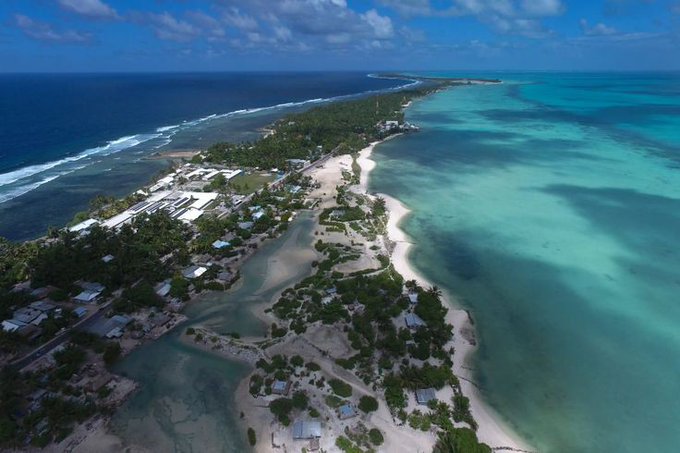
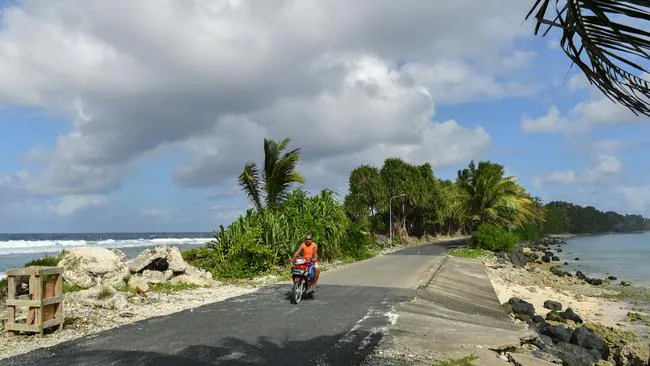
In fact, everyone has ocean views in Funafuti, the capital of Tuvalu. The entire country is built on three impossibly thin and meandering reef islands that barely manage to poke their heads above the waves of the vast expanse of the Pacific on one side and the Te Namo lagoon to the other.

Often the distance from one coast of Tuvalu to the other is just a few metres with the waves of the ocean always in earshot.

But it’s those waves that pose the biggest threat to Tuvalu’s existence.

A report released last week has only further added to the worst fears of the people living Tuvalu that their country is living on borrowed time.

That more and more of their precious land will be gobbled up by the sea.

There are even concerns the entire nation, which at its highest point is just 4.5 metres above sea level, could eventually vanish.

And it’s not just Tuvalu. Much of the Solomon Islands, the Marshall Islands and many others in the western Pacific barely rise above the water.

“It sounds harsh, but it’s really hard to imagine some of these low lying places still existing,” climate scientist Shayne McGregor of Monash University told news.com.au.

Last week’s United Nations Intergovernmental Panel on Climate Change (IPCC) report made for sobering reading.

It stated Australia had already warmed 1.4C and globally temperatures could be 1.8 hotter by 2040 and 3.5C by the end of the century.

United Nations secretary-general Antonio Guterres said the internationally agreed aim of keeping the overall temperature rise to 1.5C above pre-industrial levels was now “perilously close” to being broken.

He said the report, which has been released ahead of a crucial climate conference in Glasgow, UK, in November, was “code red for humanity”.

Another key warning from the report was on sea level rises which have already gone up by around 20cm between 1901 and 2018.

A further 15-25cm of sea level rise is expected between now and 2050.

Beyond that date, how much the ice melts and the oceans creep up by will depend on future emissions, the IPCC report stated.

If we manage to belch fewer emissions, future sea rises might be around 38cm higher than the 1995-2014 average by 2100. But if we keep on belching with abandon, that rise could be around 77cm.

That’s not good news for Tuvalu’s 11,000 residents who live on just 26km square of habitable land some 12,000 kilometres north of Fiji.

An analysis by the United Nations found as many as 350,000 people living in low-lying atolls in the South Pacific could eventually need rehousing overseas if sea levels render their current homes uninhabitable.

Already Tuvalu’s once fertile soils are becoming more barren as they absorb sea salt allowing little to grow. Underground water storages have also been inundated by ocean water meaning locals are reliant on rainwater.

Addressing the Pacific Island Forum meeting on 06 August, Tuvalu’s Prime Minister Kausea Natano said missing the 1.5C target would be “disastrous for the Pacific”.

“There is no doubt that sea level rise continues to threaten the very core of our existence, of our statehood, our sovereignty, our people and our identity.”

Prof McGregor told news.com.au that the western tropical Pacific had already seen sea levels rise more than elsewhere due to strong episodes of the El Nino Southern Oscillation, better known as El Ninos and La Ninas.

But that was simply sloshing more of what sea water there was in the world towards the Pacific, meaning there was consequently less water somewhere else.

Indeed, sea levels around the world are neither static nor do they rise or fall exactly in uniform. The oceans are turbulent rather than still. Something as everyday as the tides can vary enormously even around the Australian continent.

Also the effect of a higher sea levels will not be the same in every location. Some places will have cliffs or man-made coastal defences protecting the land.

What’s not in doubt, however, is that the Pacific’s low lying islands and atolls – with no natural or man-made protections – would be under permanent threat from higher sea levels.

“The highest point above sea level in Tuvalu may be 4.6 metres but the general height from sea level is something like 1.2 metres which is very low and they don’t have a lot of defences,” said Prof McGregor.

“With an additional 77 centimetres of sea level rise as well as the variability of these El Nino and La Nina events you could imagine that most of Tuvalu will be underwater some years.”

A report in 2016 found five reef islands in the Solomon Islands, situated north east of Queensland and close to Papua New Guinea, had vanished and a further six had eroded.

By some accounts the seas have risen by 15cms around the Solomons in the past 20 years.

The Marshall Islands, a country of 60,000 people living on 29 low lying coral reefs in the western Pacific, has been called the most endangered nation on earth due to the risk of climate change.

Remarkably, however, the Marshall Islands have actually been growing in size by 13 percent as waves deposit sediment from the reefs onto shore filling in channels and extending beaches.

But this natural process may not be enough to counteract an ever rising sea.

And certainly that one respite is not happening in Tuvalu.

Nonetheless, in the capital of Funafuti, the everyday buzz of life continues. Ships are unloaded, supermarkets are filled with fresh produce – now mostly from overseas, fish are caught and church bells ring.

But the Pacific is an ever constant presence for Tuvaluans. If the world does nothing, and the ocean rises further, it could slowly take the city, and all of Tuvalu, away.

SOURCE: NEWS.COM.AU/PACNEWS

Stay connected

529FansLike
172FollowersFollow
156SubscribersSubscribe
- Advertisement -